

Free written scope consultation - allowances, timeline, and change-order rules on paper before a single trade is scheduled
Quikrete Driveway & Pavers: The Garden Grove Owner’s Guide
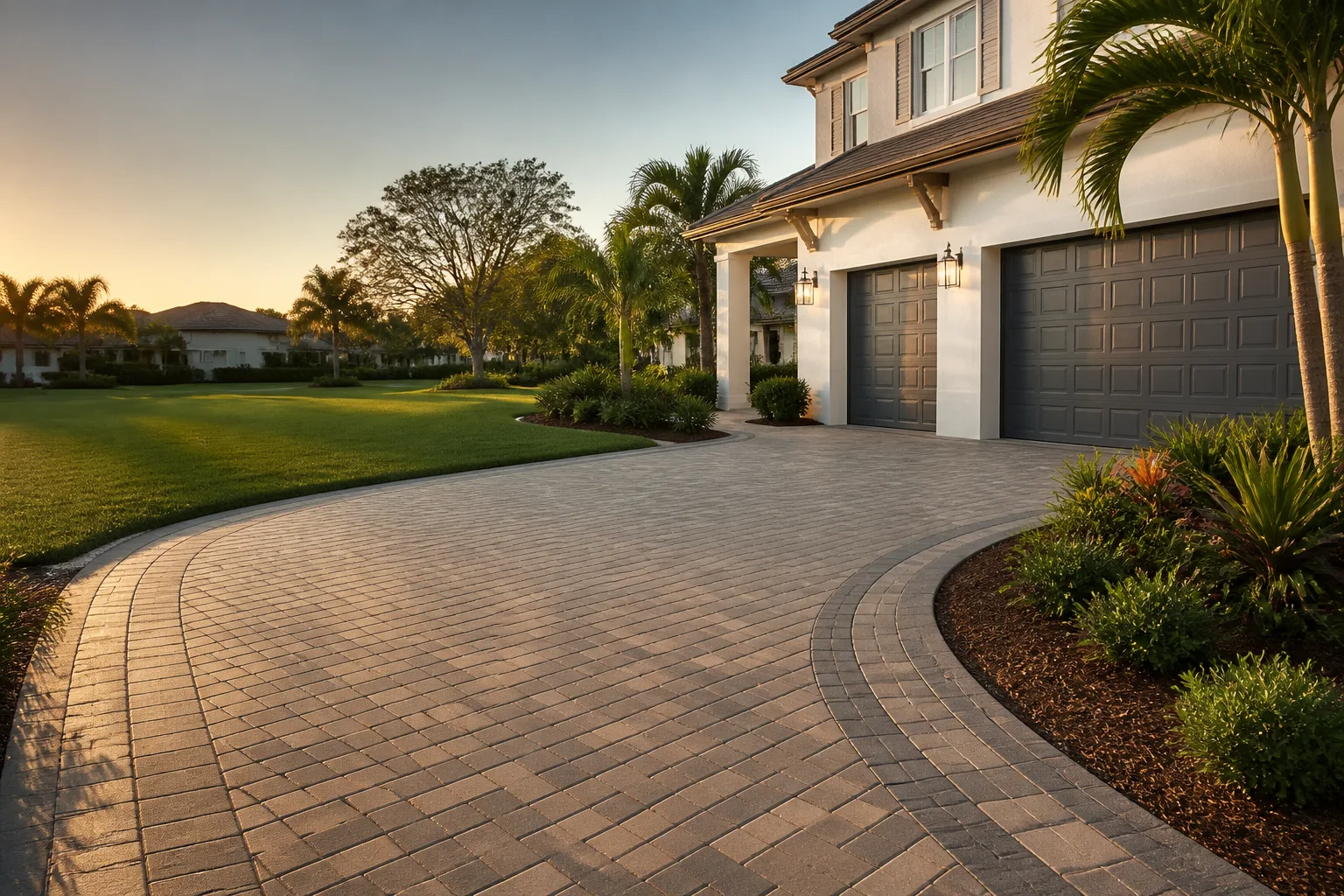
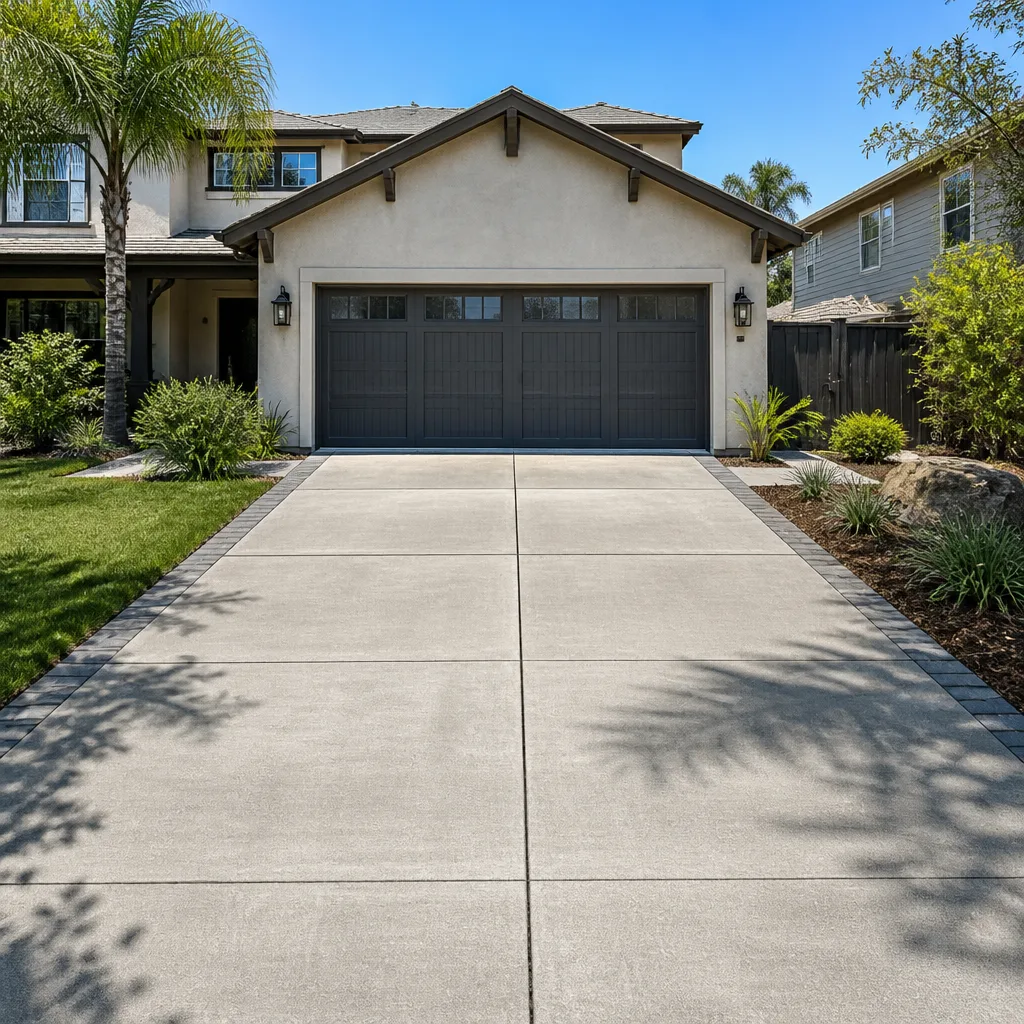
We install Quikrete-compatible driveways and paver systems across Garden Grove, and a full paver driveway here typically runs $7,000 – $18,000, while a concrete driveway installation runs $4,500 – $12,000. Quikrete is a bagged-material brand, not a machine with a model number, so “the part that failed” is almost always the base, the joint sand, or a section of the surface itself. Owners usually find out the same way: a low spot that holds water after a winter rain, a paver that rocks underfoot near the driveway apron, or a hairline crack spreading across a Quikrete-patched slab within a season of the repair.
Quikrete products show up most often in Garden Grove on concrete driveways poured with Quikrete concrete mix, paver joints swept with Quikrete polymeric sand, and small patch or resurfacing jobs. Each one fails on its own schedule, and the fix is different for each.
Key takeaways:
- Quikrete has no serialized driveways or pavers, so we identify the failing system by material and base condition, not a model plate.
- Most Garden Grove failures trace to a thin or wet base, not the Quikrete product itself.
- Polymeric joint sand and localized patching are realistic repairs. A failed pour or a trenched base is a rebuild.
- Written flat price before any work starts, and a 365-Day Done Right Promise on every job.
Which Quikrete Products This Applies To
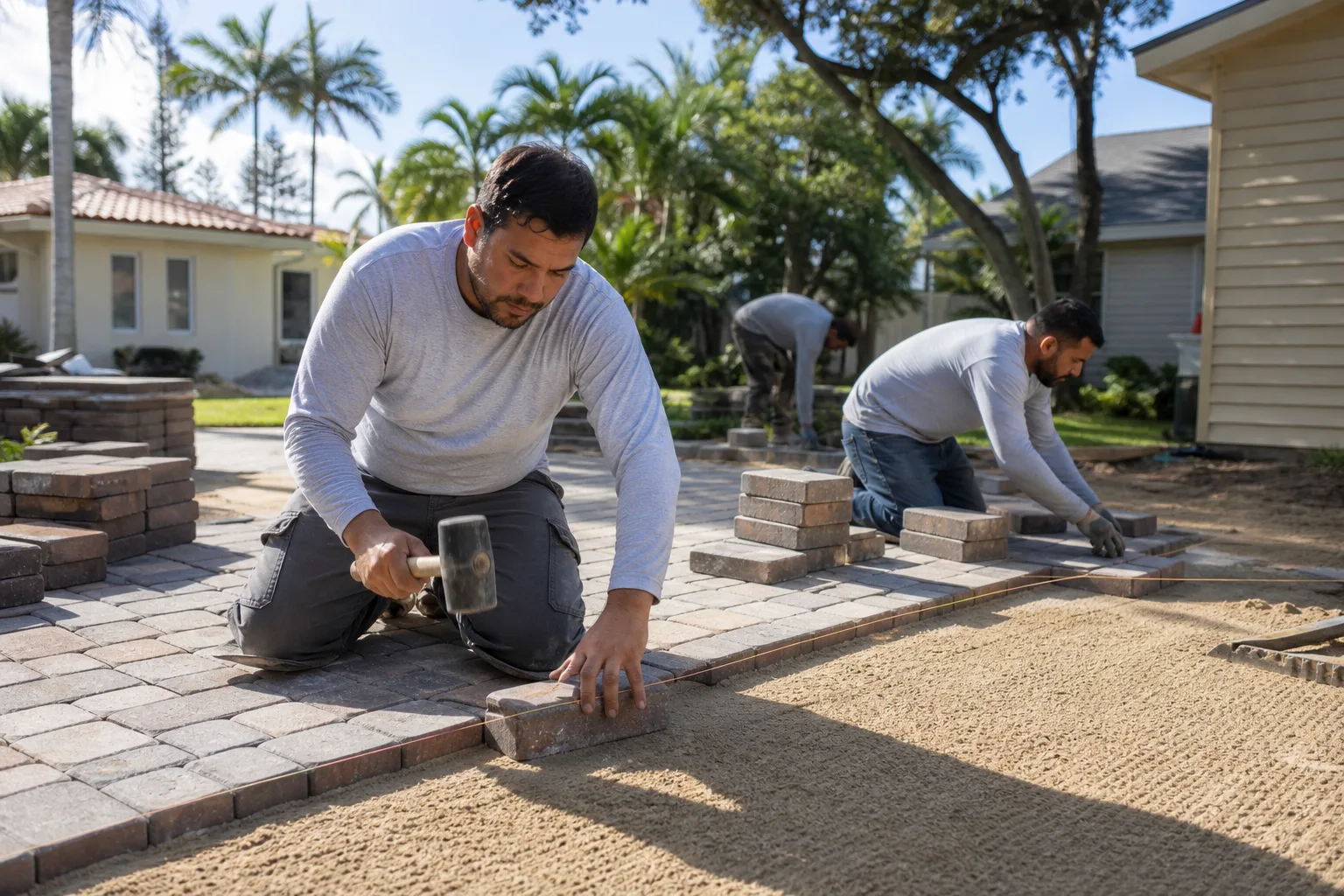
Quikrete doesn’t sell driveways and pavers as numbered models, so matching a “part” means identifying which Quikrete product line touched your surface. The main ones we see in Garden Grove:
- Quikrete Concrete Mix (usually the 80 lb bag, or the 60 lb for smaller pours) – the general-purpose mix for slabs, footings, and setting posts. If your driveway was poured with bagged Quikrete mix in a wheelbarrow batch, it’s likely this one, and strength depends entirely on the water ratio and cure.
- Quikrete High Strength Concrete Mix – a higher-cement-content mix, often used for structural slabs and driveway aprons. A 4,000 psi class mix is the realistic minimum for a driveway that sees cars; a driveway poured with a weaker general mix is where early cracks come from.
- Quikrete Polymeric Sand – swept into paver joints and set with water. This is the joint stabilizer most paver driveways in Garden Grove use. There are fine and coarse grades; coarse is what a driveway with wider joints wants.
- Quikrete Concrete Resurfacer – a thin overlay for worn slabs. This is a repair product, never a structural fix, and it fails fast over a moving crack.
- Quikrete Concrete Crack Seal – the tube-style filler for hairline and working cracks.
To identify what you’re dealing with, check the bag or receipt first. Failing that, look at particle size and joint texture: bagged-mix concrete looks uniform and grey with visible sand grains, while a poured or ready-mix slab is usually smoother. Polymeric sand has a slightly sandy, textured surface in the joints and hardens like a firm sponge when wet.
OEM versus aftermarket matters less here than it does for a seal or a spring. Quikrete’s own products are the OEM; the aftermarket equivalents are competing bagged brands and, for paver joint sand, equal or better stabilized sands. For a driveway, the honest guidance is this: the branded bag rarely decides the outcome. The base prep, mix ratio, and cure decide it. We’re an independent service provider and not affiliated with Quikrete – we install and repair to spec, and we tell you when the brand isn’t the problem.
Styles & brands we work with
- Kitchen remodeling
- Bathroom remodeling
- Home additions & ADU
- Roofing
- Windows & doors
- Driveway & pavers
- Fence
Signs Your Quikrete Driveway & Pavers Is Failing
- Hairline cracks that keep reopening after a patch. A working crack in a slab moves with the seasons, and thin Quikrete Resurfacer or a surface patch bridges it for a month before it returns. The real cause is usually a missing or thin base under that spot, or a slab that was poured too thin.
- Paver joints washing out after rain. Polymeric sand that’s rinsed out or never fully set lets water into the base, and pavers start to rock. Garden Grove’s clay-heavy soil and winter rain push this fast – once joints open, water gets under the pavers and the sand keeps chasing it.
- Ponding water in the middle of the driveway. A low point means the base settled differentially, or a Quikrete pour was finished without the correct slope away from the house. Standing water over a joint starts to soften the base within a season.
- Loose or rocking pavers near the apron. This is the corner where car weight, the street slope, and soil movement stack up. It almost always means insufficient base depth (a driveway wants roughly 4 to 6 inches of compacted base, not the 1 to 2 inches some patios use).
- Spalling or a chalky, flaking surface. A Quikrete slab mixed too wet, or cured too fast in summer heat, loses surface integrity. The top layer flakes and exposes aggregate. Patching over spalling without addressing the mix and cure repeats the problem.
See the difference
 Before
 After
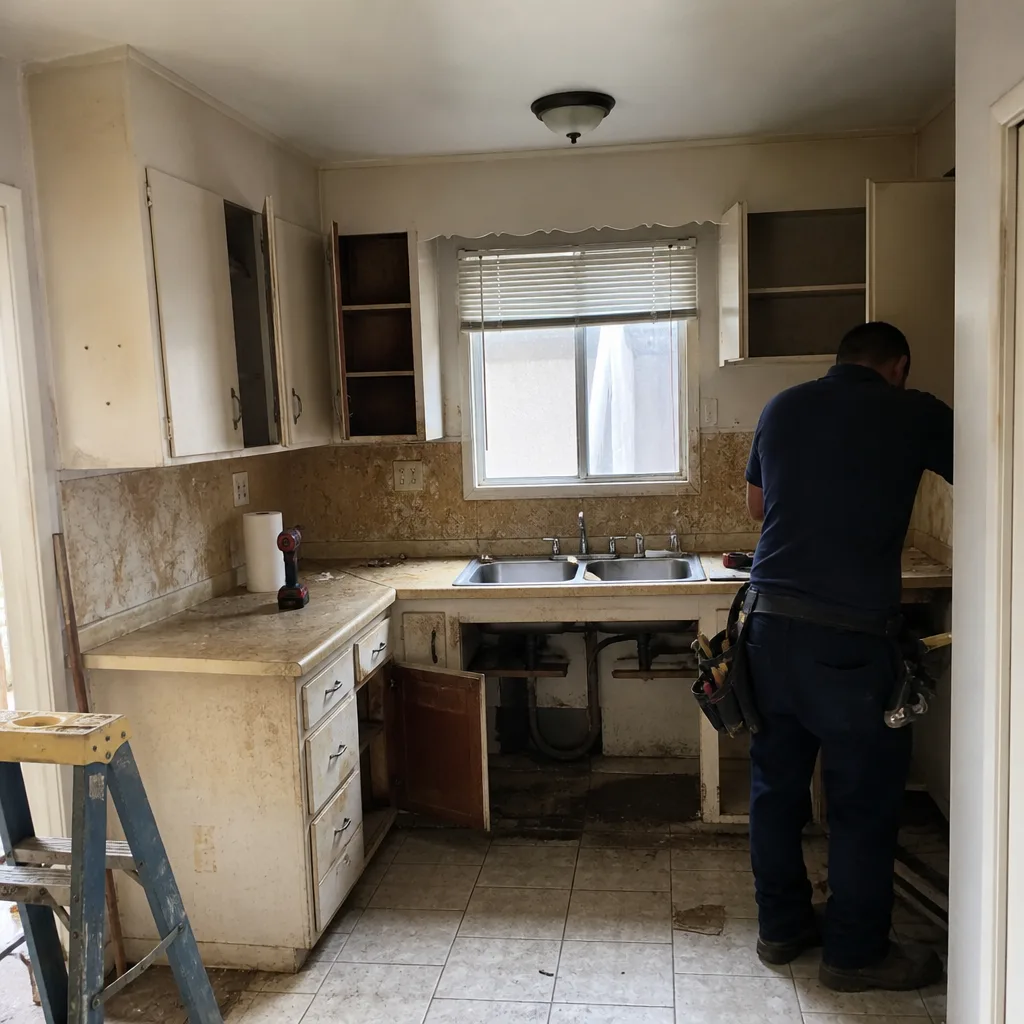 Before
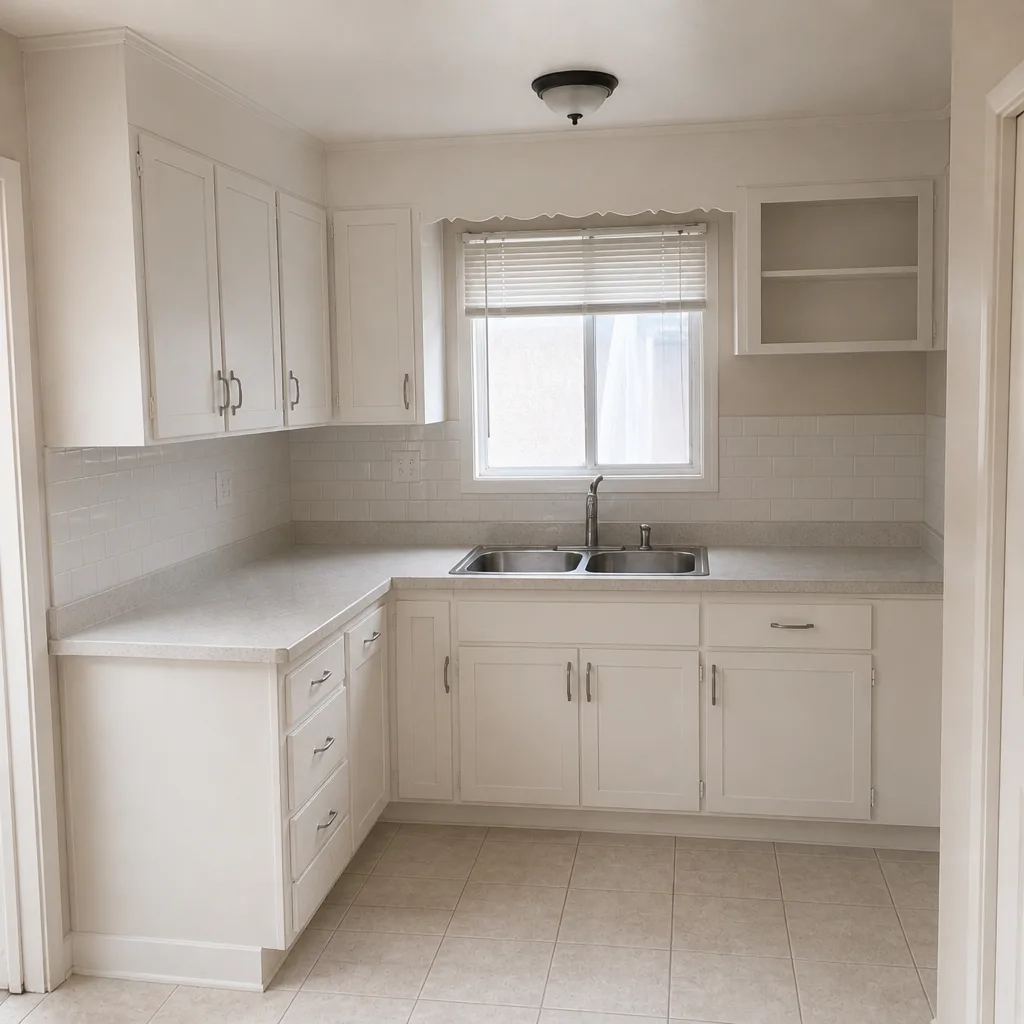 After
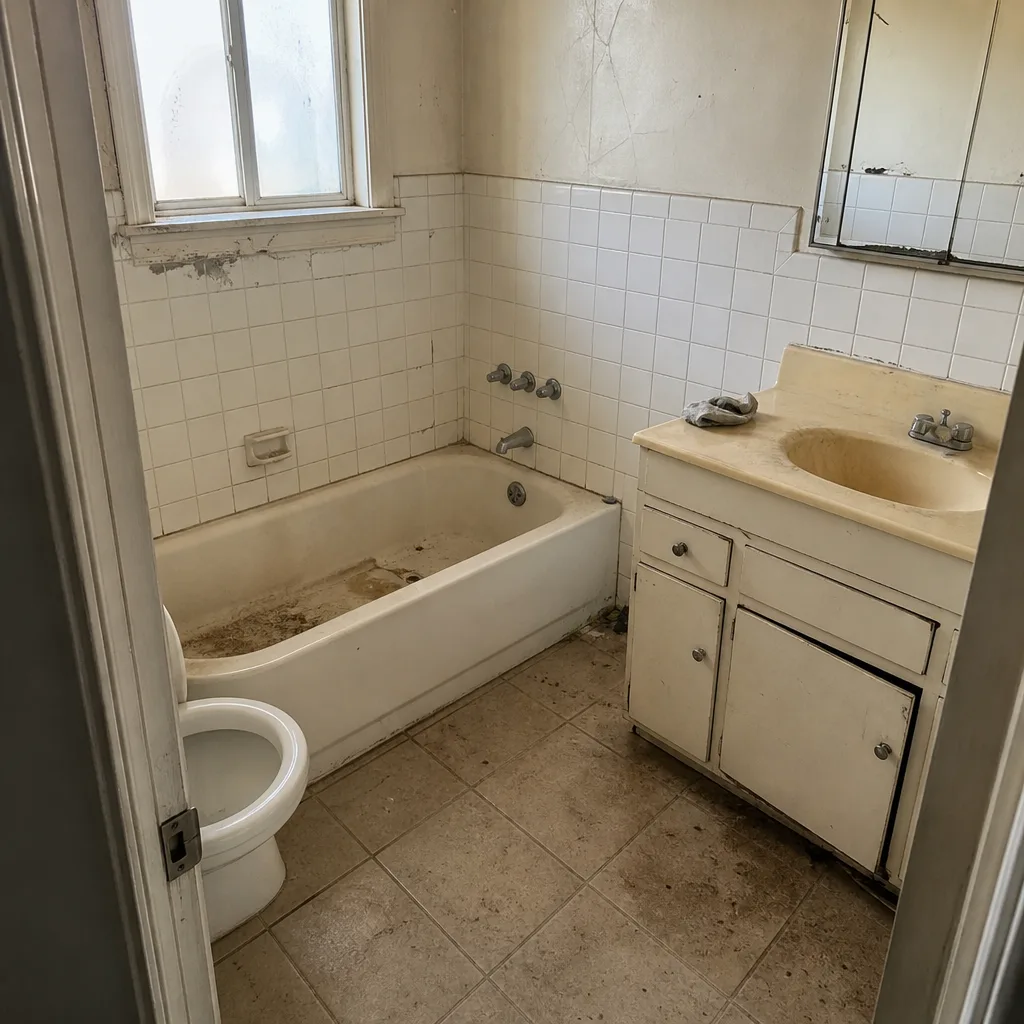 Before
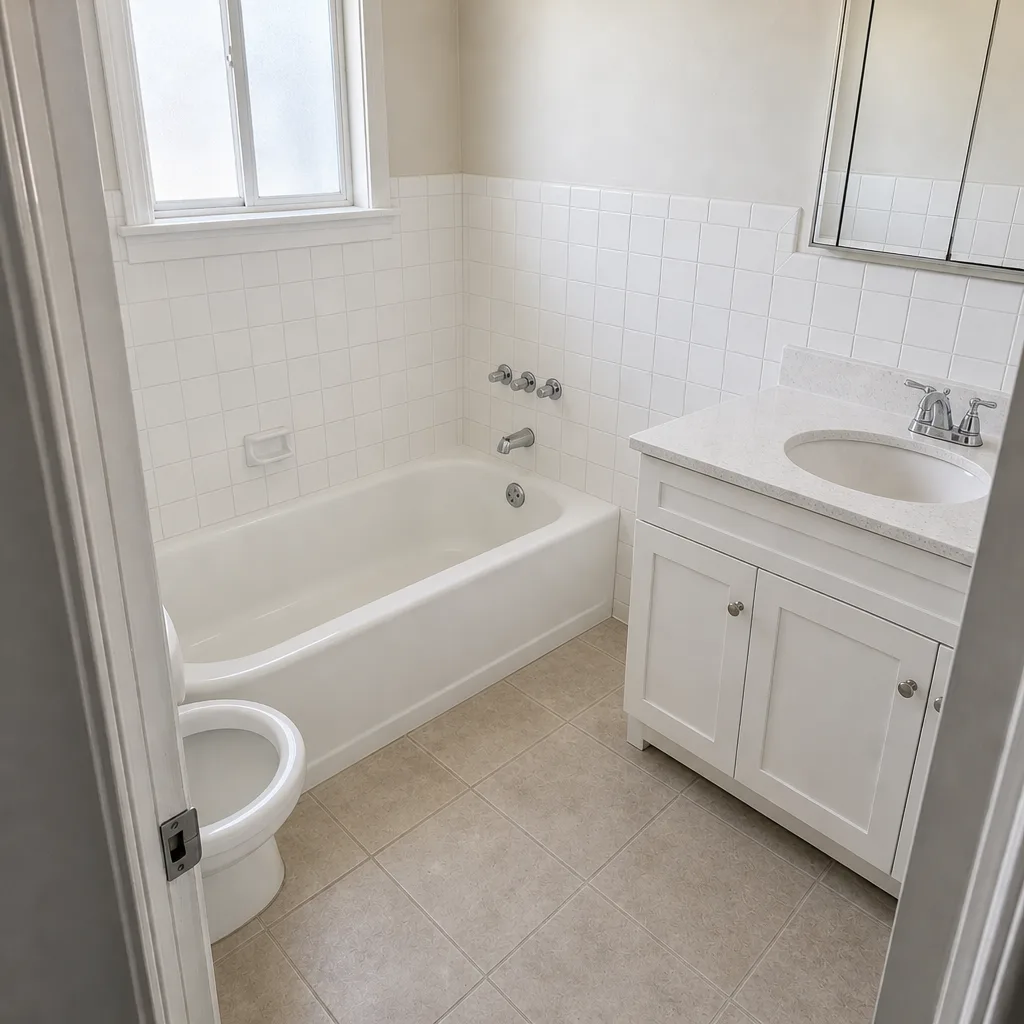 After
Replacement Cost & What’s Included
Here’s the honest price picture for Garden Grove, calibrated to what we actually write on quotes:
| Scope | Installed price range |
|---|---|
| Concrete driveway installation (Quikrete-compatible, new pour) | $4,500 – $12,000 |
| Paver driveway installation | $7,000 – $18,000 |
| Full driveway replacement (remove and rebuild) | $5,000 – $14,000 |
| Paver patio installation | $3,500 – $11,000 |
| Driveway sealing | $250 – $700 |
What drives the range: square footage, base depth and condition, whether demolition and haul-off are needed, and paver grade. Material is often the smaller number. The price includes the base prep, the mix or paver set, the compacted joint sand, and cleanup with a documented photo record of what we found and what we installed.
Labor and parts are quoted as one flat written number, not an hourly estimate that drifts. The written scope and warranty are in your hand before work starts, and a signed change order is required before any cost moves. Coverings like KraftMaid, Cambria, and Silestone come up on landscaping projects around garden walls – same rule applies across all seven trades: written price first, always. The 365-Day Done Right Promise covers the craftsmanship, so a re-widened joint or a settled paver gets corrected.
DIY or Call Us?
For a paver driveway or a Quikrete concrete pour, the honest split looks like this:
- Safe to check yourself: bag and receipt identification, joint sand condition, puddle locations after rain, paver rocking by hand, and hairline crack location. No tools needed.
- Where DIY usually goes wrong: base depth and compaction. Someone re-lays pavers over a shallow bed and the same ruts reappear. Re-sweeping polymeric sand without fixing the drainage repeats the washout. Re-pouring a Quikrete slab at the wrong water ratio gets another spalled surface and a fresh crack.
- The one honest safety point: fresh concrete and Quikrete mix are caustic – prolonged skin contact causes chemical burns, and dry mix dust is a respiratory irritant. If you’re mixing a large batch in a wheelbarrow for a section of driveway, do it with gloves, eye protection, and a dust mask. A driveway scale pour is a team job, and a bad base underneath a good pour is a lost weekend with nothing to show.
Call (888) 303-8980 for a free estimate – written flat price, no pressure.
FAQs
A properly mixed, correctly based Quikrete concrete driveway typically lasts 20 to 30 years in Garden Grove’s climate, provided the base is compacted and slope drains. Quikrete polymeric sand in paver joints should be refreshed every 3 to 5 years, sooner if the driveway faces full sun and winter rain. If the base is thin or the mix was wet, the surface will show cracks within a few seasons. We assess the base, not just the surface, on any estimate.
Often yes – a joint sand refresh, a localized pour patch on a stable slab, or a full driveway sealing for a surface with minor cracks can be repaired without replacement, and driveway sealing alone runs $250 – $700. If the crack is a working crack, or pavers rock because the base has settled, patching is a temporary measure and we say so. We’ll give you the repair number and the replacement number side by side. Call (888) 303-8980 and we’ll look at both.
A paver driveway installation typically takes 3 to 6 working days; a concrete pour takes 2 to 4 days for prep and pour, plus cure time before you drive on it. Curing is the part no one can rush – a Quikrete concrete driveway needs roughly 7 days before vehicle traffic for a full-strength cure, longer if it’s cool. We schedule around the weather, and the timeline is written into the quote. Call (888) 303-8980 to get a start date and a written price.
We source Quikrete products and pavers through local supplier channels and confirm the specific grade before any work begins, so the concrete mix class and the joint sand grade match your driveway’s spec. We’re an independent service provider, not affiliated with Quikrete, and there’s no brand upcharge – we name the spec in the quote so you can compare line by line. The photo record shows the bags and the mix used. Call (888) 303-8980 for a free estimate, and we’ll review any competitor’s quote line by line at no charge.
Written by the team at Rowan Construction Group Garden Grove, serving Garden Grove and nearby areas.