Last updated November 17, 2026





Free written scope consultation - allowances, timeline, and change-order rules on paper before a single trade is scheduled
Bathroom Remodeling Warning Signs Every Homeowner Should Know
A soft spot in front of a shower door isn’t a tile problem. It’s subfloor rot, and by the time the floor gives underfoot, the damage usually reaches 12 to 24 inches past what you can feel. The pan-and-tile replacement that looked like a $2,000 job is suddenly a $6,000 to $9,000 job. In our experience across Garden Grove, that soft spot was there for a year and a half before anyone picked up the phone. This guide names the seven signs that predict a bathroom remodel going sideways, explains the failure mechanism behind each one, and puts a dollar figure on what’s likely hiding behind the wall when you see it.
Quick Answer
The main bathroom remodeling warning signs are soft or springy floors, white powder on grout lines, peeling ceiling paint, a toilet that rocks, grout staining that returns after cleaning, caulk gaps at the tub-wall joint, and doors or windows that have swollen shut. Each points to moisture or structural movement, and each one changes a remodel’s scope and budget before demolition ever starts. Catching them during the estimate is the difference between a planned project and an emergency one.
Styles & brands we work with
- Kitchen remodeling
- Bathroom remodeling
- Home additions & ADU
- Roofing
- Windows & doors
- Driveway & pavers
- Fence
Table of Contents
- The Seven Warning Signs and What Each One Means
- How to Inspect Your Own Bathroom Before Getting Bids
- Cosmetic vs. Structural: What Actually Changes the Price
- Red Flags in Contractor Behavior During the Estimate
- Why Garden Grove Homes Show These Signs Differently
- Why a Written Scope of Work Protects You
The Seven Warning Signs and What Each One Means
These aren’t cosmetic quirks to live with. Each one is a symptom of a mechanism already at work under the surface, and the repair cost depends entirely on how long it’s been running.
1. Soft or springy floors
This is subfloor rot, usually from a slow leak at the shower pan, the toilet base, or a supply line. Particleboard and plywood lose structural strength once saturated, and a floor that flexes underfoot is soft across a wider area than it feels. Repair often means replacing the subfloor, the pan, and the surrounding tile: typically $6,000 to $9,000 once the rot is confirmed.
2. White powder on grout lines (efflorescence)
Efflorescence is mineral salt pushed to the surface as moisture migrates through the substrate and evaporates. Seeing it on grout lines or tile edges means water is moving through the assembly, not sitting on top of it. That usually points to a failed waterproofing membrane behind the tile, and re-tiling without fixing the membrane puts you right back here in a few years.
3. Peeling paint on the ceiling
Bathroom ceilings peel for one reason in almost every case: the exhaust fan isn’t moving air, or the duct has disconnected in the attic. A fan rated for the room’s cubic footage, vented to the exterior, keeps surface humidity below the level where paint fails. When the duct has slipped off its fitting, moisture condenses on the ceiling and the paint lifts within a season.
4. A toilet that rocks
Movement at the base means the wax ring has failed or the floor flange is cracked or rotted. Every flush pushes a little water into the subfloor instead of the drain. A rocking toilet is a subfloor problem in progress, and by the time the floor around it feels soft, the flange and the decking underneath usually need replacement.
5. Grout staining that returns after cleaning
If you scrub the grout and the dark lines come back within weeks, the discoloration is coming from behind the tile, not off the surface. That’s mold or organic growth feeding on moisture trapped in the substrate. Cleaning treats the symptom. Finding and stopping the water source treats the cause.
6. Caulk gaps at the tub-wall joint
Caulk fails for two reasons: it aged out, or the tub pan is moving. A pan that flexes when you step in means the installation didn’t properly support it or set it in a mortar bed, and the gap will keep reopening no matter how many times you re-caulk. This one is worth flagging to a contractor, because pan movement is a scope item, not a maintenance item.
7. Doors or window frames that have swollen shut
Wood swells when it absorbs moisture. A bathroom door that drags or a window that won’t close in the same room means moisture has migrated into the framing, not just the surface finishes. Structural moisture in framing is the most expensive sign on this list because it changes both the timeline and the budget once the wall is opened.
How to Inspect Your Own Bathroom Before Getting Bids
You can find most of these signs in 20 minutes with three tools: a flashlight, a screwdriver, and a moisture meter. The moisture meter is the one worth buying. Models like the General Tools MMD4E run $20 to $35, and it takes the guesswork out of “is this damp or does it just look damp.”
- Check the floor around the toilet and shower with the meter. Push the pins into the floor covering (not through tile) at the base of the toilet, along the shower curb, and in front of the shower door. A reading above 15 to 20 percent on wood subfloor warrants a closer look.
- Tap-test the tile with the screwdriver handle. A hollow, dull thud instead of a sharp click means the tile has debonded from the substrate. Loose tile over a wet membrane is a sign the assembly has been wet for a while.
- Shine the flashlight along the base of the toilet and tub. Look for staining, mineral deposits, or a dark tide line on the caulk or baseboard. Water leaves a mark every time.
- Run the exhaust fan and hold a tissue to the grille. If the tissue doesn’t stick, the fan isn’t pulling air. Check the attic side if you can safely access it, and confirm the duct runs to the exterior.
- Open and close the bathroom door and window slowly. Note where they stick. A door that drags only near the bottom is a moisture pattern, not a hinge problem.
- Photograph everything you find. A dated photo record is your best tool in a conversation with any contractor, and it’s the same practice we build into every visit.
Cosmetic vs. Structural: What Actually Changes the Price
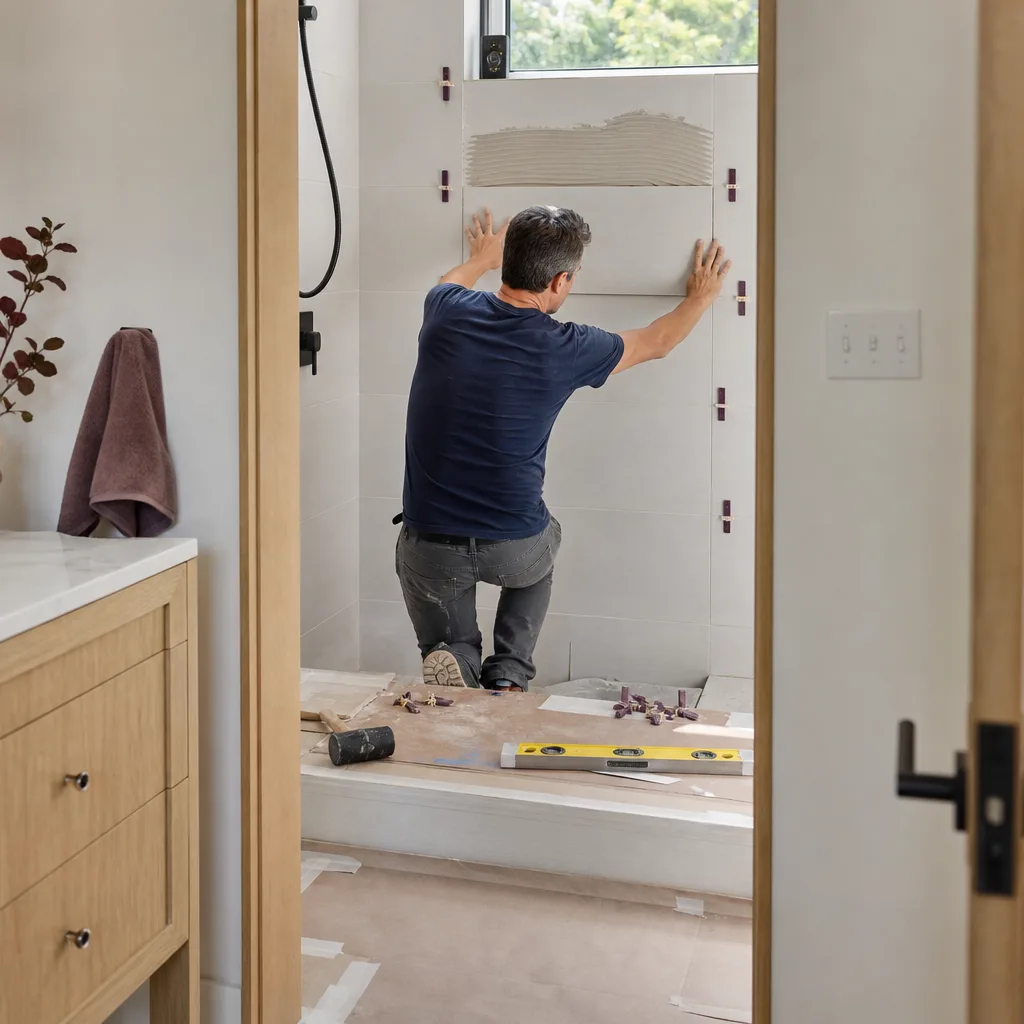
The single most useful distinction in bathroom remodeling is between a surface issue a remodel can fix and a concealed structural issue that changes the scope. Cosmetic problems are things you can see and touch: faded caulk, worn grout, a dated vanity, a chipped tile. Structural problems are underneath: rot, failed membranes, disconnected ducts, cracked flanges, rotted framing.
- Cosmetic: Recalking a stable tub-wall joint, replacing a vanity, re-grouting dry grout. These sit inside a normal remodel budget.
- Structural: Replacing subfloor, rebuilding a shower pan and membrane, rerouting a disconnected vent duct, replacing a rotted flange. Each one adds days and dollars.
- The difference in practice: A cosmetic-only bathroom refresh in Garden Grove typically lands in the $8,000 to $15,000 range. A bathroom with confirmed subfloor rot and a failed pan pushes into the $18,000 to $30,000 range once the substrate and framing are restored.
The reason this matters: contractors who quote before opening anything are quoting the cosmetic number. The structural number is only knowable once someone looks, and the only honest way to manage that is a written scope of work that says what’s included, what’s excluded, and how a discovered structural condition gets priced and approved before work continues. That’s Clause 1 of the Haven Standard: the price is written before anyone starts. With 4,000-plus projects delivered, we’ve watched the alternative play out many times, and it almost always ends in a change order the homeowner didn’t see coming.
Red Flags in Contractor Behavior During the Estimate
The signs under the floor are half the story. The other half is how a contractor behaves when you ask about them. Three behaviors should stop the conversation cold.
- They quote without opening anything. If a contractor hands you a firm number for a bathroom they’ve only looked at from the doorway, they’re either guessing or planning to discover the rest later. A written price is only meaningful when it’s tied to a written scope, and the scope requires a real look at the substrate, the pan, and the venting.
- They discourage you from pulling a permit. Permits exist to protect you: the inspector verifies the waterproofing, the plumbing, and the electrical before the walls close. Anyone who offers to skip the permit to “save you time” is transferring risk onto you. On a bathroom remodel, that’s not a small favor.
- They can’t name the waterproofing membrane. Ask directly: “What membrane are you using behind the tile?” A professional answers in one sentence and can describe how it’s installed. A contractor who can’t name it is going to build the shower the old way, with moisture going into the substrate instead of the drain.
One more, softer sign: a contractor who says “call for a quote.” A written price before any work starts isn’t a favor, it’s a basic standard of doing business. We don’t offer a phone-only estimate, and we don’t know why anyone would.
Why Garden Grove Homes Show These Signs Differently
Garden Grove’s housing stock skews toward the 1950s to 1970s, and the plumbing, subflooring, and drain systems from those decades change the warning-sign profile in ways a newer home never shows. Three patterns come up again and again in our Garden Grove projects.
- Galvanized supply lines. Homes from these decades often still have galvanized steel water lines. They corrode from the inside out, and by the time the pressure drops or the water runs brown, the pipe is narrowing itself shut. A remodel is the moment to address the supply lines, because the walls are open anyway.
- Single-layer subfloors. Many of these homes were built with a single layer of subfloor under the tile, with no decoupling or waterproofing between the tile and the wood. That assembly was never designed for the shower rigors of a modern household, and it’s why rot shows up faster here than in a newer build.
- Original cast-iron drain stacks. Sixty-plus years of use leaves cast-iron drains scaled and, in some homes, cracked at the joints. A rocking toilet or a slow drain in a Garden Grove bathroom is worth investigating at the stack, not just the flange.
The climate matters less than the age of the assembly. Garden Grove’s dry summers don’t undo the effect of a shower running every day for six decades. If your home is one of the older stock near downtown Garden Grove or along the Lampson corridor, treat any single warning sign as a prompt for a professional look, not a “wait and see.”
Why a Written Scope of Work Protects You
Every warning sign on this list has a dollar amount attached, and that number is only honest if it’s written down before demolition. A written scope of work does three things. It names exactly what will be removed and replaced, including the substrate and the membrane. It names what’s excluded, so a discovered condition is a conversation rather than a surprise. And it names how changes get priced: no work proceeds on a change until a change order is signed and dated. That’s the discipline that has kept our projects within a few percent of the agreed cost across more than 4,000 jobs.
We bring a moisture meter and a flashlight to the estimate. We photograph what we find and leave you with that record, because “say what we found” is not a slogan, it’s the difference between an estimate and a guess. If you’re comparing bids, we’ll review a competitor’s written estimate line by line for free, and we’ll tell you what’s missing from it. Sourcing from brands like Kohler and Toto for fixtures, and KraftMaid and Wellborn for cabinetry, gives the written quote honest numbers instead of padded ones, and it gives you a page you can actually compare.
If your bathroom is part of a larger scope, our Rowan Construction Group Garden Grove home page covers the full range of trades we work in, and our Home Additions & ADU in Garden Grove page explains how a bathroom remodel fits into an addition. The warning signs don’t stall because the project is bigger; they just get more expensive to ignore.
Common Mistakes to Avoid
- Re-caulking over a moving tub pan. The gap comes back because the cause was never addressed. Fixing the caulk without fixing the pan movement wastes money twice.
- Re-tiling without a membrane. New tile over a failed waterproofing layer will look new for a year and then start showing the same stains. The membrane is the part you can’t see and the part that matters most.
- Accepting a phone-only quote. A number without a written scope is not a bid, it’s a starting point for change orders. Ask for the written version, every time.
- Skipping the permit to save time. A permit means the waterproofing and plumbing get inspected before the walls close. In Garden Grove’s older homes, that inspection is the cheapest insurance on the job.
- Ignoring a single warning sign because the others are fine. One soft spot, one rocking toilet, one swollen door is enough to warrant a professional look. The signs arrive one at a time.
- Hiring on personality instead of documentation. The estimate should describe the substrate, the membrane, the venting, and the change-order process. If it doesn’t, it’s a sales pitch, not a scope.
- Waiting for the floor to feel soft before calling. Subfloor rot extends 12 to 24 inches past the soft spot, and the tile and pan replacement that could have been a $2,000 job becomes $6,000 to $9,000. The sign was there for months before the floor gave.
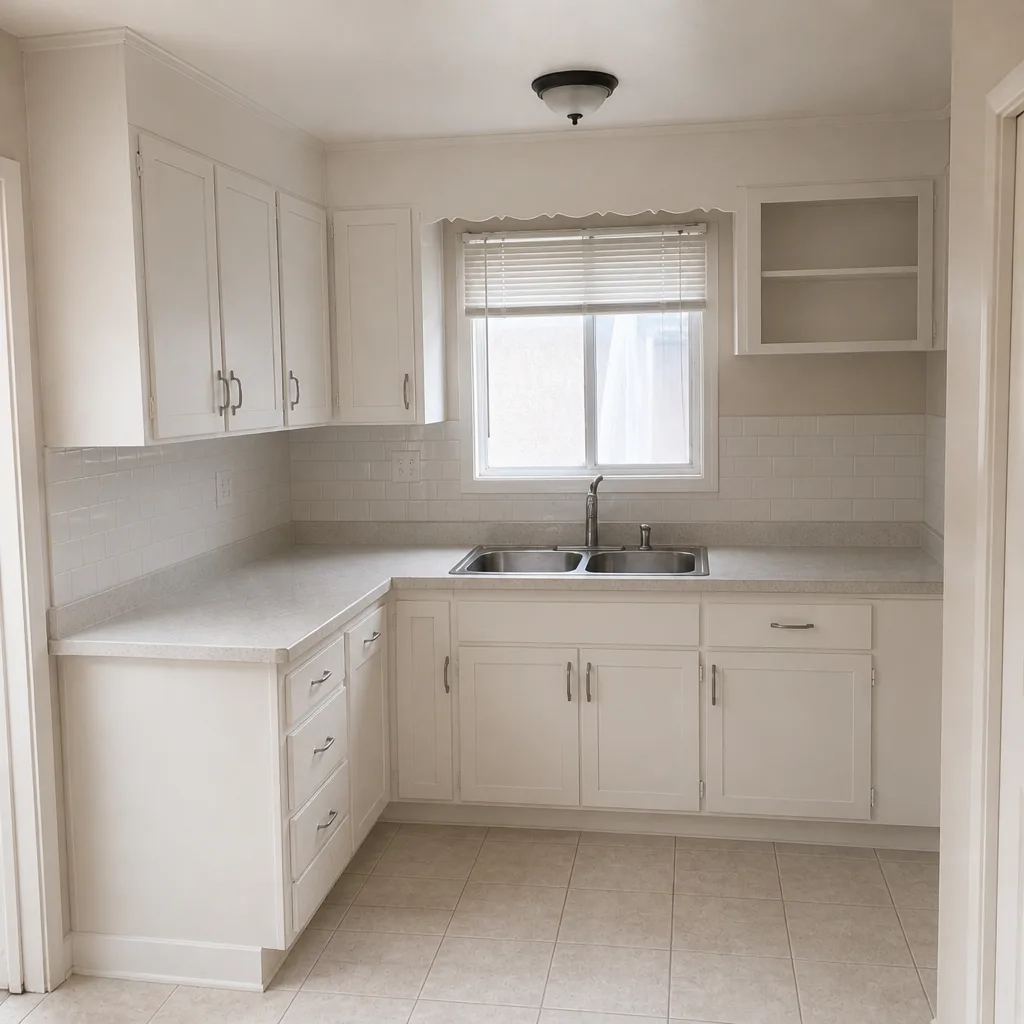
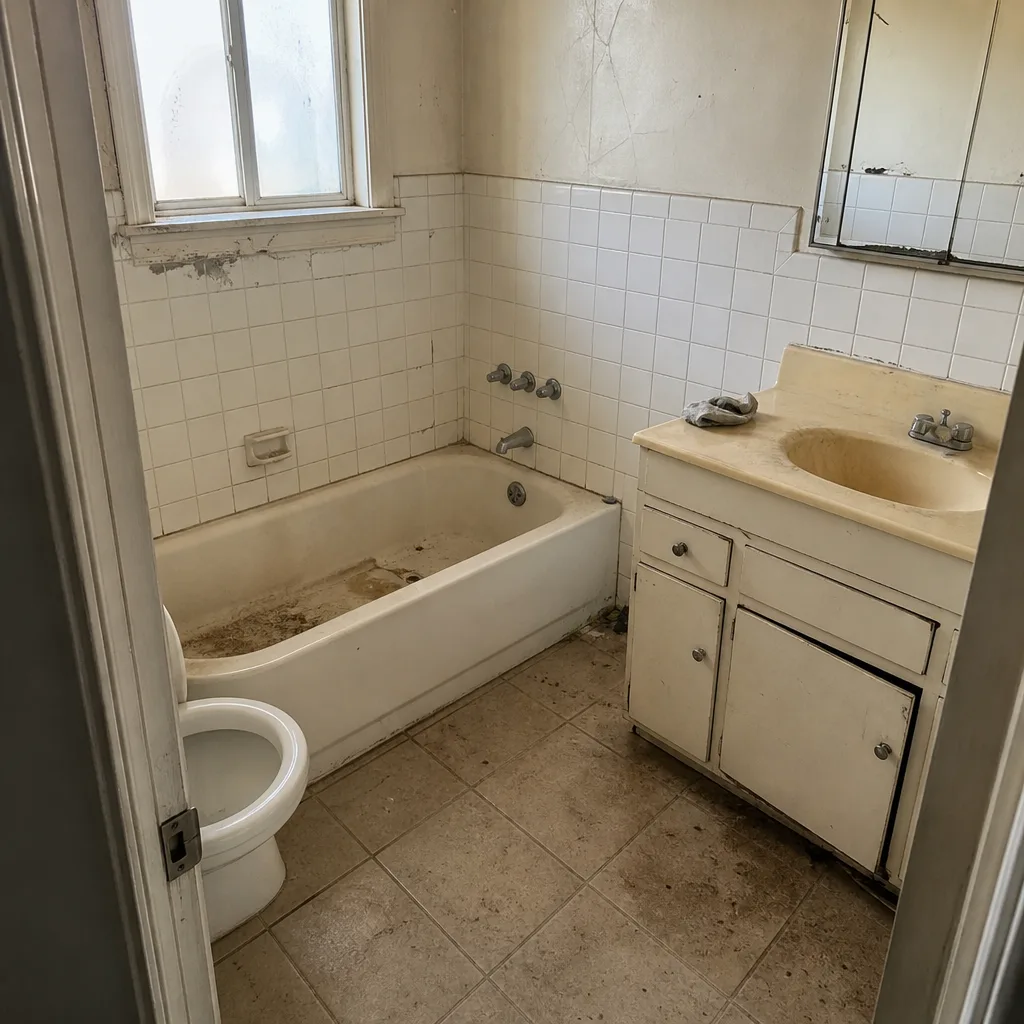
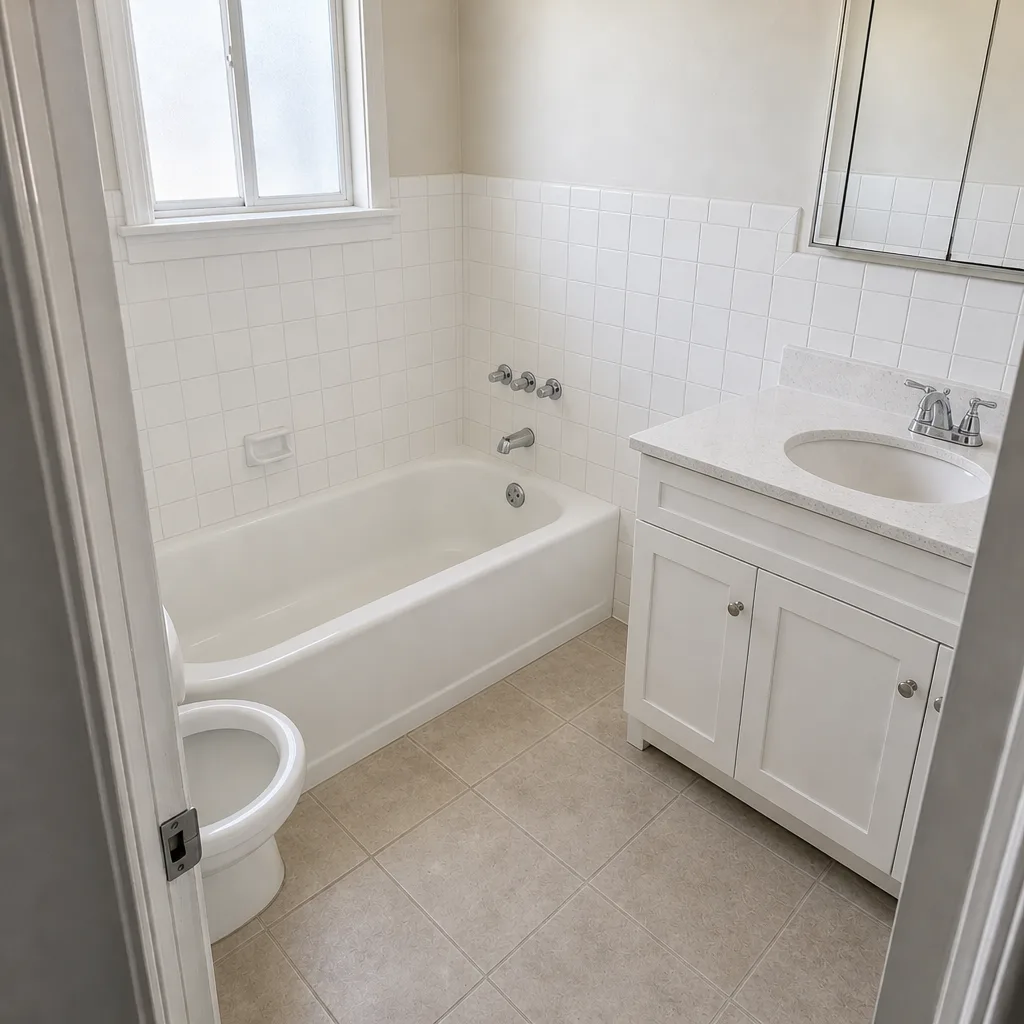
See the difference
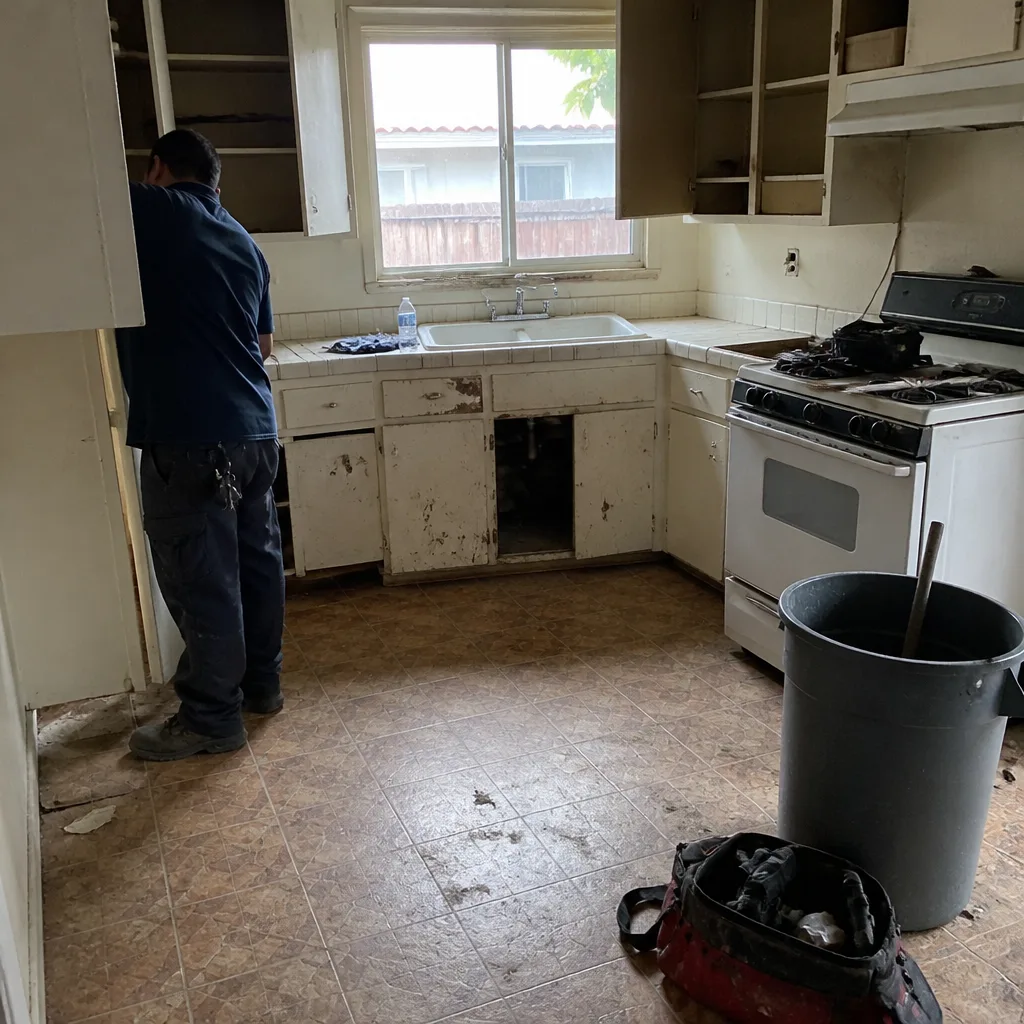 Before
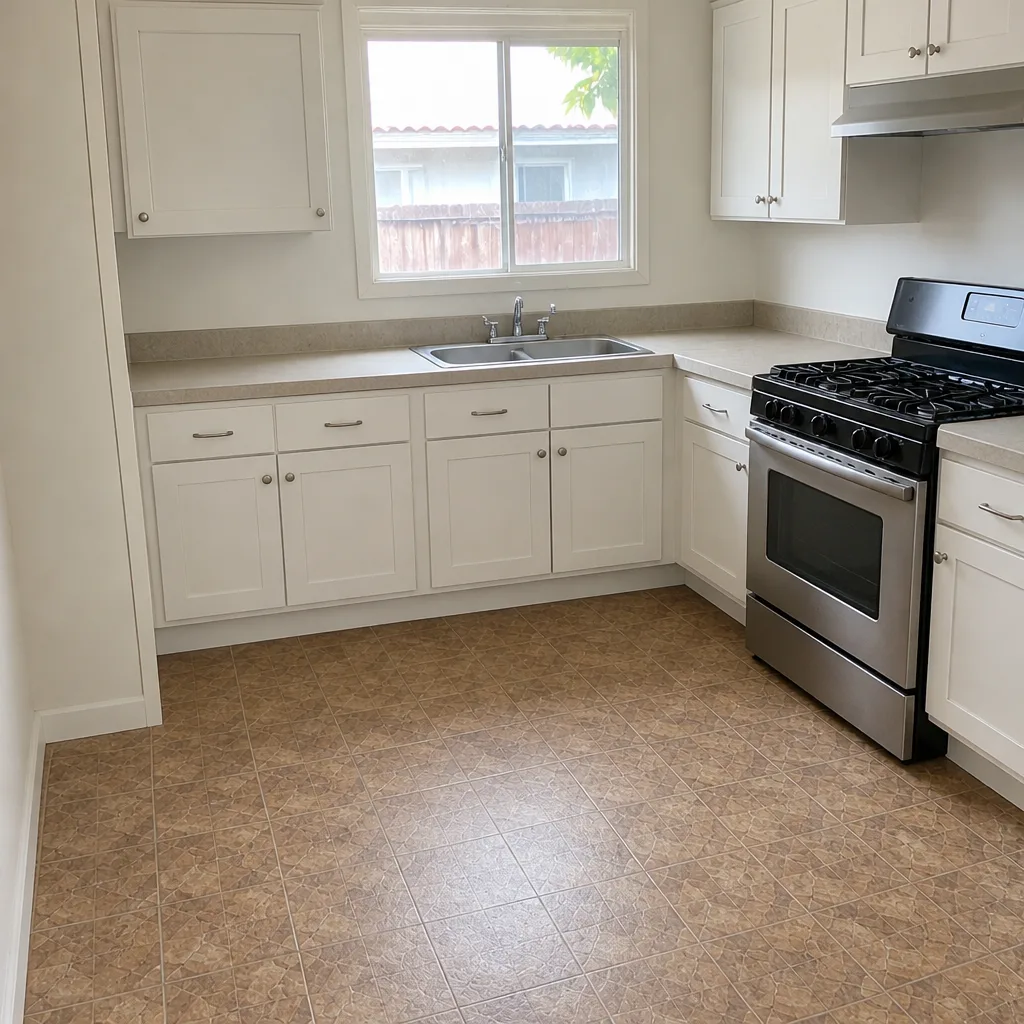 After
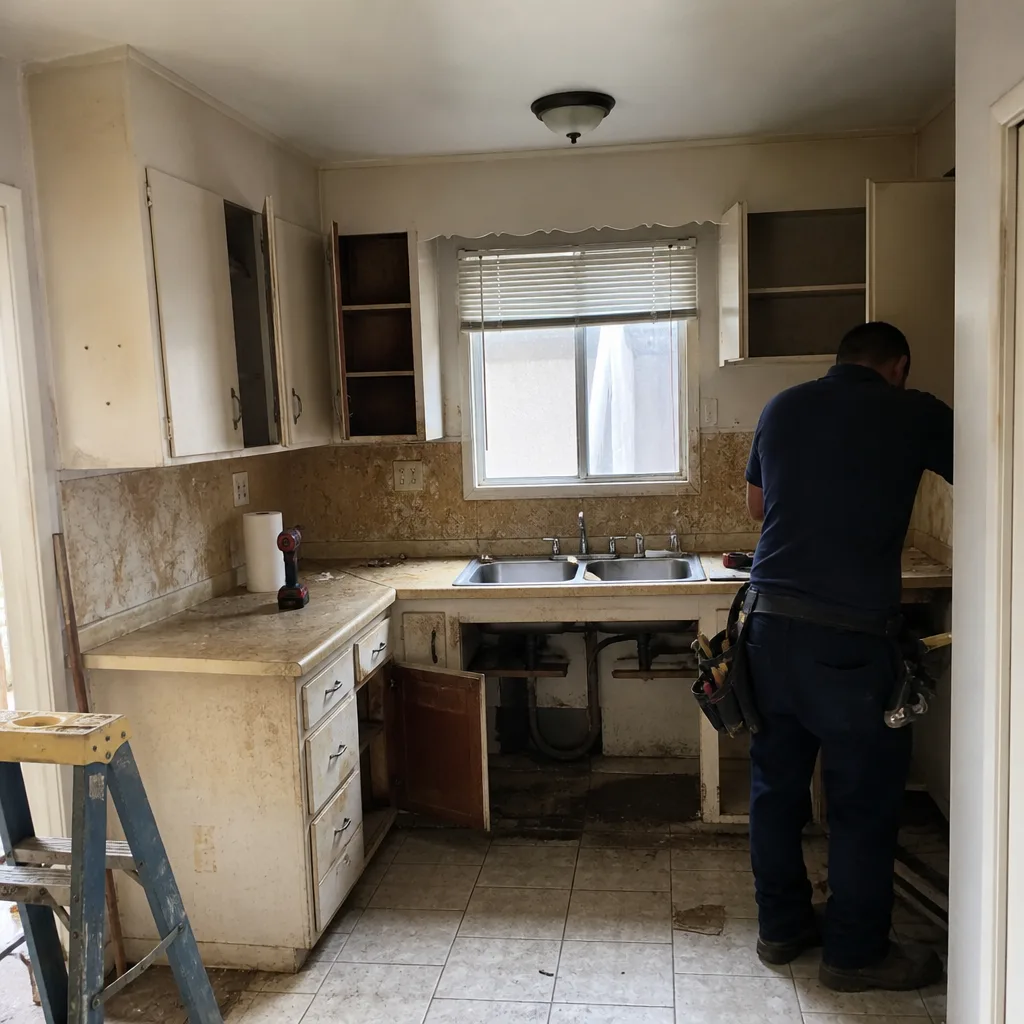 Before
 After
 Before
 After
When to Call a Professional
Call a professional the moment you see any of these signs and can’t explain it: a floor that flexes, white powder on grout, a toilet that rocks, ceiling paint that peels, or a door that has swollen shut in the bathroom. Call sooner if two or more show up together, or if your Garden Grove home was built before 1980 and still has galvanized lines or a single-layer subfloor. Those conditions make the failure mechanism faster and the repair larger. A professional inspection at the estimate stage runs you nothing if you get a written quote, and it can save you thousands in scope creep once demolition starts. Rowan Construction Group Garden Grove offers free estimates in Garden Grove. Call (888) 303-8980.
Frequently Asked Questions
Efflorescence, the white powder on grout lines, is the sign most often missed because it looks like a cleaning problem. It actually means moisture is migrating through the substrate, and the repair involves the membrane, not the surface. Call (888) 303-8980 for a free estimate if you see it.
No, and this is the mistake that turns a cosmetic job into a structural one. Soft flooring means the subfloor has lost strength, and new tile over a compromised substrate will crack or debond. The subfloor has to be repaired first, and that’s a scope-of-work conversation before any demo starts.
A cosmetic refresh typically runs $8,000 to $15,000, while confirmed subfloor rot and a failed pan push the scope into the $18,000 to $30,000 range. The exact number depends on what’s found once the subfloor is opened. Call (888) 303-8980 to schedule a free estimate, and we’ll put the price in writing before anything is removed.
Yes, most bathroom remodels that move plumbing, electrical, or the shower assembly require a permit and inspection. Permits are how the waterproofing and rough plumbing get verified before the walls close. Any contractor who discourages the permit is transferring risk to you, not saving you time.
Peeling ceiling paint almost always means the exhaust fan is undersized or its duct has disconnected in the attic. The fan is running, so the room feels ventilated, but moisture is still condensing on the ceiling. It’s fixable, and it should be fixed before the ceiling is re-painted.
The 1950s to 1970s housing stock common in Garden Grove often has single-layer subfloors, galvanized supply lines, and original cast-iron drains, and none of those were designed for the shower use of a modern household. The assembly is older and less water-resistant, so the same sign appears sooner. Call (888) 303-8980 for a free estimate that accounts for the home’s actual build.
The Bottom Line
Every sign in this guide points to one of two mechanisms: moisture where it shouldn’t be, or movement that shouldn’t be there. Soft floors, white powder on grout, peeling ceilings, rocking toilets, recurring stains, caulk gaps, and swollen doors all trace back to those two. The cost of catching them at the estimate is zero; the cost of catching them after demolition runs $6,000 to $9,000 on a single shower alone. Get a written scope, name the membrane, pull the permit, and insist on a price before the work begins. That’s the standard, and in Garden Grove it’s the difference between a remodel and a repair project.
Written by the team at Rowan Construction Group Garden Grove.