Last updated November 17, 2026

Free written scope consultation - allowances, timeline, and change-order rules on paper before a single trade is scheduled
Bathroom Remodeling Troubleshooting: Common Problems and How to Fix Them
Grout cracking at the base of a shower wall within a year of installation almost never means the grout failed. It means the mud bed beneath the tile was mixed or cured incorrectly, and the grout is showing movement that starts inches below the surface. That distinction matters because it separates a $40 caulk repair from a $4,000 tear-out. In this guide we walk through the five post-remodel failures we see most often in Garden Grove, show you how to diagnose each one before you spend a dollar, and explain which are legitimate warranty claims against the installing contractor and which are owner-maintenance issues. You will also learn what documentation you should already have from your original remodel, and what its absence costs you.
Quick Answer
Most bathroom remodel problems that surface six to eighteen months after completion trace back to three installation errors concealed under the finished surface: inadequate waterproofing membrane coverage, incorrect mortar bed thickness, or a poorly sloped shower floor. Diagnosis starts with observation – where water pools, when cracks appear, how fast a drain empties – before any contractor is called. Repair costs run from under $50 for owner-appropriate fixes to several thousand dollars when walls or plumbing need to be opened, and warranty coverage depends on whether the cause is an installation defect, an owner-maintenance failure, or a manufacturer defect.
Styles & brands we work with
- Kitchen remodeling
- Bathroom remodeling
- Home additions & ADU
- Roofing
- Windows & doors
- Driveway & pavers
- Fence
Table of Contents
- Why Is My Grout Cracking After the Remodel?
- Why Does Mildew Keep Coming Back?
- Why Is My Shower Drain Slow?
- Why Are Wall Tiles Coming Loose?
- Why Is the Toilet Running After Installation?
- Is This a Warranty Claim, Owner Maintenance, or Manufacturer Defect?
- What Documentation Should You Have From the Original Remodel?
- Common Mistakes to Avoid
Why Is My Grout Cracking After the Remodel?
Grout cracking is almost always a symptom of movement, not a grout problem. Three causes account for nearly every case we investigate: substrate deflection (the wall or floor flexes because backer board wasn’t fastened to spec or the subfloor is undersized), a mud bed mixed too wet so it shrinks as it cures, or the wrong grout type for the joint – sanded cementitious grout used where a flexible sealant was required at movement joints. Before you re-grout, find the cause.
Here’s how to diagnose it:
- Press hard on the tile on either side of a crack. Movement of any kind means substrate deflection, and re-grouting will fail again within months.
- Note where the cracks appear. Cracks that follow a straight line at a corner or where two wall planes meet are movement-joint cracks – the installer should have used flexible sealant there, not grout.
- Tap tiles with a plastic screwdriver handle. A hollow sound near a crack means the tile has debonded from the thinset.
- Check the crack width. Hairline cracks that stabilize are cosmetic; cracks that widen over two weeks point to ongoing movement.
Repair cost depends entirely on the diagnosis. Re-caulking a movement joint runs $15 to $40 in materials. Debriding and re-grouting a shower wall is a $60 to $120 material job if you do it yourself. Fixing deflection means opening the wall or floor and correcting the framing – a licensed contractor job that runs $1,200 to $3,500 in the Garden Grove market. We see this most in homes built in the 1960s and 1970s around Westminster and Garden Grove’s older tracts, where the original subfloor was never engineered for the weight of a full stone tile assembly.
Why Does Mildew Keep Coming Back?
Persistent mildew after a remodel has two possible root causes, and they need completely different fixes. One is ventilation deficiency – the bathroom fan is underpowered, incorrectly ducted, or running on a timer that shuts off before the moisture clears. The other is incomplete waterproofing: moisture is trapped behind the tile because the membrane has gaps or was never installed at all. You can distinguish them in a single test.
Hold a piece of toilet paper against the ceiling and walls an hour after a shower. If it stays dry, ventilation is fine and the problem is in the wall assembly. If it comes away damp across a broad area, ventilation is the issue. Next, check the fan itself:
- Look for a spec sticker on the fan housing. A fan rated at 50 CFM is undersized for most bathrooms; the standard is roughly 1 CFM per square foot of floor area, and more for rooms with a shower.
- Run the fan and hold a tissue against the grille. If it doesn’t pull flat, the fan or duct is blocked.
- Confirm the duct terminates outside the house, not into the attic. Discharging warm moist air into an attic is a code violation and the most common ventilation failure we find.
- Run the fan for 20 minutes after every shower, not five. A timer switch solves this cheaply.
A replacement bathroom fan with proper exterior ducting runs $180 to $450 installed. If the mildew is behind the tile, the waterproofing has failed and the repair requires opening the wall, which starts around $1,800 and climbs with the square footage affected. Garden Grove’s coastal-adjacent humidity, especially during the May gray and June gloom stretch, makes ventilation defects show up faster here than in inland climates.
Why Is My Shower Drain Slow?
A slow shower drain after a remodel is either debris blockage from the construction process or a floor slope error. Debris is far more common and far cheaper to fix. Construction grout, thinset crumbs, and hair all collect in the drain body or trap during a project, and installers don’t always clear them. The slope error is the serious one.
Diagnose before you call anyone:
- Remove the drain strainer and shine a flashlight down the body. Visible debris is your answer – clear it with a bent wire or plastic hair tool, never a chemical drain cleaner on a new P-trap.
- Use a level on the shower floor. It should tilt between 1/4 inch and 1/2 inch per foot toward the drain. A floor that reads flat or slopes away will pool water permanently.
- Pour a quart of water across the far corner. If a puddle remains after five minutes, the slope is wrong.
- Check the outdoor side: in Garden Grove, cast iron P-traps on older homes sometimes corrode, and a remodel can dislodge scale right into the trap.
A cleared blockage costs nothing to a few hundred dollars for professional snaking. Rebuilding a shower floor with the correct slope – which means removing tile, correcting the mortar bed, and re-waterproofing – runs $2,500 to $6,000 depending on size and tile. The slope error is a legitimate installation-defect claim against the original contractor, but only if you can prove the floor was out of tolerance at installation, which is where the pre-remodel photo record earns its keep.
Why Are Wall Tiles Coming Loose?
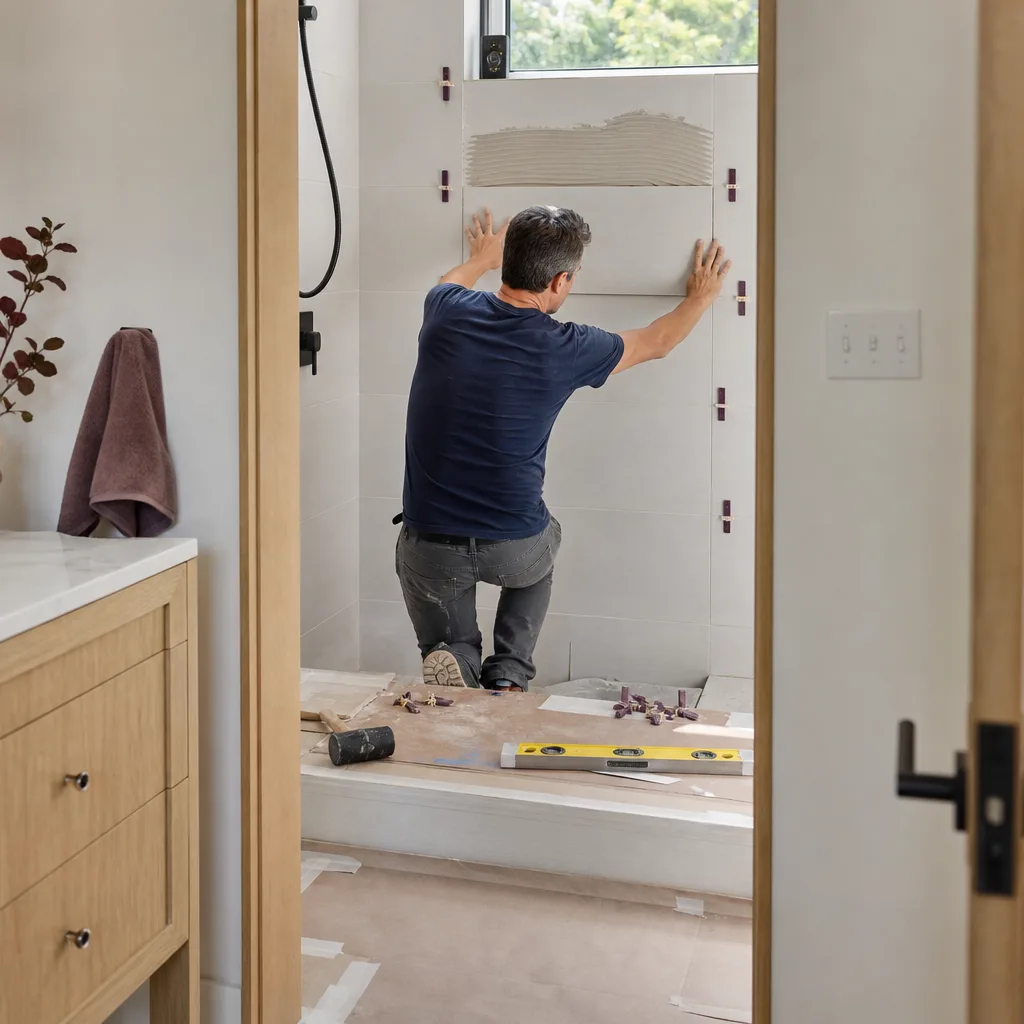
Wall tile comes loose from one of two causes: a failed thinset bond (bad coverage, wrong thinset for the substrate, or thinset that skinned over before the tile was set) or an omitted movement joint where the wall assembly meets a structural change. Both look identical from the outside – a tile that taps hollow – but the fix is different. On a properly set tile, thinset coverage should be at least 95 percent on a wet-area wall.
Check for the cause with a few tools you probably own:
- Tap every wall tile in the shower with a plastic tool handle. Map the hollow-sounding tiles with painter’s tape. Clusters near corners or fixtures point to a bond failure; a neat line along a joint points to a movement issue.
- Pluck out a loose tile if it comes free without force. Look at the back. Bare thinset with comb marks that never touched the tile means poor coverage. Clean, glossy tile back means no adhesion at all.
- Feel for a lip at the seam. Grout that has been compressed on one side and widened on the other confirms movement.
A single loose tile can be reset for $180 to $400 by a tile setter. A partial wall re-tile, where the failed section is removed and reinstalled with proper waterproofing and a movement joint at the corners, runs $1,500 to $4,500 in Garden Grove. We’ve seen this failure at a higher rate on remodels where large-format tile – 12×24 or bigger – was set with standard thinset rather than the large-and-heavy-tile mortar the manufacturer specifies, because heavy tile pulls away from marginal coverage as the mortar cures.
Why Is the Toilet Running After Installation?
A running toilet newly installed after a remodel is almost always a flapper specification error or flush valve seat damage caused during installation. It isn’t the toilet’s design in most cases; it’s the finish assembly. Two quick diagnostics tell you which.
- Lift the tank lid and look at the water level. Water spilling into the overflow tube above the flush valve means the fill valve is set too high – a five-minute adjusting fix.
- Add a few drops of food coloring to the tank, wait 15 minutes without flushing, and check the bowl. Color in the bowl means the flapper is leaking past the seat.
- Run a finger around the flush valve seat – the edge the flapper presses against. A nick or mineral ridge means the seat is damaged and needs replacing.
When a contractor installs a Kohler or Toto toilet, they’re matching a flapper to the flush valve. Contractors or homeowners who substitute a generic flapper at a big-box store can introduce a slow leak because a generic flapper’s material and seat profile don’t match a brand-specific flush valve. The part is $8 to $25 and the repair is a 10-minute DIY job, unless the flush valve seat itself is damaged, which adds $40 to $90 for the part and up to $200 for a plumber to pull and reset the tank. Homeowners can check the flapper spec against the toilet’s manual, which every Kohler and Toto model publishes online.
Is This a Warranty Claim, Owner Maintenance, or Manufacturer Defect?
Sorting the cause into the right category is the difference between a warranty repair and a bill. In our experience, three categories cover nearly all post-remodel failures, and each requires different evidence.
Installation defects (contractor liability)
- Incomplete waterproofing membrane coverage
- Incorrect mortar bed thickness or overly wet mix
- Improper shower floor slope
- Thinset coverage below spec on wall tile
- Omitted movement joints at corners and transitions
These are legitimate warranty claims, but only if the failure falls within the contractor’s warranty period and you can show the cause is installation, not use. The evidence: photos of the failure, your original written scope of work, and the manufacturer’s product data sheet for the waterproofing and mortar systems that were installed.
Owner-maintenance failures (your cost)
- Deteriorated caulk joints at the shower base and tub edge
- Clogged bathroom fan filter or duct
- Debris buildup in the drain after construction
- Flapper not maintained or incorrectly replaced by the homeowner
These are not installation defects. Caulk joints are expected to be replaced every one to three years, and a clogged fan filter is maintenance. Any contractor with a written warranty, including Rowan Construction Group under the Haven Standard, will tell you the same line: if the failure is a maintenance item, it’s not covered.
Manufacturer defects
- A defective cartridge in a new shower valve
- A toilet flapper or fill valve that failed prematurely
- A tile or fixture with a manufacturing flaw
These fall under the manufacturer’s warranty, not the contractor’s. Documentation required: the product receipt or order record, model and serial number, and in most cases a proof-of-installation-date. Kohler, Toto, and the major tile manufacturers publish their warranty terms and expectations on their websites.
What Documentation Should You Have From the Original Remodel?
Documentation is what turns a suspicion into a claim. If you have it, diagnosis is fast and warranty repairs are straightforward. If you don’t, both get expensive. Before your next remodel begins, ask for and file the following:
- The written scope of work and the flat-price quote – the document that describes what was installed
- Copies of the pull permits and the passed inspection records
- Product data sheets for the waterproofing membrane, the thinset, and the grout, with batch or lot numbers if the installer recorded them
- As-built photos of the rough plumbing and any wall cavities opened during the project
- The signed change orders, if any
- The written workmanship warranty
In Garden Grove, a bathroom remodel permit is pulled through the city’s building department, and the inspection card is a record you should keep. Without the waterproofing and mortar data sheets, a contractor diagnosing a failure has to guess at the system that was installed, and a manufacturer will not honor a claim without proof of their product being used. Rowan Construction Group includes a documented photo record on every visit as a standard deliverable, so your rough plumbing and inspections are on file, not lost to a contractor’s phone three years later. Read more about how we approach Rowan Construction Group Garden Grove home projects and the documentation standard behind them.
Common Mistakes to Avoid
- Re-grouting before diagnosing. Grout cracking is a symptom of movement, and re-grouting a deflection issue buys you six months at most. Find the cause first.
- Using caulk to hide a waterproofing failure. Caulk over mildew recurs within the same season. Ventilation and membrane coverage have to be checked or the problem returns.
- Pouring chemical drain cleaner into a new P-trap. It can damage newer plastic trap assemblies and doesn’t clear construction debris. Use a hair tool or snake instead.
- Assuming the toilet is defective. A running toilet after install is a flapper spec or fill-height issue far more often than a factory defect, and the fix is usually under $25.
- Skipping the photo record. Garden Grove homes built in the 1960s and 1970s need as-built photos of the rough plumbing because the original build isn’t documented anywhere else. Without them, diagnosis is guesswork.
- Ignoring the fan. Discharging warm moist air into the attic is a common and ongoing code violation. Check the duct routing, not just the fan.
- Assuming the contractor won’t honor the warranty. A written warranty with a signed scope of work is enforceable. Ask for it, keep it, and use it.
See the difference
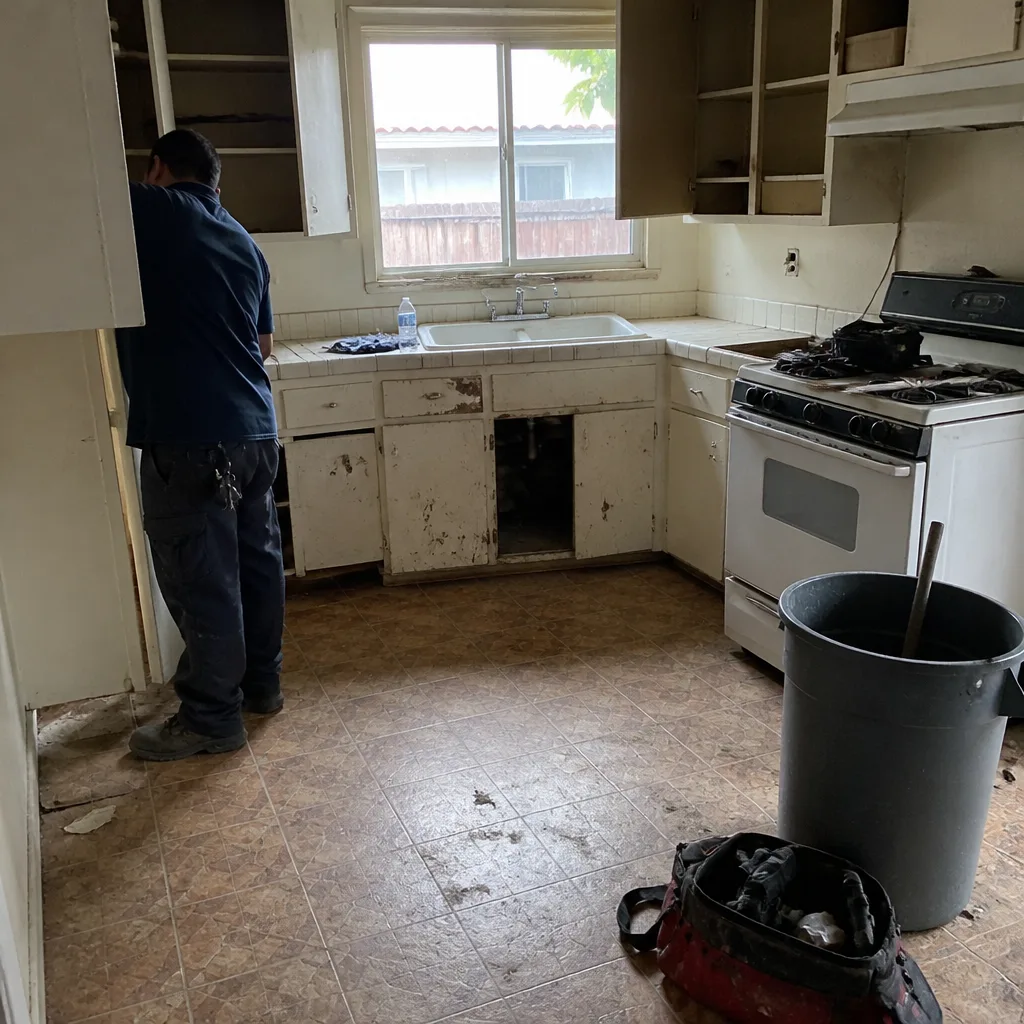 Before
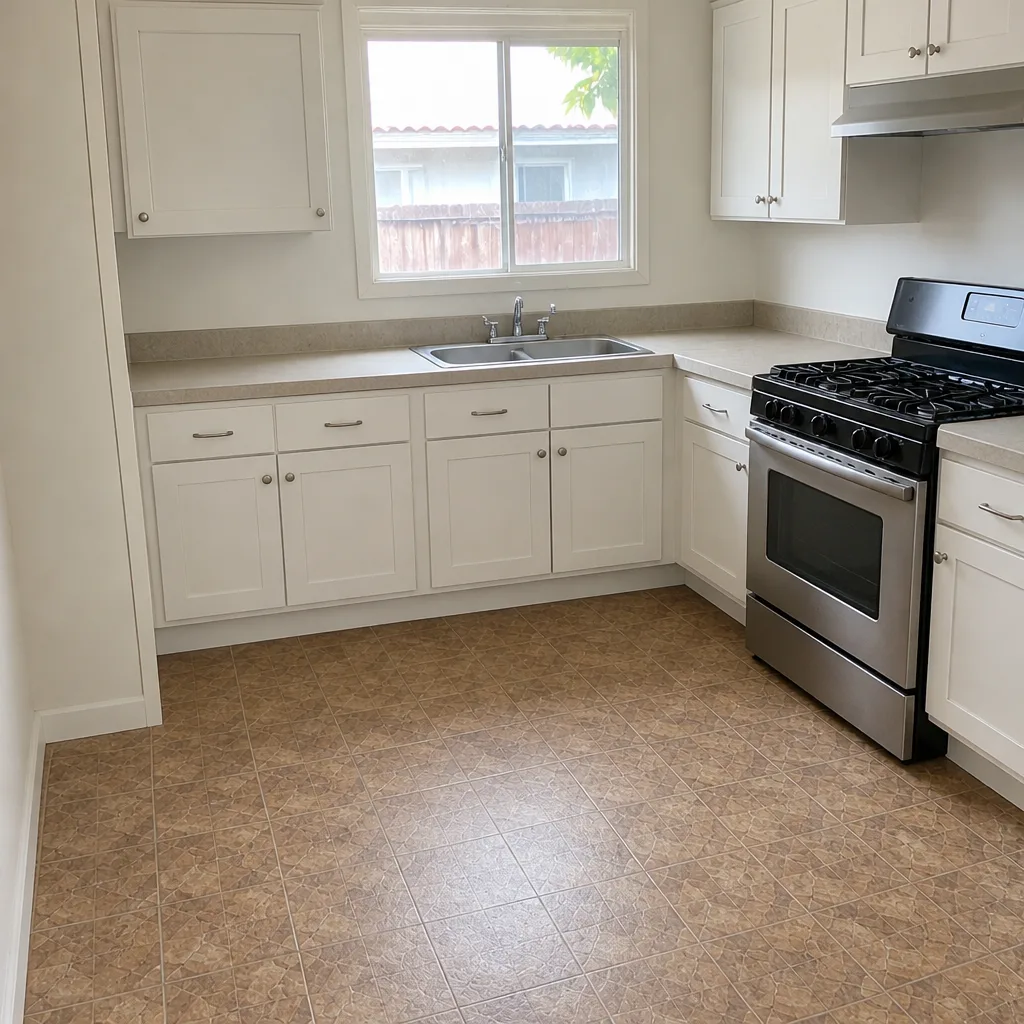 After
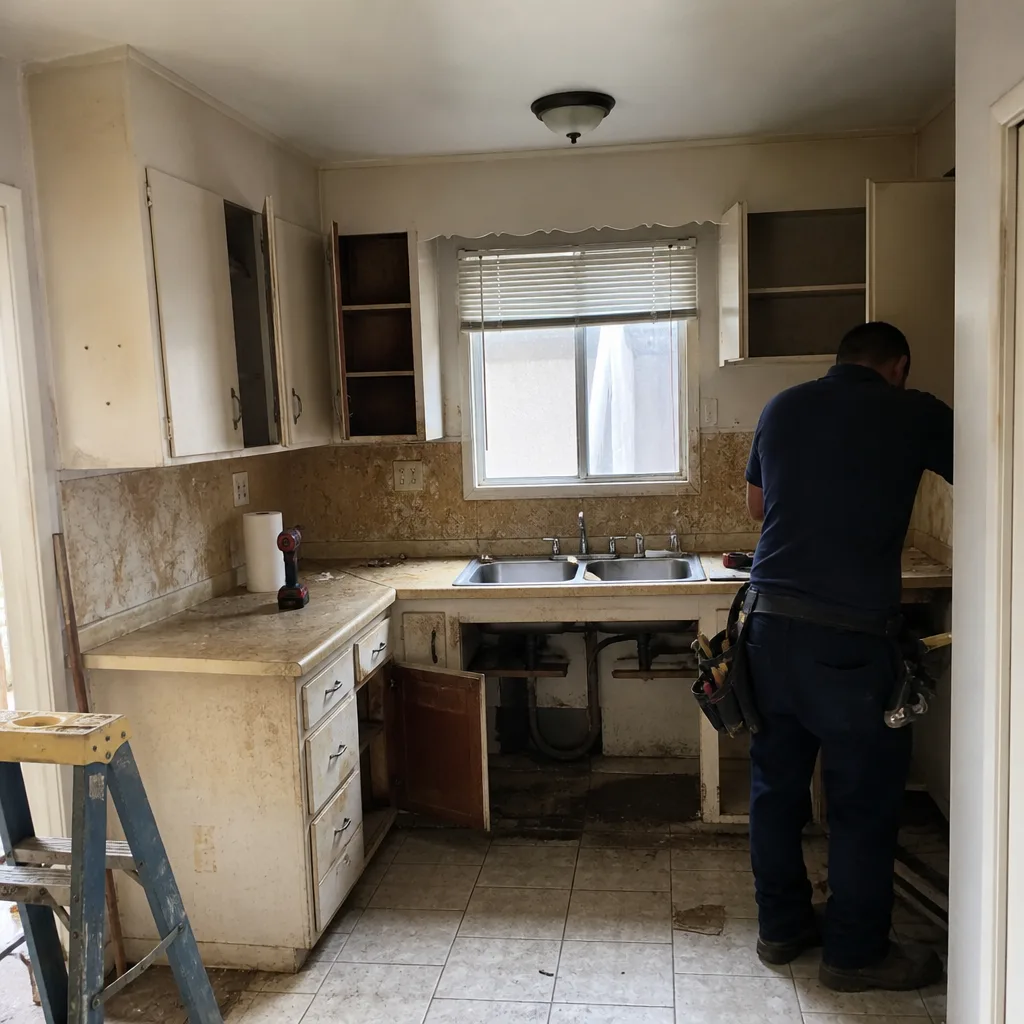 Before
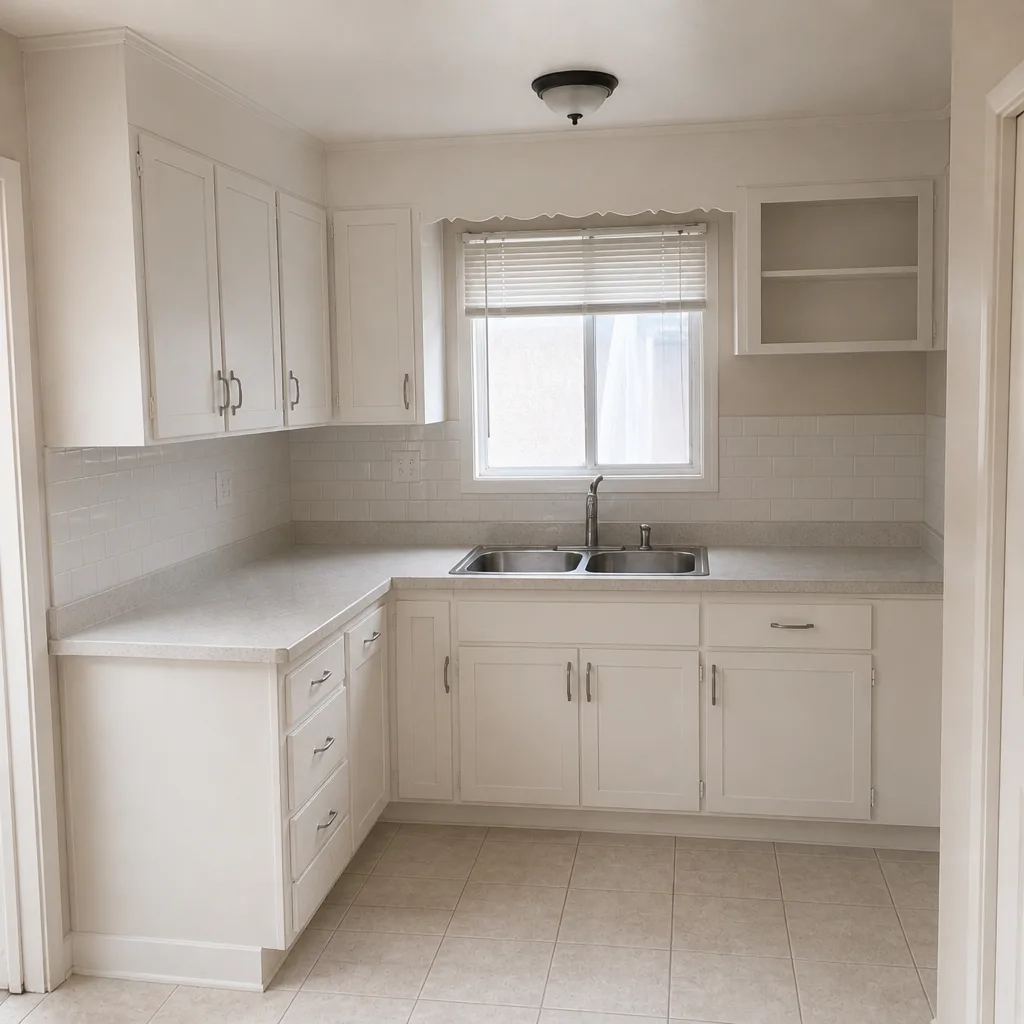 After
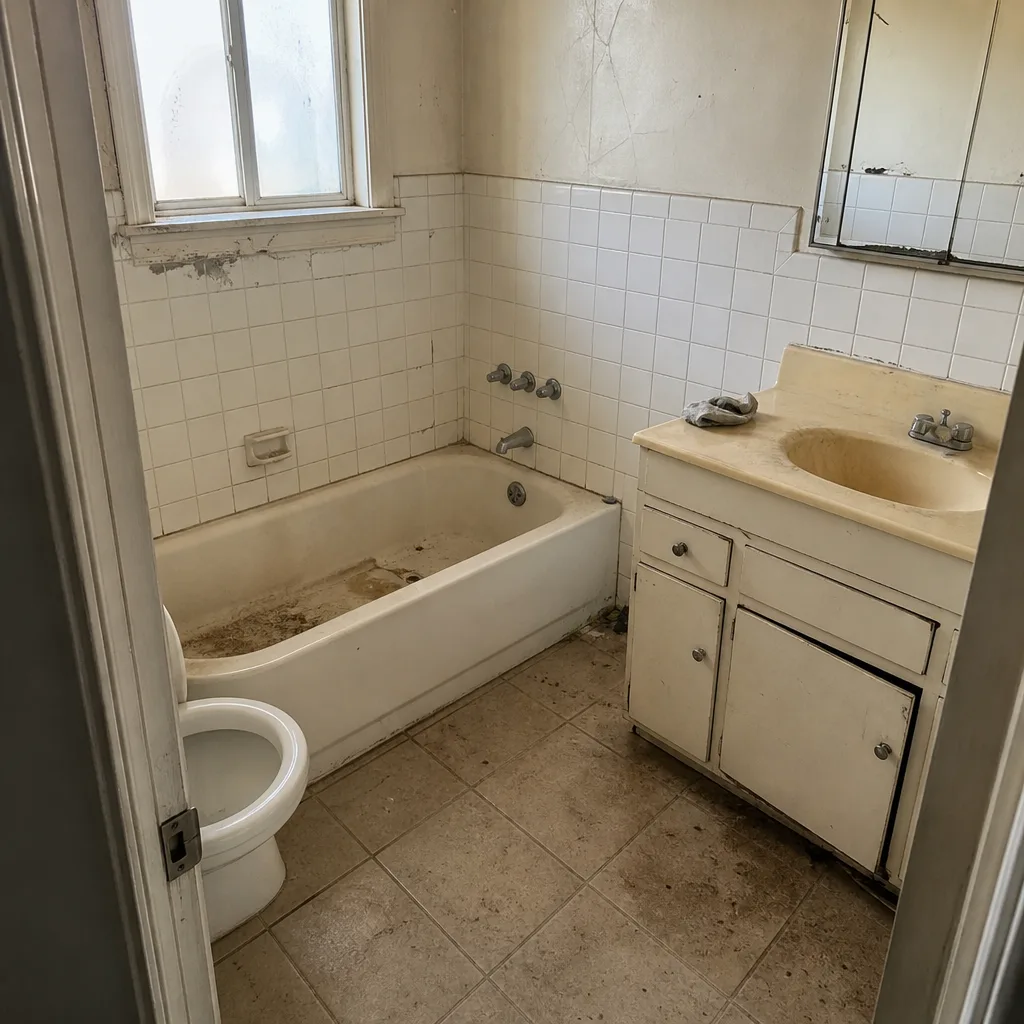 Before
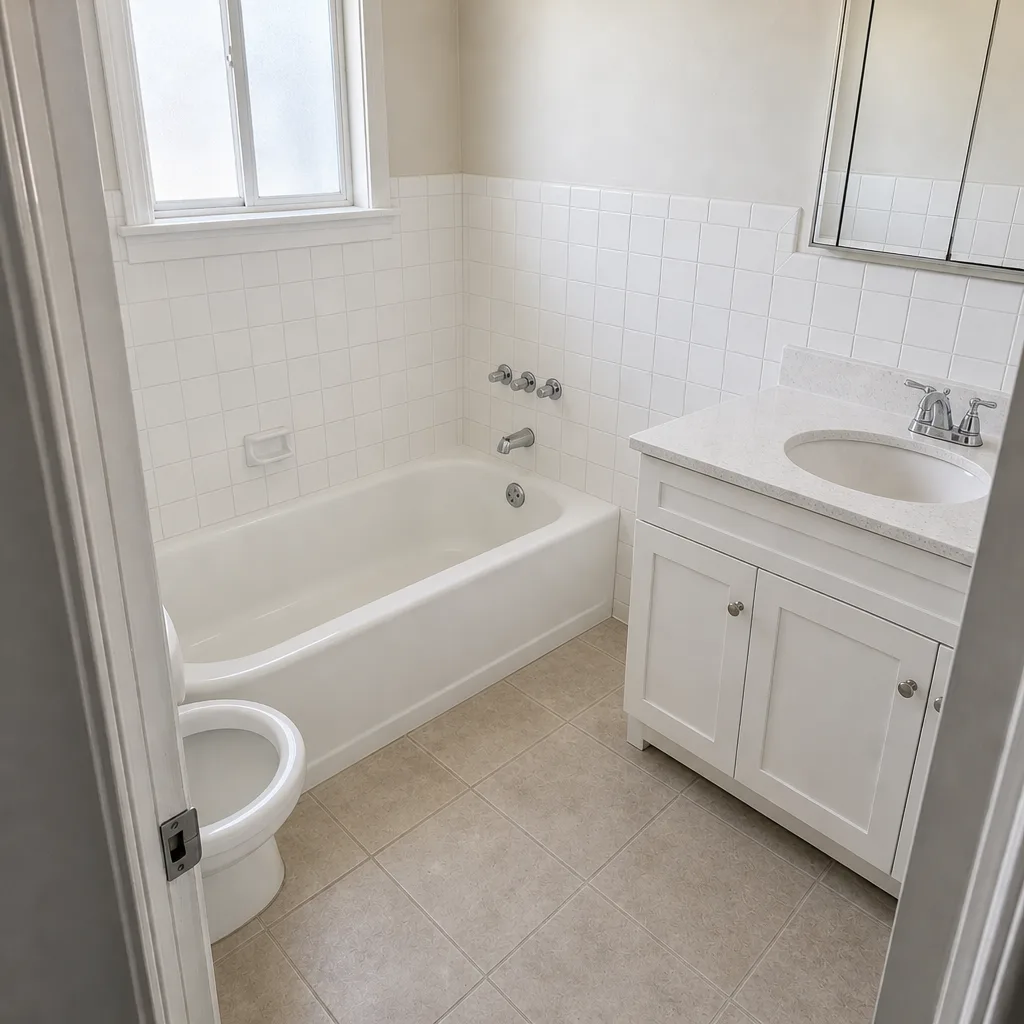 After
When to Call a Professional
Some failures are safe to handle yourself: caulking a shower base, replacing a toilet flapper, cleaning a fan filter, clearing drain debris. Others are not. If cracks widen over a week, if tiles move against finger pressure, if water is pooling on the shower floor, or if you suspect the waterproofing has failed behind the tile, call a professional. Opening a wet wall is plumbing and waterproofing work, and the Garden Grove real estate market (through neighborhoods like West Garden Grove, Garden Park, and the historic downtown tract) rewards a documented, correct repair. Rowan Construction Group Garden Grove offers free estimates in Garden Grove – call (888) 303-8980 to schedule yours. We’ll tell you which cause a failure matches, name the price in writing before anything is opened, and give you a free second opinion on any written estimate you already have.
Frequently Asked Questions
Re-caulking a movement joint runs $15 to $40 in materials for a DIY repair; re-grouting a shower wall with cementitious grout runs $60 to $120 in materials or $400 to $900 with a tile contractor. If the diagnosis is substrate deflection, plan on $1,200 to $3,500 to correct the framing. Call (888) 303-8980 for a written estimate before any wall is opened.
No. Debris blockage from construction is the most common cause and clears with a hair tool or snake, at no cost. A slow drain is an installation defect only when the floor slope is out of tolerance (less than 1/4 inch per foot toward the drain), and that’s provable with a level on the floor. If pooling remains after multiple attempts to clear it, call (888) 303-8980 to schedule a free estimate.
Only if the tile loosened from a bond failure within the warranty period and you can prove the cause is installation, not maintenance. Wall tile that taps hollow within 12 months of a remodel is usually a thinset coverage issue, which is covered. Tiles loosening at the joint after several years often point to an omitted movement joint, which is a documentation question the warranty depends on. For a free second opinion on your written estimate, call (888) 303-8980.
Most often the fan is undersized or ducted into the attic. The standard is roughly 1 CFM per square foot of floor area, and more for rooms with a shower. If the fan pulls a tissue flat against the grille and the duct terminates outside, ventilation is likely fine and the moisture is coming from a waterproofing leak behind the tile. Call (888) 303-8980 for a free estimate.
Replacing the shower pan and the waterproofing behind the tile is a permit-level repair in most Garden Grove cases, and a licensed contractor should pull it. Ask for the inspection records when the repair is done, because those records matter if you ever need the warranty or you sell the home. Call (888) 303-8980 to discuss your written scope before any permit is pulled.
Diagnosis by a licensed contractor should be free in the form of a written estimate. The specific tests – the tile tap, the color test in the toilet tank, the level on the shower floor – cost nothing and take 20 minutes. If a contractor wants to charge for a diagnosis before writing a quote, that’s a red flag. Call (888) 303-8980 for a free written estimate and a documented photo record.
The Bottom Line
Most bathroom remodel failures that appear months after completion came from three installation errors hidden under the finished surface: incomplete waterproofing membrane coverage, an incorrectly mixed or cured mortar bed, and a shower floor without the required slope. Grout cracking, recurring mildew, slow drains, loose tile, and a running toilet each have a specific symptom that points to a specific cause, and the cheapest diagnostic tools – plastic handle, level, food coloring, toilet paper – find the cause before anyone opens a wall. File the permits, product data sheets, as-built photos, and the signed warranty the day the job ends. If a failure looks like a waterproofing or plumbing defect, call a professional before touching the tile. For a free written estimate from Rowan Construction Group Garden Grove, call (888) 303-8980. If your next chapter is bigger than a repair, explore Home Additions & ADU in Garden Grove, Fence Installation in Garden Grove, or Driveway & Pavers in Garden Grove and get the same written-before-work promise on every trade.
Written by the team at Rowan Construction Group Garden Grove.