Last updated November 17, 2026
Free written scope consultation - allowances, timeline, and change-order rules on paper before a single trade is scheduled
The Complete Fence Installation Guide for Garden Grove Homeowners
California’s Good Neighbor Fence Law, Civil Code 841, requires written notice to your neighbor at least 30 days before you begin construction on a shared boundary fence. It costs nothing to send. Most fence installation guides don’t mention it, and a fair number of contractors skip it too. That single omission is why well-meaning Garden Grove homeowners end up in disputes after the posts are already set. This guide walks through the three rule systems that govern nearly every fence in Garden Grove – city code, HOA covenants, and state shared-fence law – then gets into the materials, footings, and costs that actually determine how long the fence stands.
Quick Answer
Fence installation in Garden Grove is governed by three overlapping rule systems: the city’s municipal code (42-inch front-yard height limit, 72-inch rear and side limit for residential zones), your HOA’s CC&Rs (which can be stricter and often require written approval before you buy materials), and California Civil Code 841, which gives you a shared-cost right with your neighbor but requires 30 days’ written notice before work starts. Understanding which rules apply to your specific property line, and in what order, is the step that prevents permit violations and neighbor disputes. Material and installation costs in Garden Grove run roughly $28 to $95 per linear foot installed, depending on material and site conditions.
Styles & brands we work with
- Kitchen remodeling
- Bathroom remodeling
- Home additions & ADU
- Roofing
- Windows & doors
- Driveway & pavers
- Fence
Table of Contents
- The Three Rule Systems Governing Fence Installation in Garden Grove
- Garden Grove Fence Height Limits and the Variance Process
- HOA CC&R Fence Restrictions: What to Check Before You Buy Materials
- California’s Good Neighbor Fence Law in Plain English
- Material Comparison with Installed Cost Ranges
- Post Footing Depth and Concrete Requirements for Garden Grove Soil
- Common Mistakes to Avoid
- When to Call a Professional
The Three Rule Systems Governing Fence Installation in Garden Grove
Fence work in Garden Grove isn’t one approval process; it’s three parallel ones, and they don’t always agree with each other. We’ve seen homeowners get written HOA approval, buy materials, and then discover their proposed six-foot fence sits in a front setback zone where the city caps height at 42 inches. We’ve also seen the reverse: a project that passes city code review but violates an HOA architectural covenant requiring masonry instead of wood on a street-facing side.
The three systems, in the order you should verify them:
- Garden Grove Municipal Code – sets maximum height by zoning district and lot location (front yard versus rear/side). This is enforceable by the city and a permit or variance may be required.
- HOA CC&Rs (Covenants, Conditions, and Restrictions) – if your property is in a planned community, the HOA’s architectural rules can be stricter than city code. HOA approval is a private contractual requirement, not a city one.
- California Civil Code 841 – the “Good Neighbor Fence Law,” which governs shared boundary fences between adjacent property owners and establishes both cost-sharing rights and notice requirements.
In Garden Grove’s older neighborhoods – the tracts around Chapman Avenue west of Brookhurst, or the established blocks near Garden Grove Park – fences are often original to the 1950s and 1960s and may predate current code. That matters: if you’re replacing a fence in kind, the process can differ from a new installation or a height increase. Verify current limits with Garden Grove’s planning department before assuming an existing fence was ever compliant.
Garden Grove Fence Height Limits and the Variance Process
Garden Grove’s residential fence height limits follow a standard California pattern, but the specific numbers matter and the front-yard rule is where most projects get caught.
- Front yard: 42 inches maximum in residential zones. This applies to fences, walls, and hedges in the front setback area.
- Rear and side yard: 72 inches maximum in residential zones.
- Corner lots: sight-distance triangles at driveways and intersections override standard height limits. A six-foot fence that blocks visibility at a driveway apron is a code violation regardless of yard location.
- Pool and safety barriers: California pool safety requirements can impose different minimums and can supersede maximums where a barrier is required.
If your proposed fence exceeds the limit for your zone, you’ll need a variance from Garden Grove’s planning department. A variance is not a rubber stamp. You’ll typically need to demonstrate a hardship specific to your property – unusual lot shape, topographic constraint, or a documented safety concern – not simply a preference for more privacy. Expect the process to take weeks to a few months, and expect to pay an application fee.
The practical advice: if your project is close to the limit, measure from the actual property line, not from where the old fence stood. Property lines in Garden Grove’s older subdivisions sometimes don’t match the fence line, and a survey is cheaper than a variance application denied over a two-foot encroachment.
HOA CC&R Fence Restrictions: What to Check Before You Buy Materials
A significant share of Garden Grove’s housing stock sits in planned communities and HOA-governed subdivisions. If yours does, the HOA’s architectural review process is often stricter than the city’s, and it runs on its own timeline.
Before you buy a single board, pull your CC&Rs and the architectural guidelines (sometimes called design guidelines or architectural standards) and check for:
- Material restrictions – some Garden Grove associations prohibit chain link on street-facing sides, restrict vinyl, or require masonry or stucco to match the home’s exterior.
- Color approval – many HOAs require pre-approval of stain or paint color, often with a defined palette. Buying pre-stained material in a color the HOA rejects means eating the cost.
- Height limits below city code – a 60-inch HOA cap in a zone where the city allows 72 inches is common, and the HOA rule wins for you.
- Setback from the property line – some associations require the fence to sit a defined distance inside the line.
- Submittal requirements – most architectural review committees want a site plan, elevation drawing, material samples, and color chips. Get written approval before ordering.
Get the approval in writing, including the specific fence spec that was approved, and keep it. We’ve seen HOA boards change members mid-project, and the approval letter is what protects you when a new board member questions the color.
California’s Good Neighbor Fence Law in Plain English
Civil Code 841 governs fences that sit on a shared property line between two owners. It gives you real rights, and it imposes real procedural steps that most installations skip. The procedural step most often missed: written notice to your neighbor at least 30 days before construction begins.
What the law does, in plain terms:
- Shared cost right. If a boundary fence is reasonably necessary for the use and enjoyment of your property, you can require your neighbor to share in the cost of construction, maintenance, or repair, in proportion to your respective interests.
- Thirty-day written notice. Before you build, you must give your neighbor written notice by registered or certified mail specifying the proposed fence, the estimated cost, and a deadline to respond. This is not optional.
- Cost allocation. If your neighbor agrees within the notice period, costs are shared. If the neighbor refuses or doesn’t respond, you can build at your own cost and the neighbor’s obligation is generally limited – but you keep the right to pursue contribution later under specific conditions. Talk to an attorney for your specific facts; this guide is not legal advice.
- Existing fence condition. If the existing fence is in disrepair and one side won’t participate, the law provides a path to build and recover a share of the cost, subject to the notice requirements.
The practical takeaway for Garden Grove homeowners: send the notice, keep the certified-mail receipt, and document the fence condition with photos before work starts. On a standard Garden Grove lot, a shared rear boundary runs somewhere between 50 and 70 feet – so at a mid-range installed cost, you may be looking at several thousand dollars, and thirty days of notice is cheap insurance against a dispute over half of it.
Material Comparison with Installed Cost Ranges
Installed cost in Garden Grove depends on linear feet, gate count, removal of the old fence, and site conditions (slope, root intrusion, hardscape near the post line). The ranges below reflect what we see in the Garden Grove market, installed, including posts, footings, and cleanup. They’re the honest starting numbers – any quote significantly below these should be examined closely for thinner posts, fewer stringers, or footing depths that won’t hold up to wind.
- Pressure-treated pine: $28 to $45 per linear foot installed. Lifespan 10 to 15 years with regular sealing. Lowest upfront cost, needs restaining every 2 to 4 years. Appropriate for interior boundary fences away from street view.
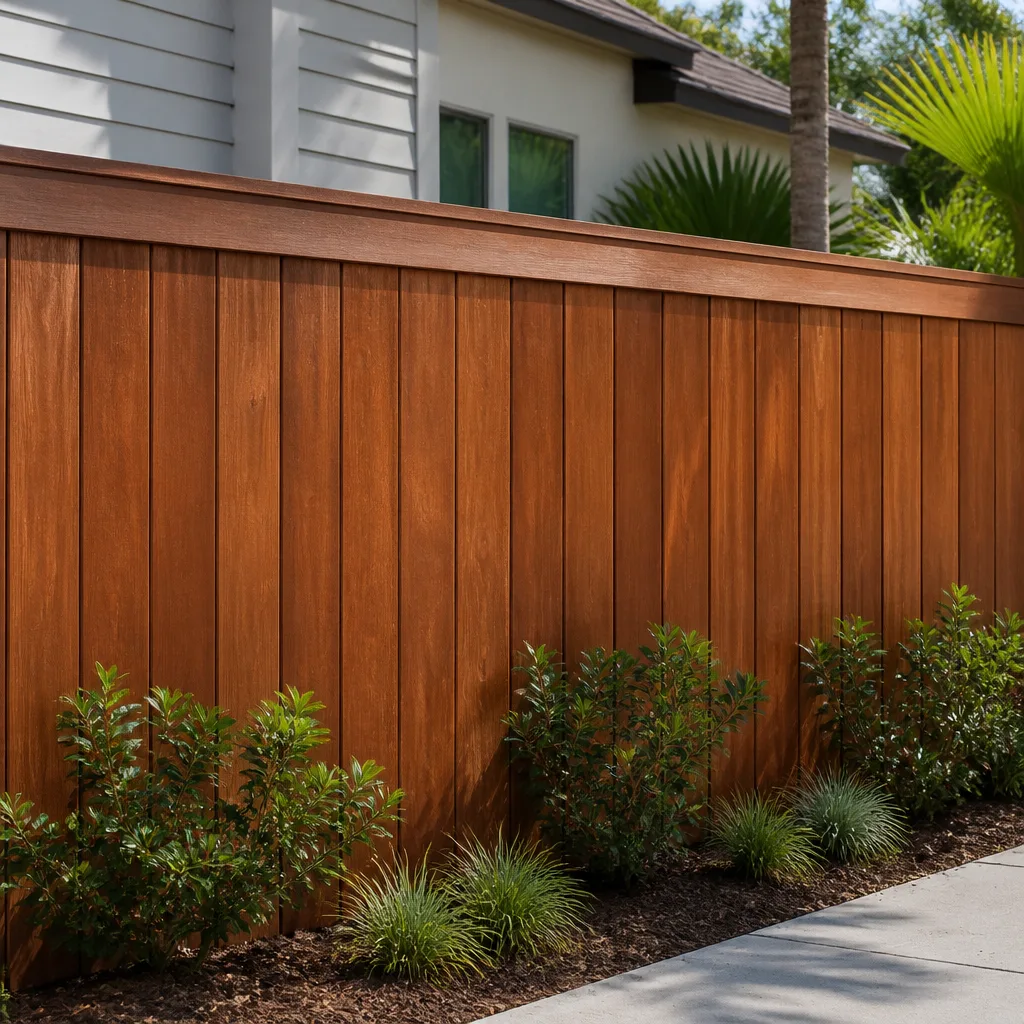
- Cedar: $40 to $62 per linear foot installed. Lifespan 15 to 25 years. Naturally rot- and insect-resistant, holds stain longer than pine, weathers to a silver-gray if left unfinished. The standard upgrade in Garden Grove’s older neighborhoods.
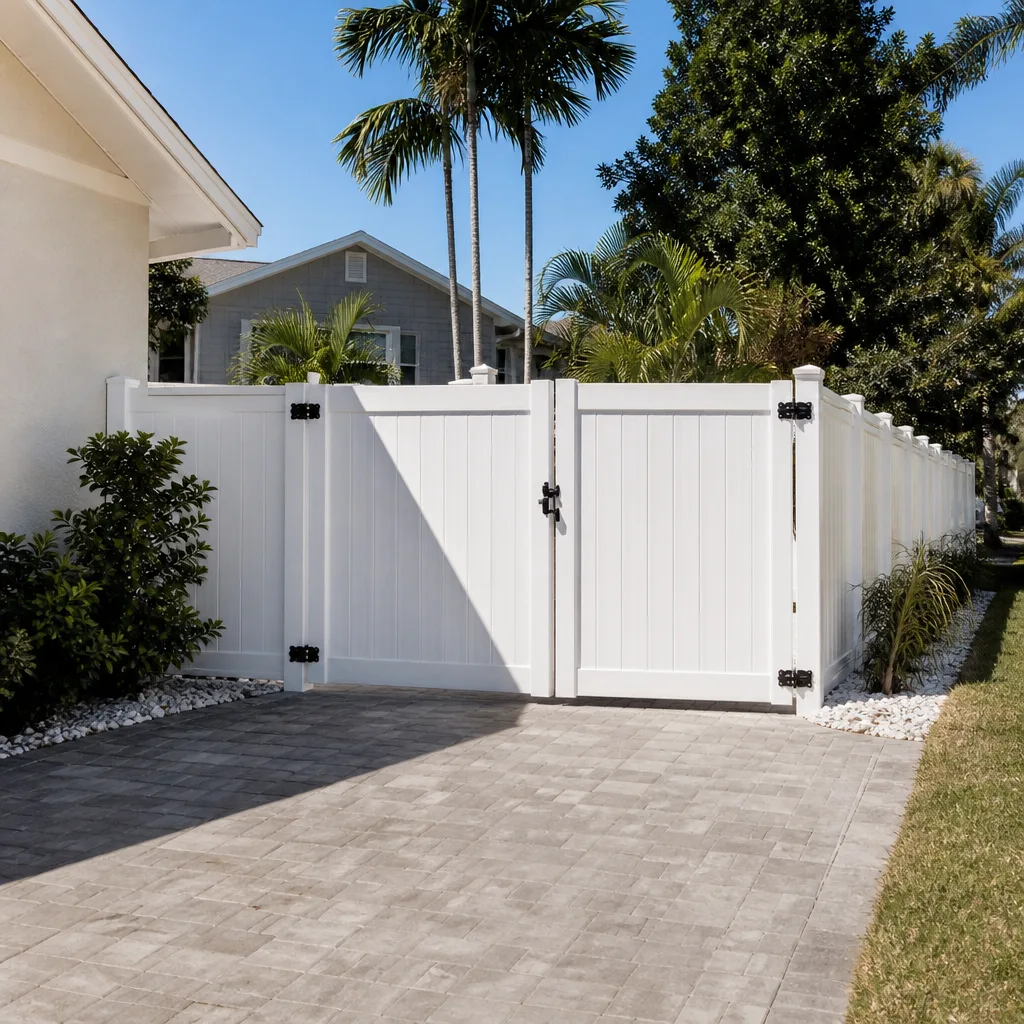
- Vinyl: $45 to $70 per linear foot installed. Lifespan 20 to 30 years. Low maintenance, no painting or staining; some manufacturers offer stronger structural profiles – Simtek and Amerimax are two brands we see specified for privacy fencing. Color is molded in, but can fade over decades in direct sun.
- Composite: $60 to $85 per linear foot installed. Trex Seclusions is the brand most often specified. Lifespan 25+ years. Composite looks like wood with none of the maintenance; it costs more than wood and vinyl up front.
- Aluminum or steel ornamental: $55 to $80 per linear foot installed. Typically used in front yards where a low, see-through fence is required or desired. Not a privacy material on its own.
- Masonry block: $75 to $95+ per linear foot installed. Lifespan measured in decades. Usually requires a footing and, in Garden Grove, often an engineered design. Common on street-facing sides in older Garden Grove neighborhoods and required by some HOAs.
The maintenance profile matters as much as the installed number. Over 20 years, a cedar fence that gets sealed every 3 years can cost more in total than a vinyl fence with a higher sticker price. We put those numbers in the written quote so the comparison is on paper, not in a brochure.
Post Footing Depth and Concrete Requirements for Garden Grove Soil
Fence failure in Garden Grove – lean, wobble, bowed panels – is almost always a footing problem, not a material problem. The rule of thumb every competent installer uses: a post should be buried at least one-third of its total above-ground height in the ground. For a 6-foot fence, that means a 2-foot burial; for a 7-foot fence, closer to 2 feet 4 inches.
What a properly specified footing looks like on a spec sheet:
- Hole diameter: a minimum of 10 inches in diameter. A standard Rowan Construction Group Garden Grove home page spec calls for this – the 10-inch rule isn’t arbitrary; it gives enough concrete mass around the post to resist lateral wind load on a fence panel.
- Hole depth: equal to the burial depth plus 4 to 6 inches for a gravel base, so a 6-foot fence gets roughly a 24-inch minimum hole.
- Concrete: Sakrete fence post mix is what we specify on most residential jobs – a high-strength, fast-setting mix rated for fence posts. A full 80-pound bag per post is a typical minimum.
- Drainage: 4 to 6 inches of gravel at the base of the hole keeps the post ends out of standing water. Garden Grove’s occasional winter rain events are enough to rot an improperly drained post in a few seasons.
- Wind exposure: Garden Grove sits in a low-wind area relative to canyon or hillside cities, but a 6-foot solid privacy fence acts as a sail. Spacing posts 6 feet on center (not 8) is common practice on privacy fences for exactly this reason.
If your property line runs along a slope, or the soil under the fence line has been filled or previously irrigated, the footing needs to be engineered for that specific condition. A post set in a hole punched into fill dirt will lean within two rainy seasons.
Common Mistakes to Avoid
- Skipping the 30-day Civil Code 841 notice. A shared boundary fence without written notice to your neighbor is the single most common costly mistake we see. Send certified mail, keep the receipt, and put the date in your file.
- Getting HOA approval verbally. “The committee said it was fine” is not approval. Get the written approval letter with the approved spec before you order materials; a board change mid-project has sunk more than one fence.
- Measuring from the old fence instead of the property line. In Garden Grove’s older tracts, fences and lot lines frequently drift. A survey costs far less than a variance or removal order after the posts are set.
- Buying the material before checking height limits. A 6-foot fence in a front setback in Garden Grove is 30 inches over the residential limit. Return policies on pre-cut lumber and pre-stained material are usually unforgiving.
- Burying the post too shallow to save concrete. A post that’s 18 inches in the ground instead of 24 will stand for a year or two and then lean. The concrete saved isn’t the concrete you keep.
- Forgetting corner-lot sight triangles. A code-compliant 72-inch fence that blocks visibility at a driveway apron is a violation regardless of yard location. Verify sight-distance requirements for your parcel.
- Assuming the old fence was compliant. An original 1962 fence may be grandfathered in place; replacing it in kind is not automatically grandfathered. Check with Garden Grove planning before construction.
When to Call a Professional
Some fence projects are true weekend jobs; many in Garden Grove are not. Call a licensed professional when the project involves: a shared boundary line (Civil Code 841 notice and cost allocation), a corner lot or sight-distance question, an HOA architectural submittal, a slope or fill condition on the post line, masonry block, an engineered design, or a fence replacing one that predates current code. Those are the conditions where a mistake costs more than the fence. Our technicians have up to 19 years of experience, and crews are background-checked and uniformed. Rowan Construction Group Garden Grove offers free estimates – call (888) 303-8980, and a written price with a written scope arrives before any work starts. If you have a competitor’s estimate in hand, we’ll review it line by line at no charge under our Free Second Opinion.
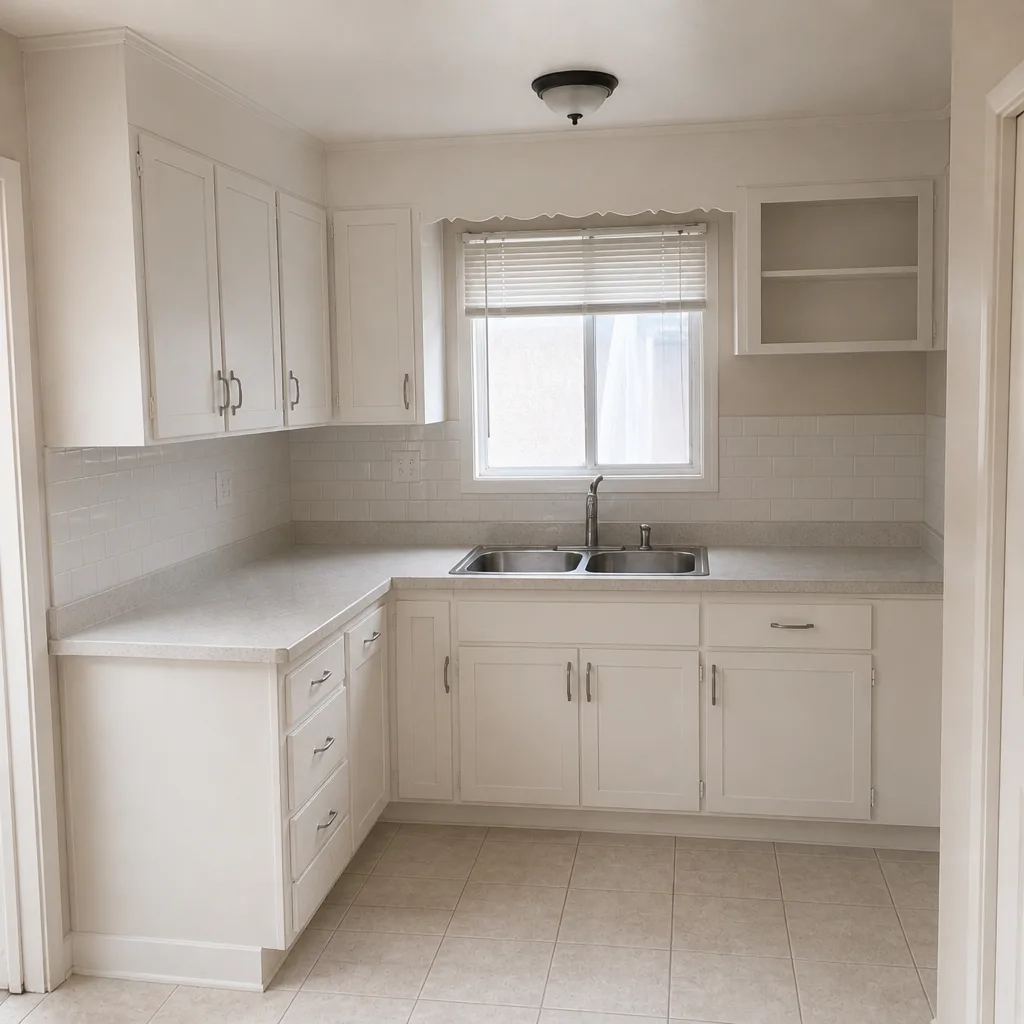
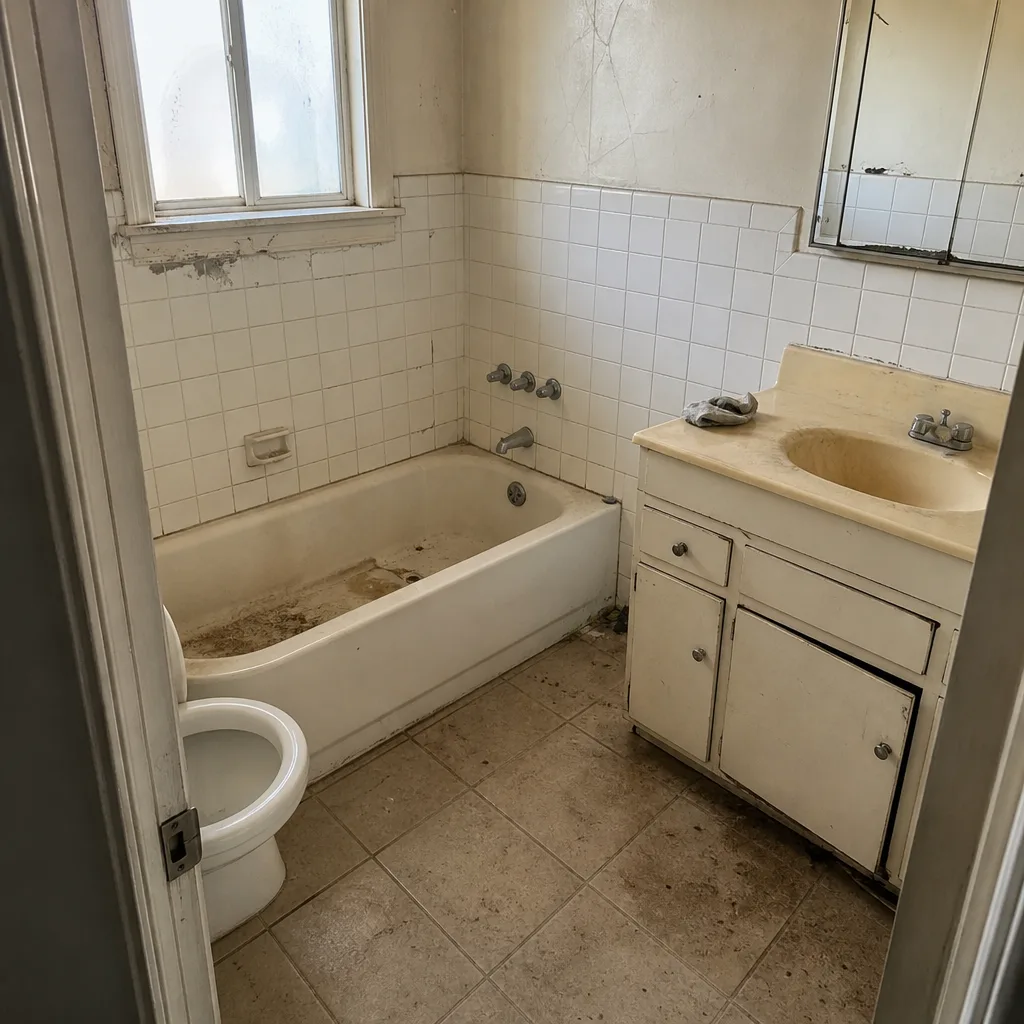
See the difference
 Before
 After
 Before
 After
 Before
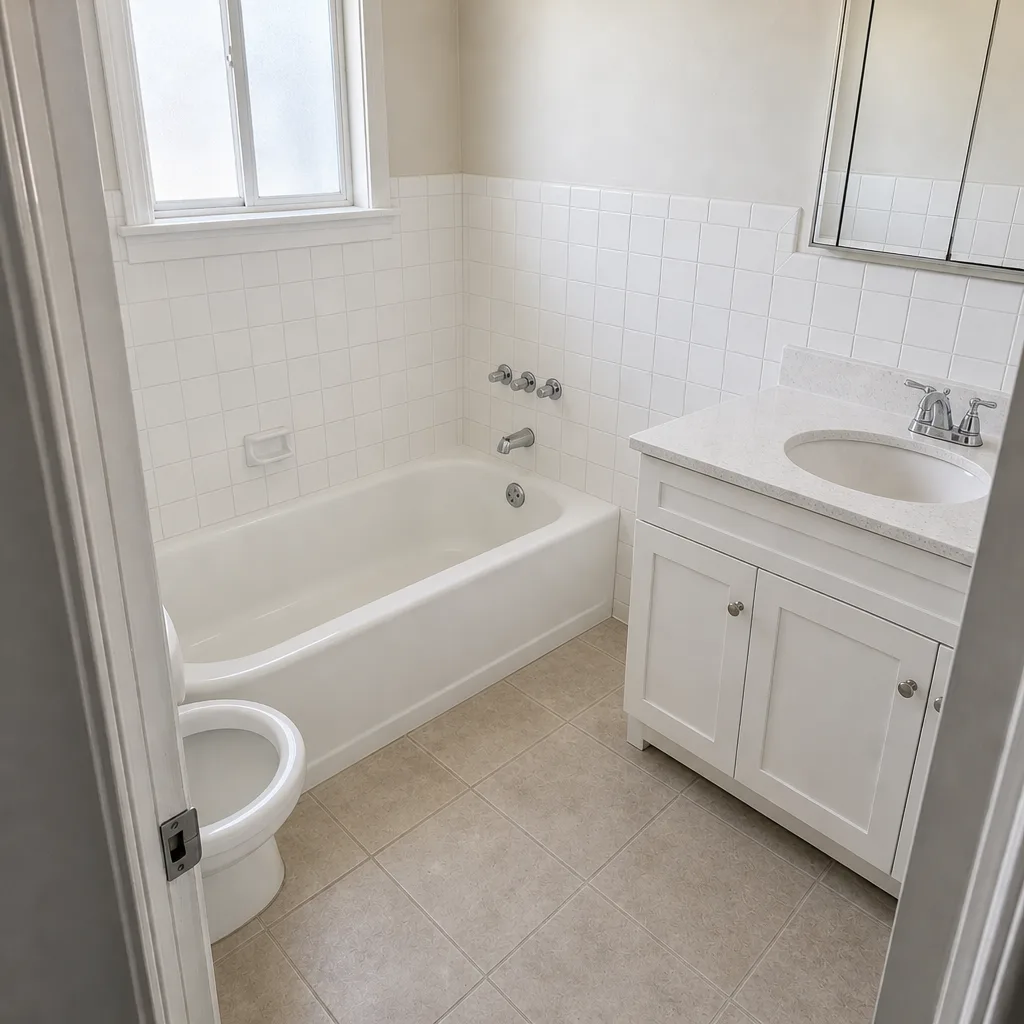 After
Frequently Asked Questions
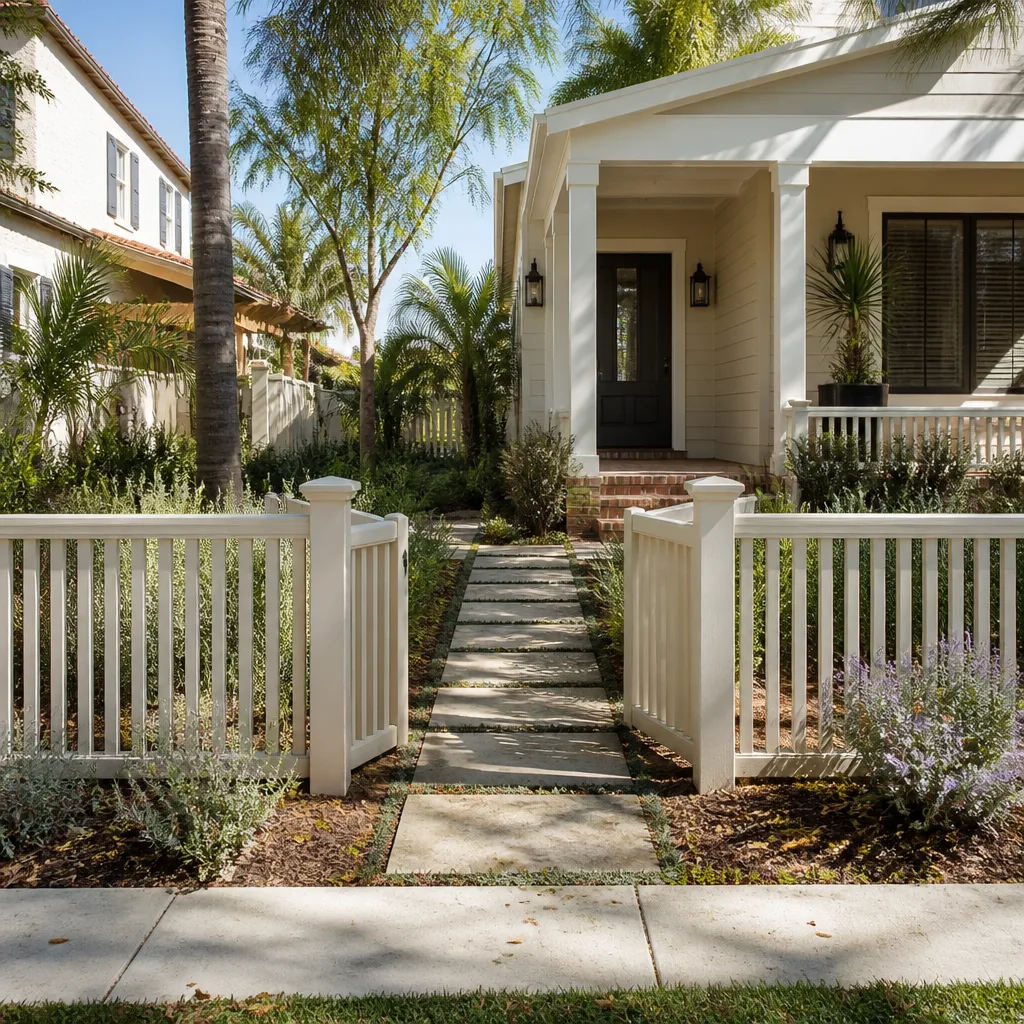
Fence installation in Garden Grove runs about $28 to $45 per linear foot installed for pressure-treated pine, $40 to $62 for cedar, $45 to $70 for vinyl, and $75 to $95+ for masonry block. A standard 60-foot residential boundary in pressure-treated pine typically lands around $1,700 to $2,700 installed, before removal of the old fence. Call (888) 303-8980 for an exact quote – estimates are free.
Garden Grove requires a permit when the fence exceeds the height limit for your zoning district, or when the project involves masonry or a retaining wall over a specified height. A code-compliant wood fence at or under 42 inches in a front yard or 72 inches in a rear or side yard typically does not require a permit, but confirming with the city before construction is the step that prevents a violation notice. Call (888) 303-8980 if you’d like us to walk through which requirements apply to your lot – the estimate is free.
California Civil Code 841 governs shared boundary fences between adjacent property owners. It gives you the right to require a neighbor to share reasonably necessary fence costs, and it requires written notice to the neighbor at least 30 days before construction via registered or certified mail. It applies to any fence on a shared property line. Call (888) 303-8980 for a free estimate – we can walk through the notice steps with you.
Yes. An HOA’s CC&Rs and architectural guidelines can be stricter than Garden Grove city code, including material restrictions, color palettes, height caps below city limits, and setback requirements. Get written approval from the architectural review committee before purchasing materials. Call (888) 303-8980 for a free estimate on the approved spec – the written price arrives before any work begins.
Fence posts should be buried at least one-third of their above-ground height – 2 feet for a 6-foot fence, closer to 2 feet 4 inches for a 7-foot fence – in a hole a minimum of 10 inches in diameter, with 4 to 6 inches of gravel at the base and Sakrete fence post mix. Post spacing of 6 feet on center is standard for a solid privacy fence to resist wind load. Call (888) 303-8980 for a free estimate on proper footing and post specification for your property.
No. Under the Haven Standard, the price is written before anyone starts, and no work proceeds on a change until the change order is signed. If a legitimate change is needed – a property-line condition, an unexpected root or utility, a material substitution – you see the change order, sign it, and only then does the work proceed. That’s the discipline that has kept projects within a few percent of the agreed price. Call (888) 303-8980 to schedule your free estimate.
The Bottom Line
Fence installation in Garden Grove works best when you resolve the rule systems first: check the city’s height limits for your exact zone, get HOA written approval if it applies, and send the 30-day Civil Code 841 notice to any shared-lot-line neighbor before you pick up a shovel. Then specify the material and footing correctly – post depth at one-third above-ground height, a 10-inch minimum hole, proper gravel and Sakrete at the base – and the fence will hold for its full rated life. Get the written price before work starts, and ask for the photo record when the crew leaves. Rowan Construction Group Garden Grove is a phone call away at (888) 303-8980, and our estimates are free.
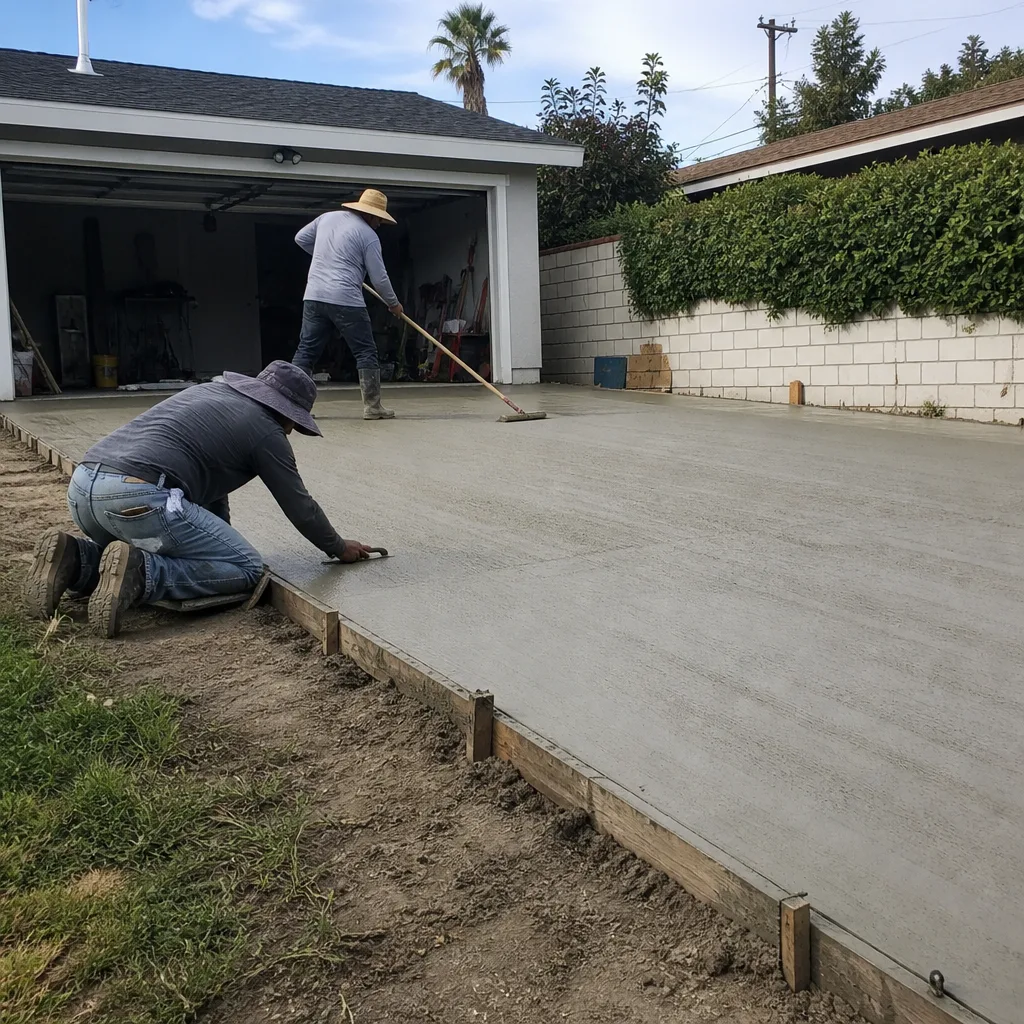
If your project is part of a larger exterior scope, our teams also handle Driveway & Pavers in Garden Grove, and the same written-price discipline applies. For a full boundary replacement with matching street frontage, see Fence Installation in Garden Grove. If you’re considering a detached structure that requires its own fence and site plan, Home Additions & ADU in Garden Grove walks through the permitting overlap. And if you’re ready to price the whole project, call us at (888) 303-8980 for a free estimate – a written price with a written scope, before any work starts.
Contact
Ready to get a real number on paper? Call Rowan Construction Group Garden Grove at (888) 303-8980 to schedule your free estimate. Bring a competitor’s written quote and we’ll review it line by line at no charge. Under Clause 1 of the Haven Standard, the price is written before anyone starts – every time, on every trade. Background-checked, uniformed technicians. Documented photo record on every visit. A live person answers the phone 24/7. The 365-Day Done Right Promise backs the work: if it is not done right, we make it right.
Written by the team at Rowan Construction Group Garden Grove.