Last updated November 17, 2026
Free written scope consultation - allowances, timeline, and change-order rules on paper before a single trade is scheduled
Windows & Doors Troubleshooting: Common Problems and How to Fix Them
A casement window that cranks open fine but won’t seal when closed almost always has a hardware problem – a worn operator arm or a misaligned strike – not a frame problem. That repair costs $45-$120 in parts. The contractor who quotes a full window replacement for the same symptom is solving the wrong problem. We’ve walked into hundreds of Garden Grove homes where a homeowner had already been told they needed new units, and the fix turned out to be a $40 hinge set or a $30 sweep. This guide works through the most common window and door failures by symptom, root cause, and repair cost, in order of likelihood, so you can triage correctly before you spend.
Quick Answer
Most window and door problems are mechanical, not structural: worn operator arms, failed weatherstripping, misaligned strike plates, and cracked glazing compound account for the majority of sticking, drafty, or leaky units. A sticking door that worsens in summer and improves in winter points to wood movement or foundation shift rather than hardware failure, and that distinction decides whether you’re looking at a $40 repair or a call to a contractor. Condensation between panes means a failed insulated glass seal, and that one needs a glass replacement, not a repair kit.
Styles & brands we work with
- Kitchen remodeling
- Bathroom remodeling
- Home additions & ADU
- Roofing
- Windows & doors
- Driveway & pavers
- Fence
Table of Contents
- The Symptom-to-Cause Matrix: What Your Window or Door Is Telling You
- The Five Most Common Window Failures and Their Fixes
- Door Problems: Why a Sticking Door Isn’t Always a Foundation Issue
- Part Names, Part Numbers, and What They Cost
- The Diagnostic Step That Separates Hardware From Structure
- When Water Intrusion Has Gone Past the Surface
- How Garden Grove’s Climate Shapes These Failures
- A Maintenance Calendar That Prevents Most of These Problems
The Symptom-to-Cause Matrix: What Your Window or Door Is Telling You
Before you buy a part, match the symptom to the most likely cause. Windows and doors fail in predictable ways, and the symptom usually narrows the cause to two or three candidates. Here’s how we approach diagnosis in the field.
- Hard to open or close: operator wear on casement windows, paint sealing the sash to the frame, or a swollen wood frame from moisture.
- Drafts when closed: failed weatherstripping, dried or cracked glazing compound around the glass, or a sash that has shifted out of alignment.
- Condensation between panes: a failed insulated glass (IG) unit seal. The desiccant inside the spacer has absorbed all the moisture it can, and the seal has broken.
- Water at the interior sill: failed exterior caulk, a missing or deteriorated sill pan flashing, or improper slope on the exterior sill that lets water run backward.
- Noise transmission increased: single-pane glazing, crushed weatherstrip that no longer compresses, or a sash that isn’t sealing tight.
- Door sticks at the top: worn or loose hinges that let the door sag.
- Door sticks at the bottom: foundation movement, a swollen door slab, or a threshold that has shifted.
- Latch won’t engage: strike plate misalignment or a door that has sagged off its hinges.
Two of these symptoms look identical to a homeowner and point to completely different fixes. A door that rubs at the top is a hinge problem roughly nine times out of ten. A door that rubs at the bottom is a hinge problem maybe three times out of ten. The other seven are the slab swelling, the threshold moving, or the floor shifting under it. Reading the location of the rub is the first and most important triage step.
The Five Most Common Window Failures and Their Fixes
Windows fail in a smaller set of ways than doors do, which makes troubleshooting easier once you know what to look for. Here are the five we run into most often, in order of frequency.
1. Difficulty opening or closing
On casement windows, a worn operator arm (the metal arm attached to the sash that the crank drives) is the usual culprit. You’ll feel the crank turn but the window barely moves, or you’ll hear grinding. Andersen operator arms run $35-$65 depending on the model series, and the replacement takes under an hour with a screwdriver. Truth Hardware casement locks cost $25-$55. The other common cause is paint: if the window was painted shut along the sash-frame joint, a utility knife run along the seam before you crank will free it. On a wood double-hung, a swollen frame from moisture is the likeliest cause, and that’s a sanding-and-sealing job, not a hardware swap.
2. Drafts when the window is closed
Weatherstripping degrades first. On a double-hung, check the compressible foam or felt strip in the jamb channel – if it’s flat, crushed, or missing sections, air moves freely. Replacement weatherstrip kits cost $15-$40 and install with adhesive backing. The second cause is glazing compound failure on older wood windows: the putty around the glass hardens, cracks, and pulls away, leaving gaps that leak air and eventually water. Third is sash misalignment, where the sash no longer sits square in the frame and the lock doesn’t pull it tight. That one you can often see by standing back and looking at the gap along the lock side of the sash.
3. Condensation between the panes
Fogging between panes means the IG unit seal has failed – the factory-sealed assembly that makes up a double- or triple-pane window. There is no repair for this at the homeowner level; the glazing unit has to be replaced. On many windows the glass unit can be swapped without replacing the frame, which costs far less than a full unit. The frame itself is usually fine. This is the one failure where a “repair kit” sold online is not going to solve the problem.
4. Water intrusion at the sill
Water coming in at the interior sill during rain points to one of three things: failed exterior caulk along the sill and at the vertical joints, a missing or deteriorated sill pan flashing under the window (a metal or flexible membrane that catches water and directs it outward), or an exterior sill that slopes the wrong way. Caulk can be redone for $20-$50 in materials. Sill pan flashing is a bigger job because the window has to come out, and that’s professional territory.
5. Increased noise transmission
A sudden increase in street noise usually means failed weatherstripping or a sash that’s no longer sealing tight. Check the weatherstrip first. If the window is a single-pane unit and the noise has always been there, the only real fix is glazing or a window replacement, which is a different conversation. We get called about noise complaints in Garden Grove homes along busy corridors more than you’d expect, and nine times out of ten it’s degraded weatherstrip, not the glass.
Door Problems: Why a Sticking Door Isn’t Always a Foundation Issue
A sticking exterior door sends a lot of homeowners straight to the foundation worry. Sometimes that’s right. Usually it isn’t. The location where the door rubs tells you which category you’re in.
Sticking at the top vs. sticking at the bottom
A door that rubs at the top of the frame, or won’t latch because it’s hanging low, is almost always a hinge problem. The top hinge screws have pulled loose or the hinge has worn, letting the door sag at the latch side. Tightening or replacing the screws – or upgrading to longer screws that bite into the framing – fixes it for under $20 in most cases. A door that rubs at the bottom is more often the slab itself: wood absorbs humidity and swells in summer, then shrinks back in winter. If the door rubs in July and clears in November, it’s not the foundation. It’s the door, and the fix is sealing the slab edges and the threshold, or shaving a small amount off the bottom.
Latch that doesn’t engage
If the door closes but the latch won’t catch, the strike plate has moved out of line with the latch bolt. You can often see scrape marks on the strike plate where the bolt has been sliding past it. Loosening the strike plate and moving it up or down by a quarter inch, then retightening, solves it. If the door has sagged, the strike plate isn’t the cause – the hinge is, and you fix the hinge first, then the plate.
Draft at the threshold
A cold or hot draft across your feet when the door is closed points to a worn sweep (the flexible blade along the bottom of the door) or a failed threshold gasket. Standard door sweeps from Pemko or Zero International run $18-$45 and install with a few screws. This is one of the cheapest and most satisfying fixes in this entire guide.
Water at the door sill
Water entering at the bottom of an exterior door usually means one of three things: the exterior caulk at the threshold has failed, the door pan (the flashing under the threshold) was never installed properly or has deteriorated, or the kickout flashing that should divert roof water away from the doorway is missing. Caulk is the cheap fix. A failed door pan means the door and threshold come out, and that’s a contractor job. Missing kickout flashing is common in older Garden Grove homes, especially where a patio cover or roof line dumps water right beside a back door.
Part Names, Part Numbers, and What They Cost
Knowing the part name and a realistic price range keeps you from overpaying or being sold a replacement you don’t need. These are the parts we end up specifying most often on repair visits, with ranges to expect in the Garden Grove market.
- Andersen casement operator arm: $35-$65. Match the operator to your window’s series; the part number is stamped on the existing arm.
- Truth Hardware casement lock: $25-$55. Also called a casement sash lock or window lock assembly.
- Standard door sweep (Pemko or Zero International): $18-$45. Measure the door width before ordering.
- Door weatherstrip and threshold gasket: $15-$40 for most standard kits.
- Compressible window weatherstrip (foam, felt, or EPDM): $15-$40 per window depending on the profile.
- Glazing compound and glazing bead repair: $10-$30 for a tube and putty knife. For a sash re-glazing job, a professional charge runs $80-$200 per window.
- Replacement strike plate: $5-$25. Match the screw hole spacing to the old plate.
- Insulated glass (IG) unit replacement: $150-$600 per window depending on size and glass spec, installed. This one you don’t DIY – the unit has to be ordered to size and set properly.
Notice the pattern: the hardware fixes cluster under $65, and the jobs that run into the hundreds are the ones where a component has to be manufactured to size or the frame has to come apart. That gap is the reason we always tell homeowners to confirm the diagnosis before buying anything. A $40 part and a $600 order can start from the same symptom.
Have a written estimate from another contractor? Under our Rowan Construction Group Garden Grove home offer, we’ll review it line by line at no charge, so you know whether the parts and labor are quoted fairly before you sign.
The Diagnostic Step That Separates Hardware From Structure
Here’s the single test that matters most, and it costs nothing. Watch how the door or window behaves over the seasons. A unit that changes behavior with the weather – sticky in August, free in December, or vice versa – is responding to wood movement or foundation shift, not hardware failure. Hardware fails consistently. Structure fails seasonally.
If the door or window misbehaves the same way every day of the year, hardware is the first suspect. If it only acts up in hot months, humidity, temperature, and wood movement are involved. That points to a moisture and sealing problem, or a foundation issue that a structural inspection can confirm.
- Observe it over a full week. Note whether the sticking or rubbing is constant or changes with the weather.
- Check the gap at the top and hinge side of the door with a flashlight. A gap that narrows at the top corner during hot weather points to wood or foundation movement. A gap that’s narrow all year points to the hinge or the frame.
- Probe the bottom corners of the frame with a screwdriver handle (gently, so you don’t damage anything). A firm, solid feel is good. A soft, spongy feel at the sill plate or bottom of the door frame means moisture has reached the wood, and that’s a call-a-professional situation.
- Look for movement in the gap itself. If you can see the door or window shift when the weather changes, you’ve confirmed the seasonal pattern and the fix likely involves re-sealing or foundation work, not a hinge.
Run this test before you buy parts. It’s the difference between solving the problem for $40 and solving it for $4,000.
When Water Intrusion Has Gone Past the Surface
Surface water is a caulk-and-flashing problem. Water that has reached the rough framing is a different category. Here are the signs that the problem is deeper than surface repair, and what to do.
- Staining on adjacent drywall or interior casing. A brown or discolored edge on drywall next to a window or door frame means water has been migrating through the wall, not just dripping at the surface.
- Soft or spongy wood when you probe the sill plate or bottom frame corners. This is the most reliable sign that moisture has reached structural wood.
- Mold or musty smell at the interior casing. Any visible mold growth on the interior side of a window or door opening is a strong indication that the wall is wet behind the surface.
- Bubbling or peeling paint inside the room near a window or door. Paint fails when moisture comes through from behind it.
When you see these signs, the fix is not more exterior caulk. The wall has to be opened to find the point of entry and confirm the extent of the damage. That means a contractor, and in Garden Grove it may also mean checking whether the repair touches anything that needs a permit. If you’re also planning bigger changes to the exterior of your home, this is where conversations about an Home Additions & ADU in Garden Grove project sometimes start.
How Garden Grove’s Climate Shapes These Failures
Garden Grove sits close enough to the coast to get marine air and enough distance inland to dry out fast in the afternoons. That swing matters for windows and doors. Our summers bring weeks of dry heat, and that’s when wood frames, door slabs, and glazing compound dry and shrink. Then the marine layer rolls in overnight, and the wood takes on moisture again. The expansion and contraction cycle opens small gaps over time, and those gaps are where weatherstripping fails, glazing compound cracks, and caulk pulls away from the frame.
We see a specific pattern in Garden Grove homes built in the 1950s through 1980s: original wood double-hung windows with glazing compound that has been baking for decades, and exterior doors whose thresholds have settled with the seasonal soil movement. In the older neighborhoods near the downtown core and along the Garden Grove Boulevard corridor, we regularly find back doors where the exterior caulk at the threshold has failed completely and the door pan underneath was never installed. That’s a pattern we don’t see as often in newer construction, where door pans and flashing shims are more consistently specified.
If you’re replacing failing windows or adding new ones as part of a larger project, our team can pull in the framed opening and materials scope through our Home Additions & ADU in Garden Grove work, or handle the exterior surrounds, including the walkways and patios the doors open onto, through Driveway & Pavers in Garden Grove and Fence Installation in Garden Grove where those surfaces meet the exterior of the house. Materials for those exterior surrounds often come from Unilock or Techo-Bloc, which we use regularly on Garden Grove projects.
A Maintenance Calendar That Prevents Most of These Problems
Most of the failures in this guide are preventable with a seasonal walkthrough. Here’s the calendar we recommend to Garden Grove homeowners.
- Every spring: walk the exterior of every window and door. Check the caulk line along the sill and frame for cracks or separation. Re-caulk any joint that’s pulled away ($20-$30 in caulk and a caulking gun).
- Every fall: open and close every window and door once. Feel the crank on casements and note any stiffness. Check that every lock and latch engages cleanly.
- Before the rainy season (October): look at glazing compound around exterior glass. Any crack, gap, or separation should be scraped out and re-glazed before winter rain.
- Every two years: check weatherstrip compression on doors and windows. A closed door should compress the weatherstrip enough that you can feel resistance. If it doesn’t, replace it ($15-$40 per opening).
- Every three years: inspect exterior door thresholds and sweeps for wear or missing sections. Replace worn sweeps ($18-$45) before they let water in.
That’s maybe two hours of work a year and $50-$100 in materials, in exchange for avoiding most of the repairs in this guide. If your home is in an older Garden Grove neighborhood, spend the extra twenty minutes on the exterior door thresholds – those are the ones that fail first.
Common Mistakes to Avoid
- Replacing a window for a hardware problem. A sticky casement with a worn operator arm costs $35-$65 to fix. A full window replacement can run $900 and up. Diagnose before you buy.
- Re-caulking a window without checking the flashing. Caulk hides the problem for a season and makes the next failure worse. If water is coming in, confirm the sill pan flashing is intact before you seal the exterior.
- Ignoring condensation between panes. It’s not cosmetic. A failed IG seal means the glazing has to be replaced, and the window’s insulation value is gone until it is.
- Assuming a sticking door is a foundation issue. Test for the seasonal pattern first. Hardware fails consistently; structure fails seasonally. That test will save you a diagnosis fee.
- Buying a door sweep without measuring the door. Sweeps come in specific widths and profiles. A sweep that’s the wrong profile leaves gaps where the old one sealed fine.
- Painting over failed glazing compound. The paint hides the crack and traps moisture behind it, which speeds up the rot. Scrape and re-glaze instead.
- Skipping the seasonal check in Garden Grove’s dry season. The dry months are when caulk and glazing compound crack. Check in late summer, not just before winter rain, and you’ll catch the failures before water finds them.
See the difference
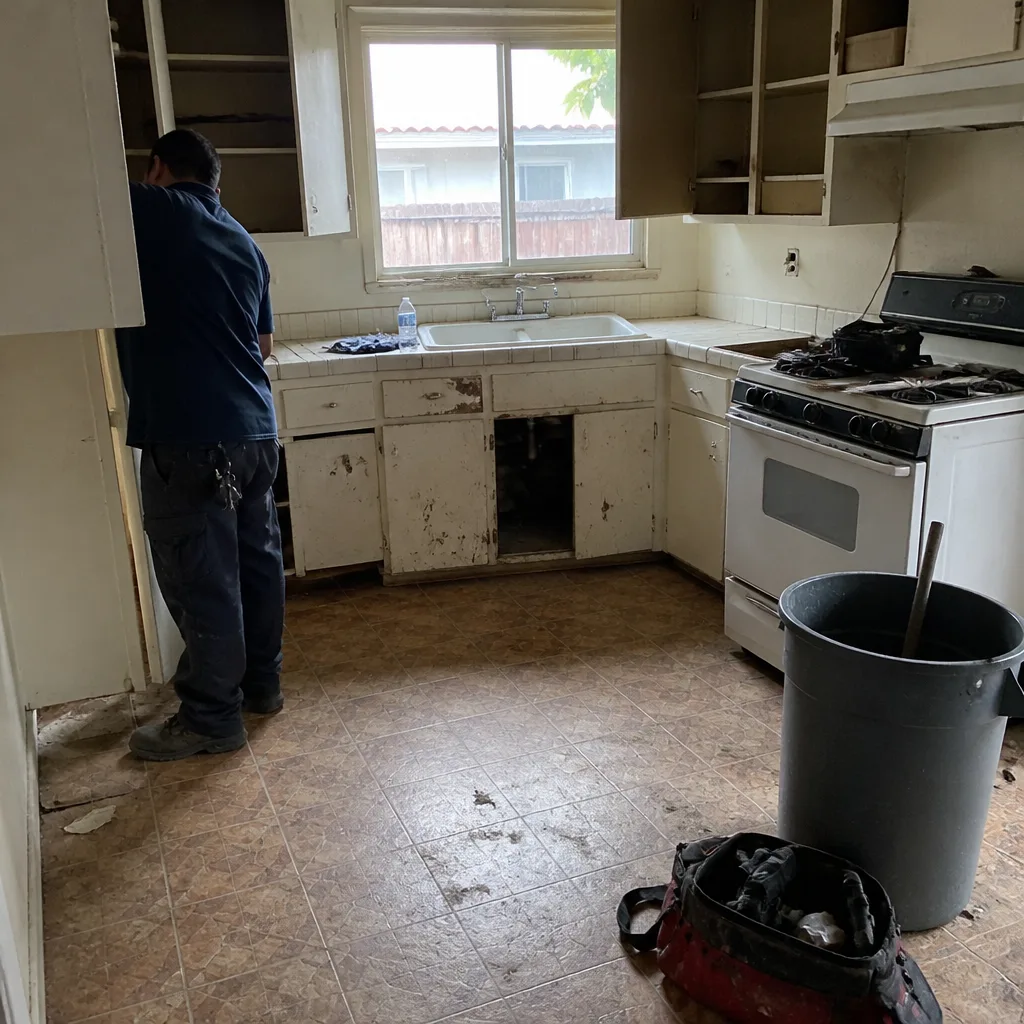 Before
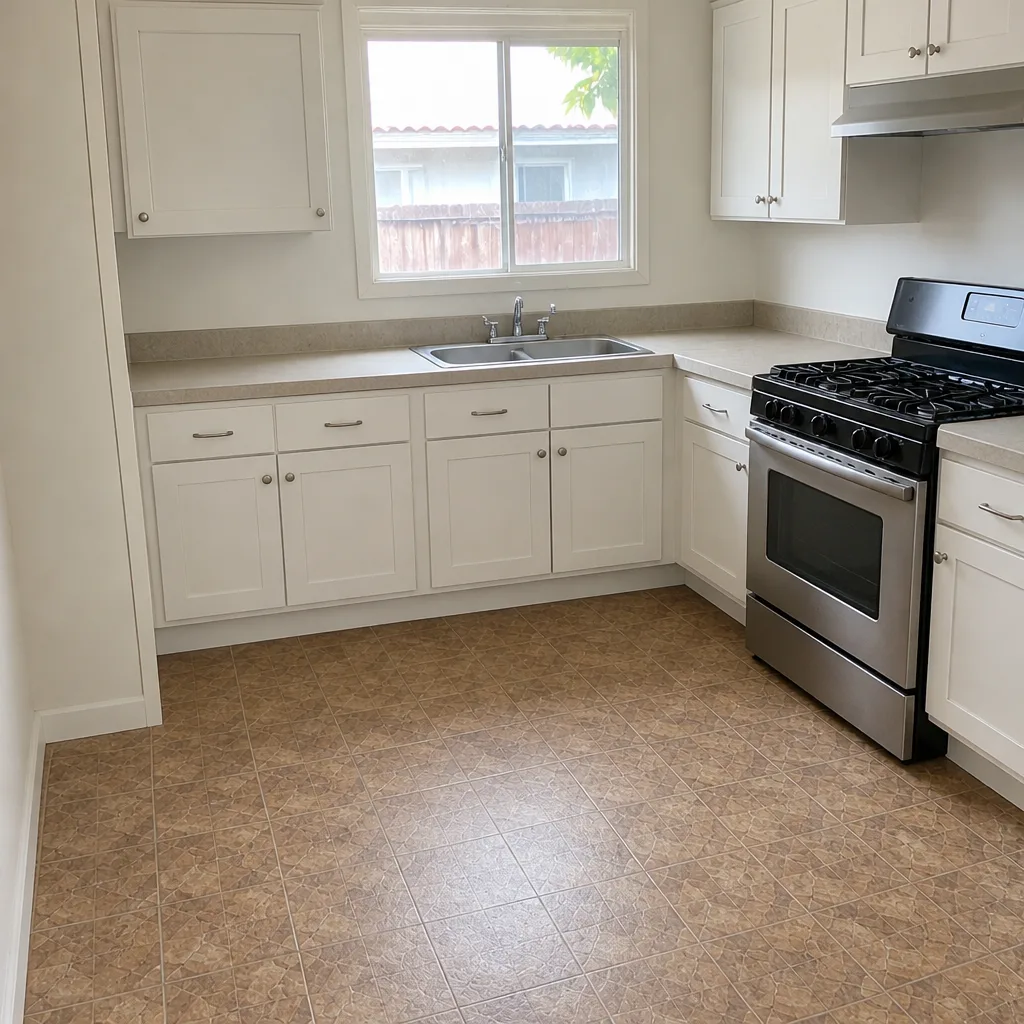 After
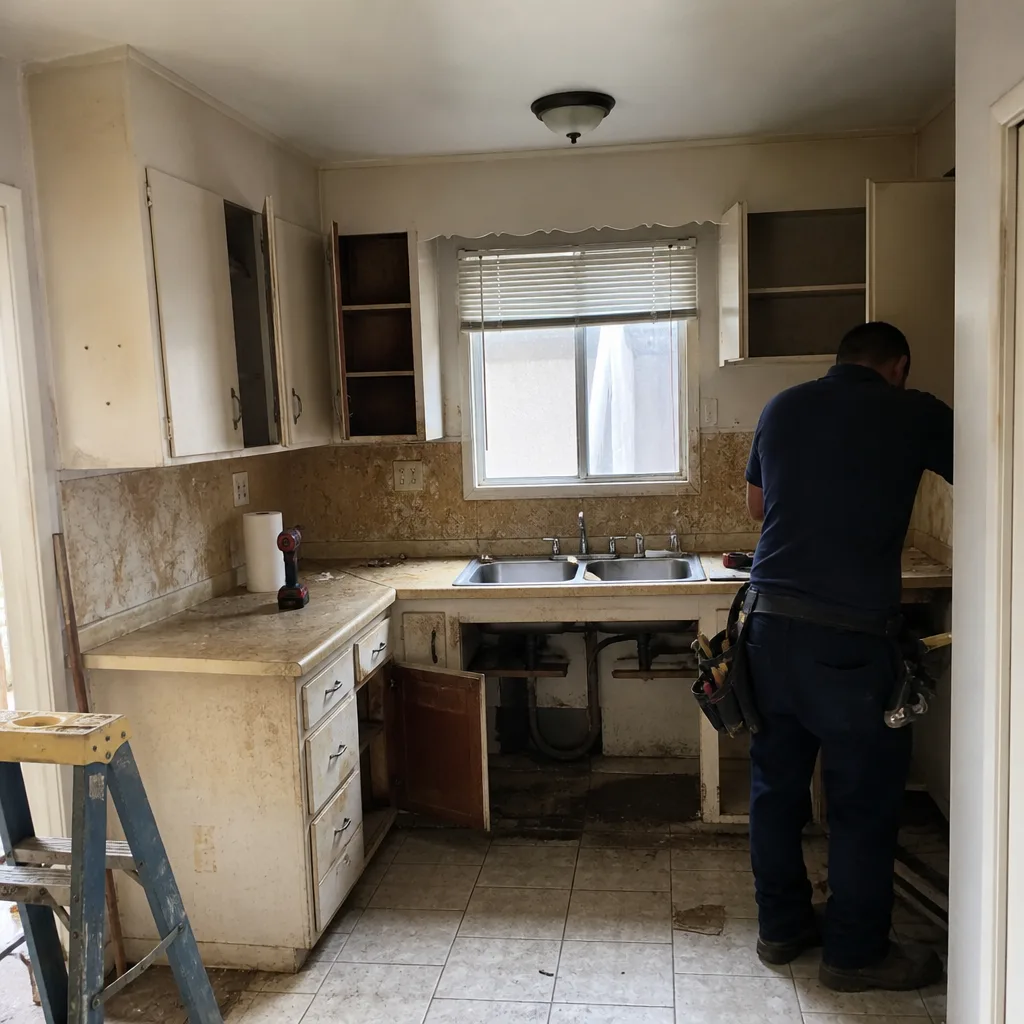 Before
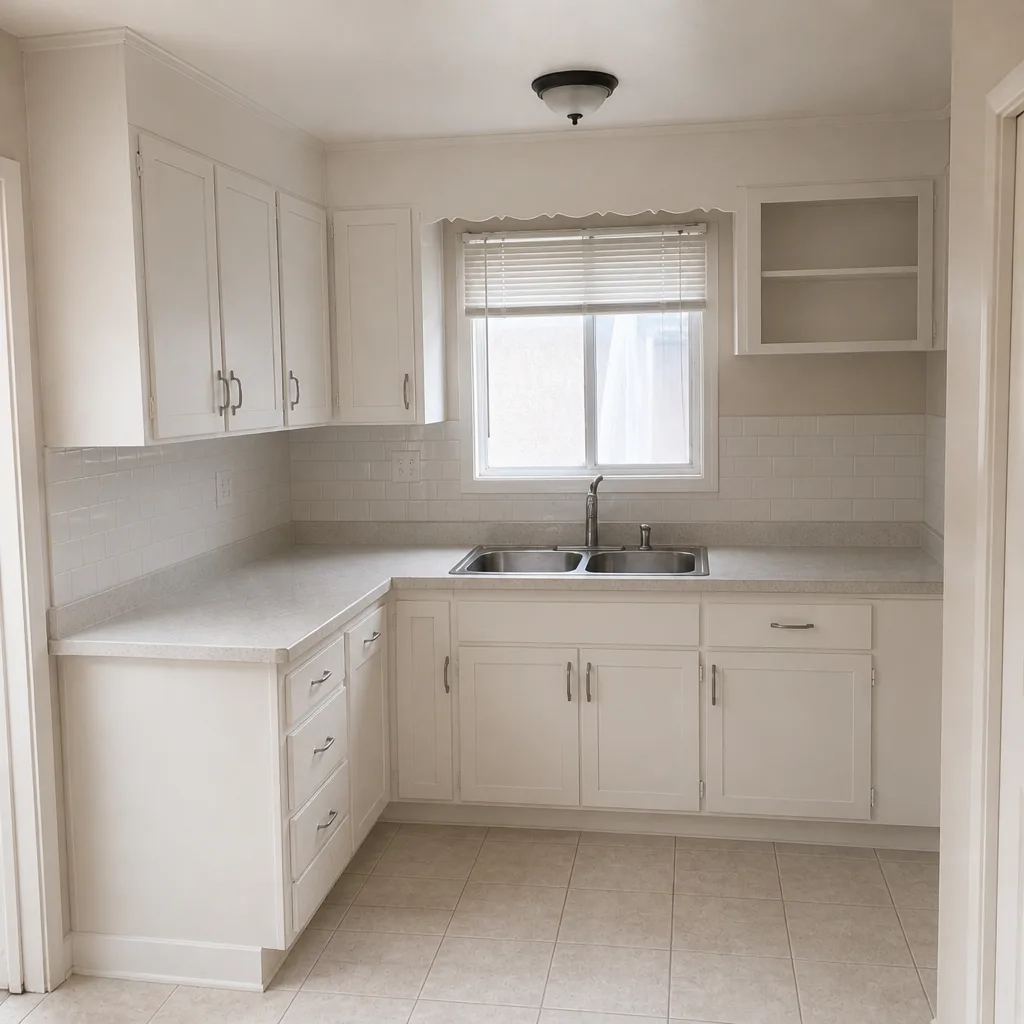 After
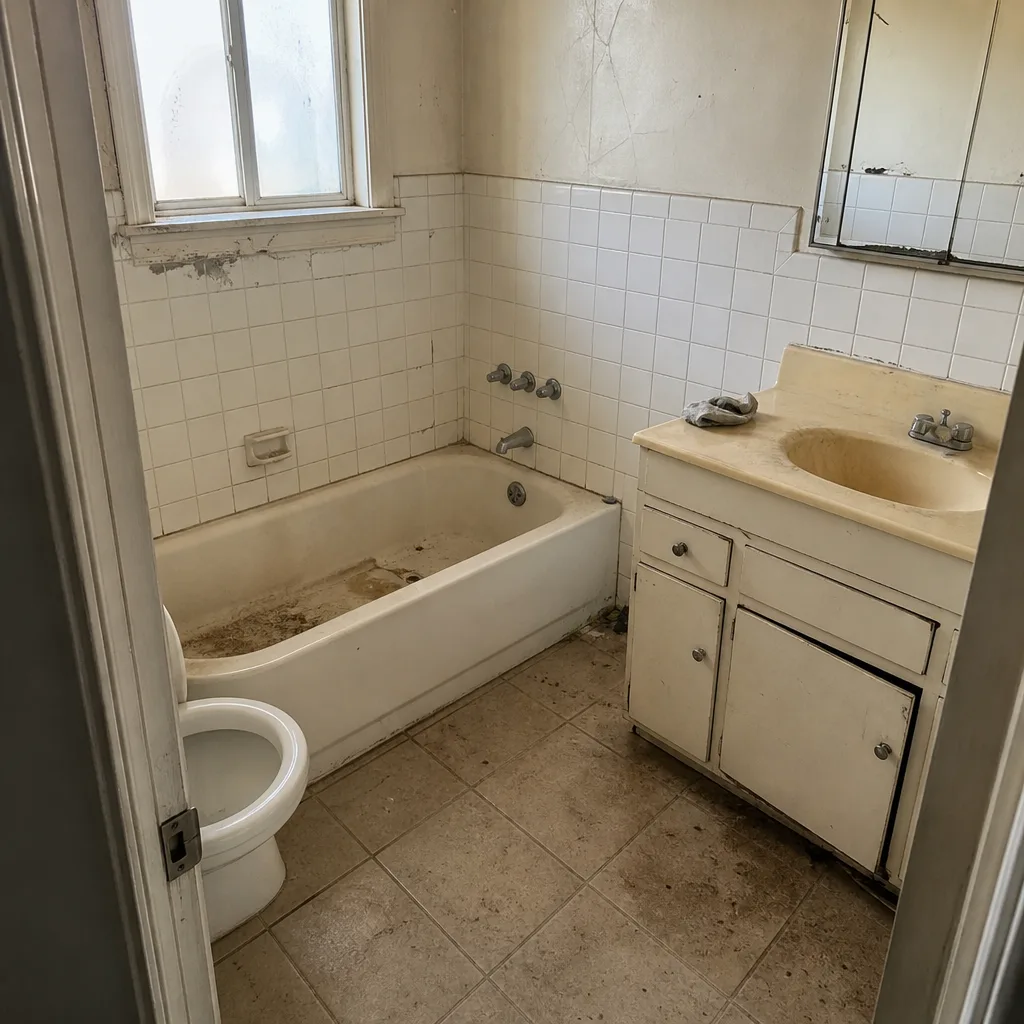 Before
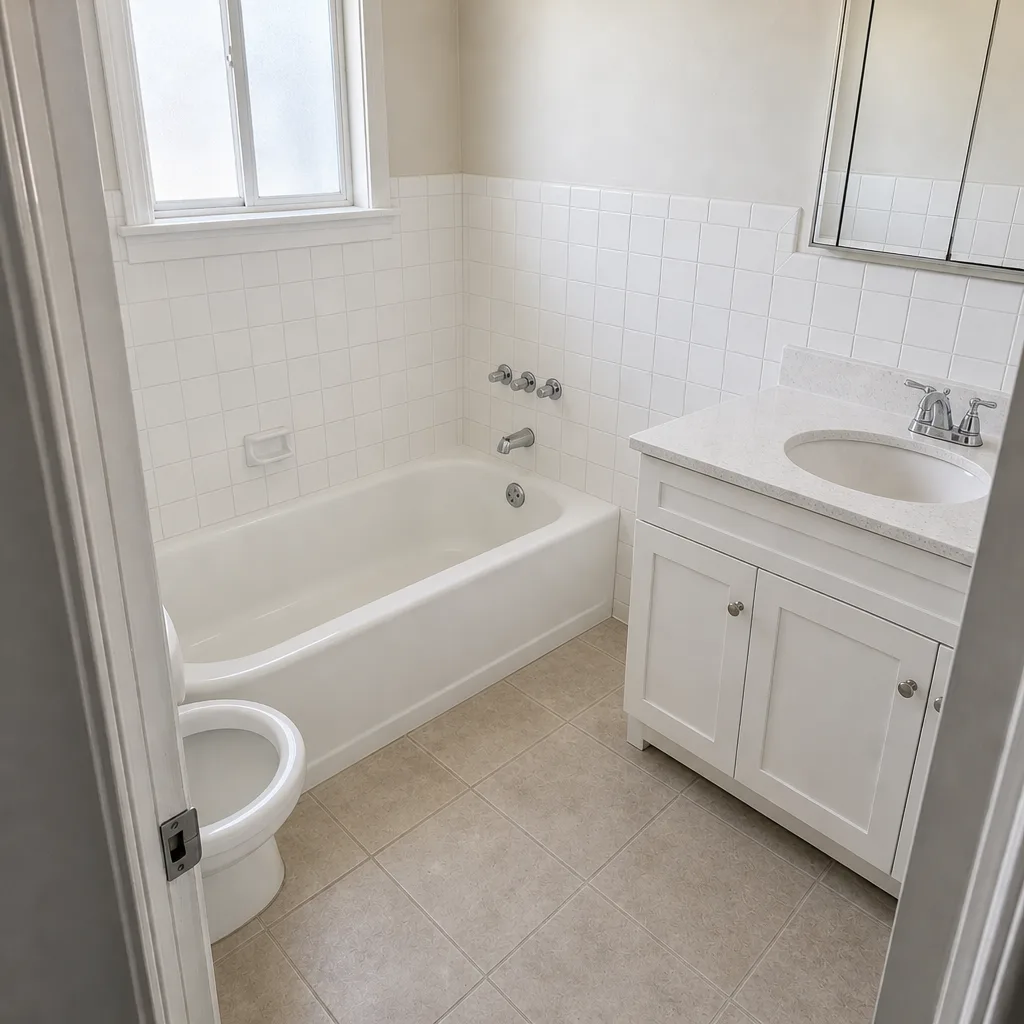 After
When to Call a Professional
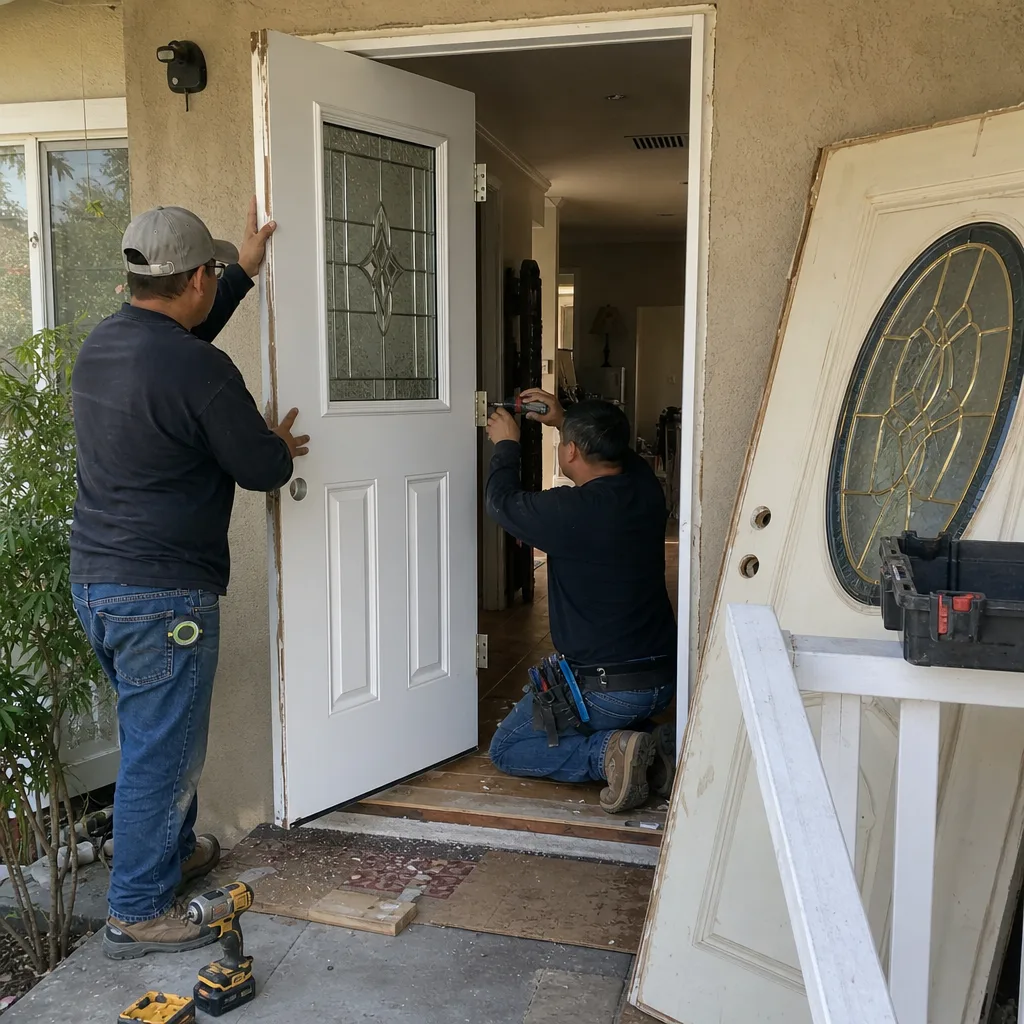
Some of these problems are a homeowner’s Saturday afternoon. Others are not. Call a professional when you see staining on adjacent drywall or interior casing, when the wood at the sill or frame corner feels soft when you probe it, or when mold or a musty smell is present at the interior casing. Call when condensation between panes appears on more than one window at once, and call when a door has shifted enough that a full-season pattern of sticking, combined with a narrowing gap at the top corner, points to foundation or framing movement. And call when you’re replacing a window or door unit rather than repairing one – proper flashing and installation is where the long-term performance of the whole opening is set. Rowan Construction Group Garden Grove offers free estimates in Garden Grove – call (888) 303-8980 to schedule one. Our technicians have up to 19 years of experience, every visit includes a documented photo record as a standard deliverable, and you’ll get a written price before any work starts.
Frequently Asked Questions
A sticking door in Garden Grove typically costs $40-$150 to repair, and most of that is labor. A hinge or strike plate adjustment is the cheapest fix; a door slab that needs shaving or sealing runs a bit more. If the diagnosis points to foundation movement rather than hardware, the repair scope changes and so does the price. Call (888) 303-8980 for an exact quote – estimates are free, and you’ll get the recommendation in writing.
Condensation between the panes means the insulated glass unit’s factory seal has failed. The desiccant inside the spacer has absorbed all the moisture it can, and the airtight seal that kept moisture out is gone. It can’t be repaired at home; the glazing unit has to be replaced, which typically runs $150-$600 installed depending on size and glass specification. Call (888) 303-8980 if you want an exact number for your windows.
Not usually. In Garden Grove, a door that sticks in summer and clears in winter is almost always responding to humidity and wood movement rather than foundation shift. The test is consistency: hardware fails all year, structure fails seasonally. If the door also rubs in the cooler months, or if the gap at the top corner of the door visually narrows over time, that’s when foundation or framing movement becomes the more likely cause and an inspection is worth the call.
Look for staining on adjacent drywall or interior casing, soft or spongy wood when you probe the sill or bottom corners, mold or a musty smell at the interior casing, and bubbling or peeling paint inside near the opening. Any of those means water has moved past the surface and the wall needs to be opened to find the entry point. Surface caulking won’t fix it.
Yes, on many casement windows the operator arm replacement is a straightforward job – remove the two screws holding the old arm, match the part number stamped on the arm, and install the new one. Andersen arms run $35-$65. The trick is matching the part to your window’s series. If the crank or the linkage inside the frame is damaged, that’s a different repair and worth having checked. Call (888) 303-8980 if you’re not sure.
Most hardware repairs – operator arms, strikes, sweeps, weatherstrip – take under an hour per opening. Glazing unit replacement takes longer because the unit has to be ordered to size and then set, so plan on a separate visit for the install. Water intrusion repairs that require opening the wall take longer and start with a diagnosis. Call (888) 303-8980 to schedule a free estimate and get a timeline in writing.
The Bottom Line
Most window and door problems in Garden Grove are mechanical, and they’re cheaper to fix than most homeowners expect. Read the symptom first: sticking at the top of a door is usually a hinge; sticking at the bottom is usually wood movement; condensation between panes is always a failed IG unit; and water at the sill is usually caulk or flashing. Test for the seasonal pattern before you order parts – that one step separates a $40 repair from a much bigger job. When water has passed the surface, or the seasonal pattern points to foundation movement, that’s the point to call in a professional. We offer written prices before any work starts, our 365-Day Done Right Promise backs every job, and we’ll give you a free second opinion on any written estimate you’ve received from another contractor. Call us at (888) 303-8980 for a free estimate in Garden Grove.
Written by the team at Rowan Construction Group Garden Grove.