Last updated November 17, 2026



Free written scope consultation - allowances, timeline, and change-order rules on paper before a single trade is scheduled
Fence Installation Warning Signs Every Homeowner Should Know
A fence built six inches over your property line can cost more to remove and relocate than it cost to build in the first place. No low bid will tell you that risk exists. It’s buried in the survey you didn’t pay for, the permit nobody pulled, and the posts that got three bags of concrete instead of the depth code requires. In our time quoting fences across Garden Grove, we’ve watched homeowners hand over deposits to contracts that looked clean and worked out badly within eighteen months. This guide teaches you to read a bid and watch a jobsite for the three skipped steps that cause most fence failures: the missing permit, the shallow post hole, and the undocumented property line.
Quick Answer
The three biggest warning signs are a bid with no property survey line item, a quote that claims no permit is needed without checking height and street-facing rules, and installers who pour concrete and set posts in the same day. Any one of those should stop you before you pay a deposit. A trustworthy fence contract names the survey, names the permit, and writes the post depth and concrete spec before work starts.
Styles & brands we work with
- Kitchen remodeling
- Bathroom remodeling
- Home additions & ADU
- Roofing
- Windows & doors
- Driveway & pavers
- Fence
Table of Contents
- Warning Sign #1: The Bid Claims No Permit Is Needed
- Warning Sign #2: Post Depth and Concrete Slip Past the Quote
- Warning Sign #3: No Documented Property-Line Survey
- How to Read a Fence Bid Line by Line
- On-Site Warning Signs During Installation
- Change Orders: Verbal Upgrades Are Where Disputes Start
- Wind, Soil, and What Fails First in Garden Grove
- Common Mistakes to Avoid
Warning Sign #1: The Bid Claims No Permit Is Needed
Garden Grove requires a building permit for most new fence construction, and the triggers are specific enough that “you don’t need one” is almost always a guess. Under the Orange County and Garden Grove building code, fences over six feet in height need a permit. Any fence that faces a street is treated differently from a rear or side-yard fence, and that street-facing rule catches people who assume a standard six-foot privacy fence in the front is exempt. Corner lots add a sight-distance rule near intersections that shortens the allowed height within the clear-vision triangle.
Then there are the HOA overlay zones. Garden Grove has neighborhoods where the HOA’s architectural rules are stricter than city code, so a permit that clears the city can still get torn back out by the association. Two rules stack: the city’s and the HOA’s. A contractor who pulls permits for a living in Garden Grove knows to ask which overlay you’re in before writing the quote.
Here’s what a good contractor does at the bid stage:
- Measures your fence height in feet and cross-references the permit threshold.
- Checks whether the fence faces a street or an intersection sight triangle.
- Asks for your HOA plan and reads the architectural section.
- Lists the permit fee and inspection as a line item in the written price.
- Puts the permit pull responsibility on the contractor, in writing.
If a contractor tells you no permit is needed but can’t name the height threshold or the street-facing rule, that’s your red flag. A no-permit claim that skips the code check is a guess dressed up as a competitive advantage.
Warning Sign #2: Post Depth and Concrete Slip Past the Quote
Here’s the number that matters: fence posts in Southern California should be set a minimum of 24 to 36 inches deep, with 30 inches the practical floor for a standard six-foot wood or vinyl fence carrying wind load. Holes should be roughly three times the post width in diameter, and the concrete should fill the hole with a proper crown at grade so water can’t pool at the base. A 24-inch hole under an eight-foot privacy fence in Garden Grove’s wind exposure is where lean starts.
What does insufficient depth look like six months later? Three things, usually in this order. First, the fence line runs out of plumb by two to five degrees at the posts nearest the wind-exposed corner. Second, the concrete shaft heaves and cracks at the surface, and the post rocks in its socket. Third, panels start to gap and shear on the windward side. If the contractor resists going deeper because “the soil’s fine,” press them. Soil that drains poorly amplifies movement, and Garden Grove’s older clay-heavy lots drain unevenly.
Signs in the bid itself that post depth is being cut:
- No concrete spec stated anywhere in the quote.
- A line like “posts anchored per standard practice” with no numbers.
- No mention of footing depth at all.
- A price per linear foot that comes in 20% under the local range with no stated scope difference.
Ask for the depth in inches and the concrete type in writing. A contractor who can’t answer isn’t being flexible; they haven’t thought about it.
Warning Sign #3: No Documented Property-Line Survey
The property-line problem is the most expensive warning sign because the fix is surgical and the cost is total. If a fence sits six inches onto a neighbor’s lot, the remedy is often removal and relocation, not a trim. In a dense city like Garden Grove, where lots run 50 to 60 feet wide in many neighborhoods, a fence line that drifts two feet over four lots isn’t hypothetical. It happens.
A competent fence contract should either include a line item for a licensed survey or explicitly reference the existing plat and confirm the fence will be set inside the recorded line with a defined offset. Either way, the alignment needs documentation before excavation. If the neighbor is a fence-share situation, the local shared-fence rules apply and the contractor should walk both parties through the line.
Bids that skip the survey usually say one of these:
- “We’ll match the existing fence line.” (The existing fence might be the one that’s wrong.)
- “No survey needed, the side lines are obvious.” (They aren’t, on a lot with a hedge or a grade change.)
- “The homeowner can mark it.” (That shifts the risk to you.)
If a contractor names Boral for composite or PGT for gates on the material side, they should be able to name the surveyor on the site side. One is not harder than the other.
How to Read a Fence Bid Line by Line
Most fence bids in Garden Grove arrive as a single number with a per-foot rate. The number is fine as a headline, but the line items underneath are where you find out whether the price is real. Here’s what a complete bid includes, and what’s missing from a bad one:
| Line item | Typical Garden Grove range | What happens if it’s missing |
|---|---|---|
| Property survey (licensed) | $400 – $900 | Risk of building over the line and paying to relocate |
| Permit fee and inspection | $150 – $400 | Fence may fail inspection or be ordered removed |
| DigAlert / 811 utility locate | $0 – $75 | Risk of striking a gas, water, or irrigation line |
| Concrete (specified mix, depth per post) | $18 – $35 per post | Lean and heave within the first year |
| Cure time (posts set before framing) | 3 – 7 days of schedule | Panels rack out of plumb as concrete moves |
| Removal and disposal of old fence | $3 – $8 per linear foot | Surprise charge or old panels left on your curb |
| Written warranty on materials and labor | Included | No recourse on panels that fail in year two |
If your quote is missing the survey, the permit, or the disposal line, the headline number is not the real price. It’s the price before the add-ons show up. For a fuller picture of what an honest fence quote looks like in this market, Fence Installation in Garden Grove breaks down the ranges by material and fence type.
When the bid also covers hardscaping or a driveway replacement alongside the fence, the same discipline applies. Our Driveway & Pavers in Garden Grove page shows how line-item pricing and disposal charges work for those trades, so you can compare bids apples to apples.
On-Site Warning Signs During Installation
Once the crew arrives, the bid stops mattering and the jobsite takes over. Watch for these five signs:
- Posts set the same day concrete is poured. Concrete needs three to seven days to cure before framing loads the post. Setting panels the same day forces the concrete to hold a load before it’s ready, and that’s where rack and lean begin.
- No string line. A string line is how you set posts in a true plane. If the crew is eyeballing it, your fence will look fine at 10 feet and crooked at 50.
- Panel gaps inconsistent by more than a quarter inch. Some tolerance is normal. A consistent quarter-inch gap between pickets is a sign of a measured install. Gaps that wander from one-eighth to three-eighths across the same run mean the pickets were cut to whatever the space needed.
- Holes too narrow for the post. A hole that’s only slightly wider than the post can’t hold enough concrete to resist wind. You’ll see it as a thin collar of concrete at grade after backfill.
- No DigAlert mark-out. Utility locators mark the ground with paint and flags before excavation. If no marks appear and digging starts, the crew is skipping a step that protects your gas and water lines.
If you can be home for the first day and the last day, you’ll catch most of these. If you can’t, ask for the photo record of the post holes and cure schedule before the panels go on.
Change Orders: Verbal Upgrades Are Where Disputes Start
Halfway through a fence job, someone suggests an upgrade. “We can add a gate on the south side for another three hundred.” “Cedar looks better than pine, we can swap it.” These are the most common source of post-job disputes for one reason: they get agreed to out loud, in the yard, and then remembered differently by both sides two weeks later.
A signed change order is the fix, and it’s simple. It’s one page with three things: what’s changing, what it costs, and what it does to the schedule. Both parties sign. Work doesn’t start on the change until the page is signed. That’s the process Rowan Construction Group runs on every job across seven trades. It’s how we’ve kept projects within a few percent of the agreed price across thousands of jobs. It’s not paperwork for paperwork’s sake. It’s what makes the promise stick after the crew has loaded up and gone.
Here’s what a change order process looks like in practice:
- Homeowner and crew lead agree on scope of change in plain language.
- Contractor writes a one-page change order with the flat number and any schedule impact.
- Homeowner reviews and signs before any material is ordered or installed.
- The signed page is added to the project file and a copy goes to the homeowner.
Ask your contractor to show you their change order template before work starts. If they don’t have one, every verbal agreement on your fence is a coin flip.
Wind, Soil, and What Fails First in Garden Grove
Southern California wind loads on a six-foot privacy fence aren’t trivial. During Santa Ana wind events, an eight-foot section of privacy fence can act as a sail. Posts set under 24 inches, or footings that don’t crown above grade, tend to fail at the windward corner first. After a wind season, you’ll find it: one or two posts with a lean, and every panel between them racked out of vertical.
Soil in Garden Grove varies block by block. Older lots in neighborhoods like Westminster-area borders and the tracts around Garden Grove Boulevard often have clay-heavy soil that drains slowly and expands when wet. Newer builds on re-compacted lots behave differently. The footing spec changes with the soil. That’s why “30 inches with a compacted gravel base” is a different build in one neighborhood than in another.
Our crews have up to 19 years of experience and they know which streets in Garden Grove want a deeper hole, which lots need an extra drain line at the base, and which gates sag within a year if the post isn’t set right. The right material helps. We install Boral composite and PGT gate systems regularly because both hold up to UV and moisture better than entry-level options, but no material survives a shallow post.
If the fence project sits alongside a larger exterior upgrade, our Home Additions & ADU in Garden Grove page covers how permits and site planning interact when you’re touching multiple structures at once.
See the difference
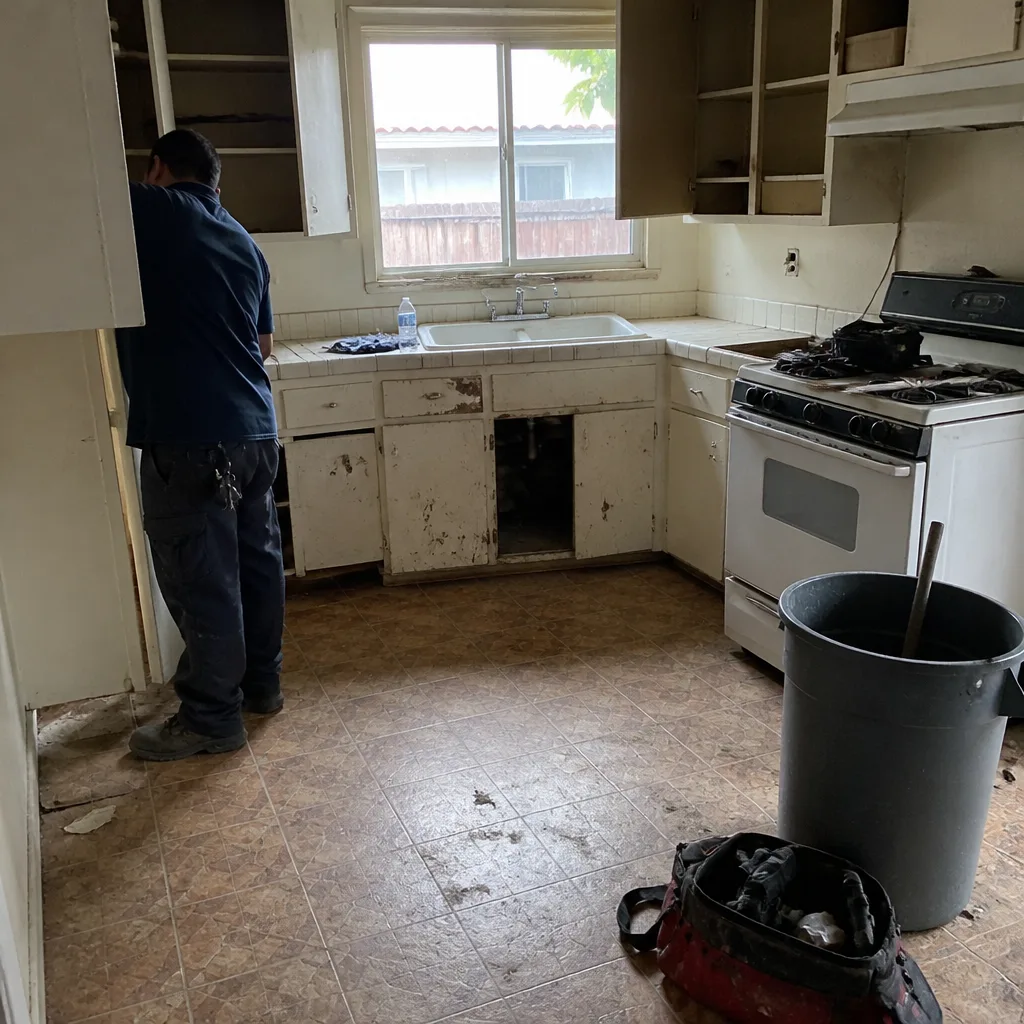 Before
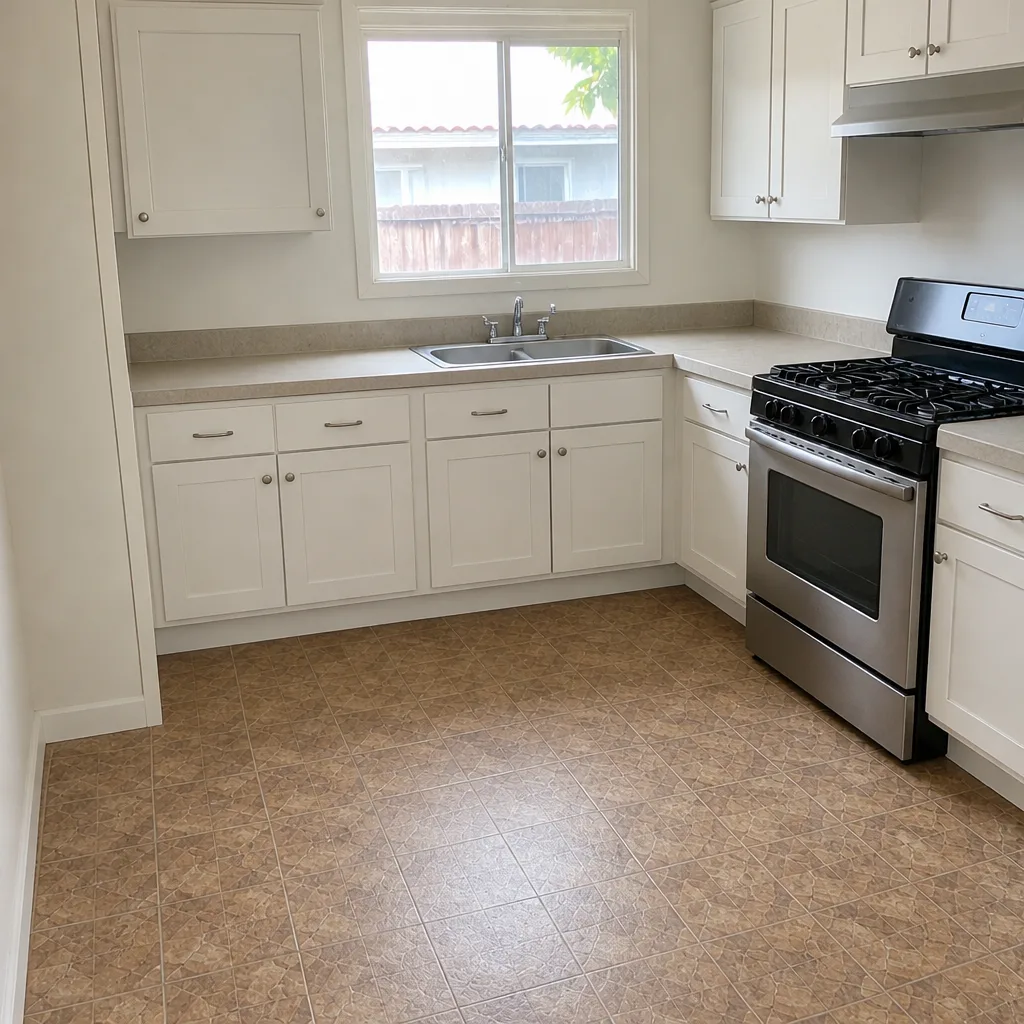 After
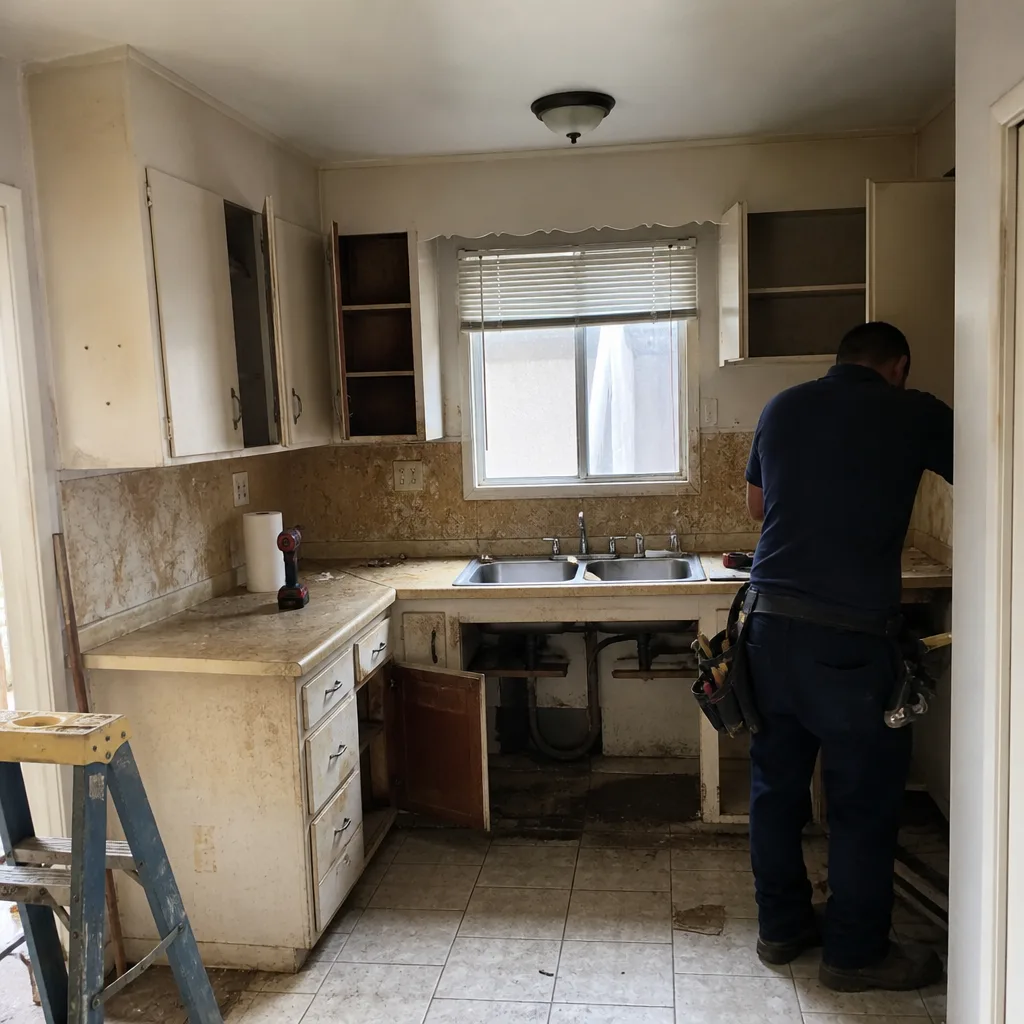 Before
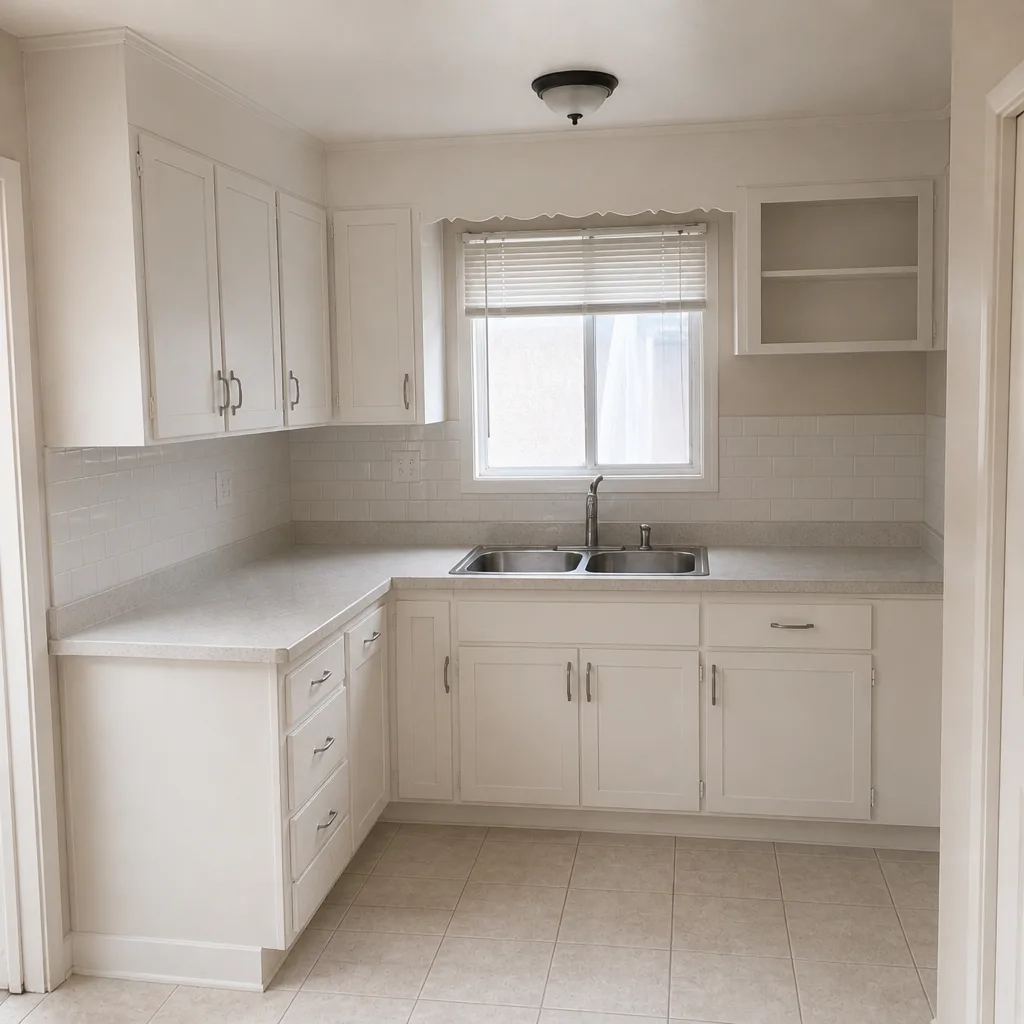 After
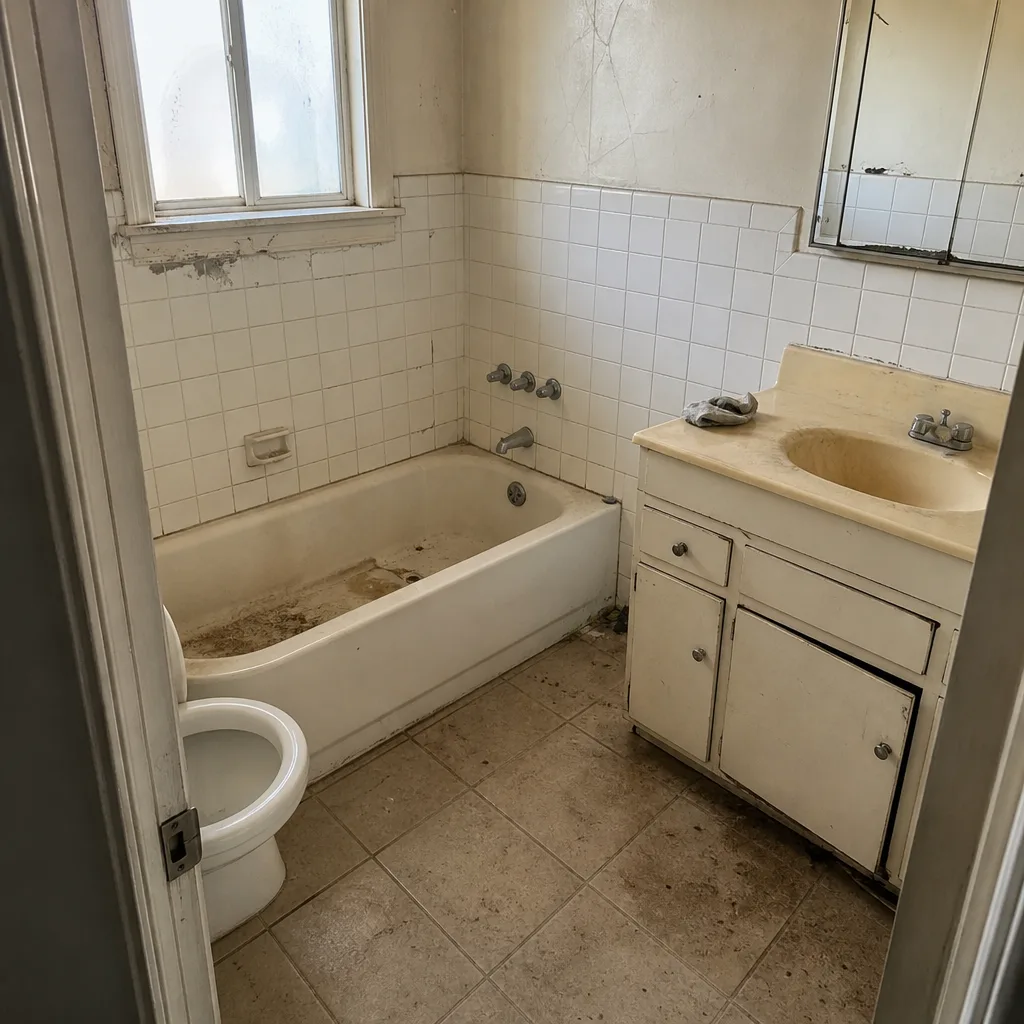 Before
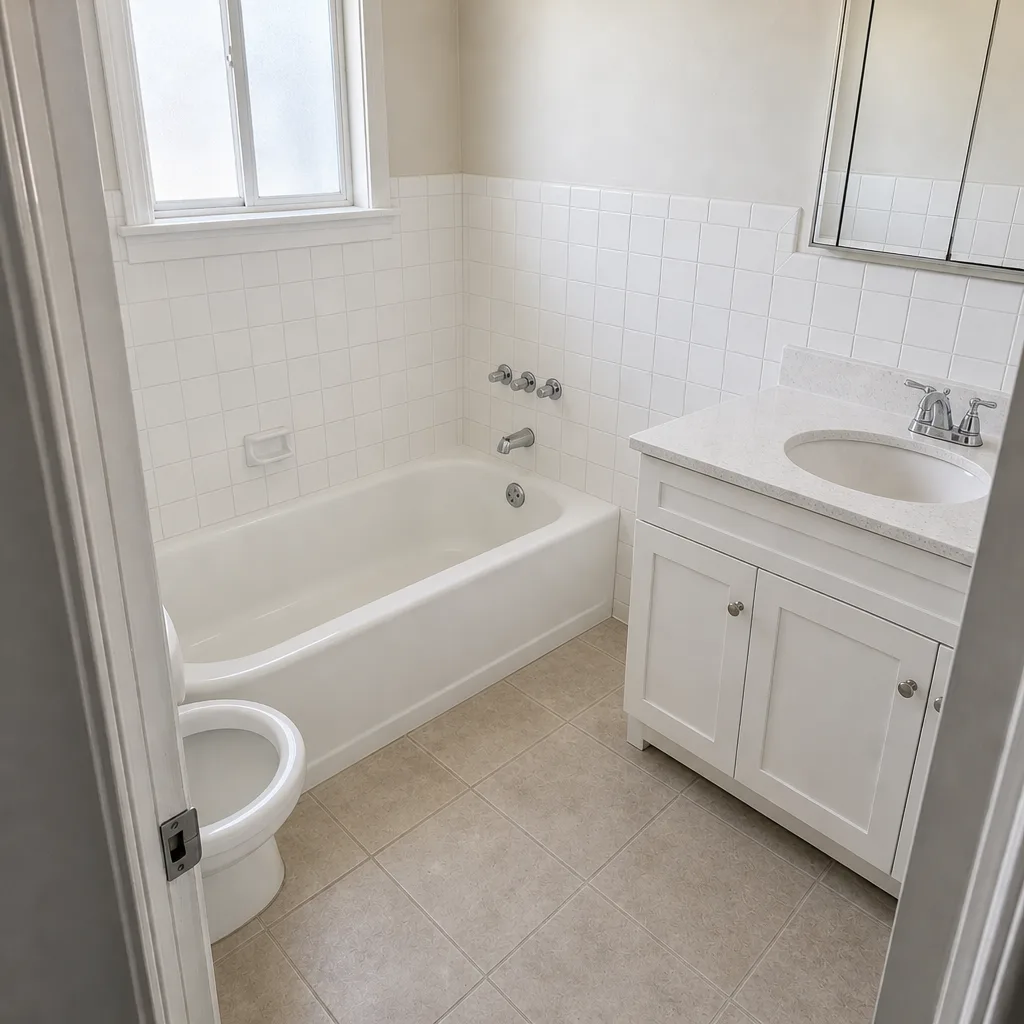 After
Common Mistakes to Avoid
- Signing a deposit before the permit is pulled. If the contractor won’t start the permit process before the deposit, you’re funding a project that may not clear inspection. Two sentences in writing fix it: “Contractor responsible for permit; permit obtained prior to deposit.”
- Trusting a “match the existing line” bid. On a 1950s Garden Grove lot, the existing fence may itself have drifted. The recorded line and the fence line are two different things until a surveyor says otherwise.
- Accepting a per-foot price with no disposal line. Old panels and posts don’t disappear. If the bid doesn’t name disposal, you’re paying the dump run separately or storing it in your side yard for a month.
- Letting the crew set panels the day posts are poured. Concrete needs cure time. Panels that go on green concrete push the post off plumb by the time the mix reaches full strength.
- Verbal upgrades. “Add a gate for another three hundred” without a signed change order is the disagreement you’ll have in three weeks. Write it down before the gate is built.
- Skipping the HOA rule check. A Garden Grove HOA can require a fence style and height stricter than the city. If the contractor never asked which association applies, they haven’t finished reading the project.
- No written warranty on materials. Composite and vinyl panels often carry a manufacturer’s warranty that’s voided if installed outside spec. A written warranty from the contractor covers the installation, not just the panel.
When to Call a Professional
Call a fence contractor before you buy a single panel if any of these apply: the fence crosses or touches a shared property line; the fence faces a street or corner sight triangle; your lot has an HOA overlay; the run is over 80 feet and needs posts on a solid plane; the posts need to clear irrigation, gas, or sewer lines; or the neighbor is claiming the current fence is on their side. Those are the conditions that turn a weekend project into a permit-and-survey job. A pro will pull the permit, get the locate, and write the post spec into the price before digging.
Rowan Construction Group Garden Grove offers free estimates in Garden Grove – call (888) 303-8980. Bring any other bid you’ve received and we’ll review it line by line at no charge. That’s a standing offer, not a tactic. We’d rather you build once with the right number than build twice. You can also start with a look at our Rowan Construction Group Garden Grove home page to see how the seven trades fit together under one written-price standard.
Frequently Asked Questions
Usually yes. Garden Grove requires a building permit for fences over six feet in height and for most street-facing fences, and corner lots have additional sight-distance rules. HOA overlay zones can add stricter requirements on top of the city’s. If a contractor tells you no permit is needed without checking those three rules, get a second opinion before you sign.
A 24- to 36-inch footing depth is the working range, with 30 inches as the practical floor for a six-foot fence carrying Southern California wind load. Holes should be about three times the post width across and filled with a specified concrete mix, crowned above grade so water sheds away. Shallow footings show up as lean and heave within the first year, especially on wind-exposed corners.
You can, and if the existing fence is off the recorded line, you’ll pay to rebuild it. A licensed survey runs roughly $400 to $900 in this market; relocating a fence that crossed a line can run several times that. On a 50- to 60-foot lot, six inches of drift is easy to miss and painful to fix. Get the survey or get a documented reference to the recorded plat with a defined offset.
A typical residential run of 100 to 150 linear feet takes two to four working days on site, plus a three- to seven-day cure window between setting posts and hanging panels. Permitting adds one to three weeks depending on inspection scheduling. Total project time from contract to final inspection is usually two to four weeks in Garden Grove. Beware any bid that promises panels the same day posts are poured.
It shouldn’t if the scope is written properly. Under our Haven Standard, the price is written before any work starts – a flat price with a written scope and a written warranty. If a change comes up mid-job, it doesn’t proceed until a change order is signed. That’s the discipline that has kept our projects within a few percent of the agreed cost across 4,000-plus jobs. Call (888) 303-8980 for a written quote that includes the survey, permit, disposal, and post spec as line items.
The contractor who pulled the permit is responsible for bringing the fence into compliance, not you. If the failure is on height, street-facing rules, or footing depth, the fix often means cutting posts or adjusting height, which is expensive. The right time to prevent this is at the bid stage – make sure the contractor is pulling the permit and responsible for inspection, in writing.
The Bottom Line
Three omissions separate a clean fence installation from one you’ll rebuild: no permit, shallow posts, and no survey. Every warning sign on this list flows from one of those three. Read the bid for the survey line, the permit line, the post depth in inches, the concrete spec, the cure time in days, and the disposal charge. Watch the jobsite for string lines, DigAlert marks, and panels that don’t go up until the concrete has cured. Ask for change orders in writing. That’s the whole discipline, and it’s what a contractor with a written-price standard shows you before you pay anything.
Written by the team at Rowan Construction Group Garden Grove.