Last updated November 17, 2026
Free written scope consultation - allowances, timeline, and change-order rules on paper before a single trade is scheduled
Construction Permits, Codes & Inspections in CA: What You Need to Know
A bathroom remodel that sailed through inspection in Sacramento can fail plan review in Orange County under a local amendment the homeowner never knew existed. California lets every city and county adopt amendments stricter than the state minimum, and Garden Grove has used that authority more than once. The permit system looks like one process from the outside. It actually runs on three parallel tracks: state code, local amendments, and Title 24 energy compliance. Miss any one of them and you’re looking at weeks of delay and thousands in rework. This guide maps which authority controls which decision, what documentation each track demands, and how the sequence really runs from application to final inspection.
Quick Answer
California construction permits are governed by the California Building Standards Code (Title 24), which combines the CBC, CRC, CMC, CPC, and CEC into one set of rules updated on a three-year cycle. Your city then layers its own amendments on top and enforces energy compliance through CF1R documents and HERS testing. In Garden Grove, expect over-the-counter permits for simple swaps and full plan review for structural, addition, and ADU work.
Styles & brands we work with
- Kitchen remodeling
- Bathroom remodeling
- Home additions & ADU
- Roofing
- Windows & doors
- Driveway & pavers
- Fence
Table of Contents
- The Five Codes: CBC, CRC, CMC, CPC, and CEC Explained
- Garden Grove’s Local Amendments to the CBC
- Title 24 Energy Compliance: CF1R, HERS, and the Inspection Sequence
- The Permit Sequence: Application to Final Inspection
- Over-the-Counter Permits vs. Plan Review
- Projects Homeowners Assume Are Exempt (But Aren’t)
- Common Mistakes to Avoid
- When to Call a Professional
The Five Codes: CBC, CRC, CMC, CPC, and CEC Explained
California doesn’t publish one building code. It publishes a family of them under Title 24, Part 2, and knowing which volume governs which scope is the first piece of leverage a homeowner has before a contractor starts talking numbers.
- CBC (California Building Code): Applies to commercial buildings and to residential projects that exceed the scope of the CRC. Structural additions, multi-story work, and anything involving three or more dwelling units falls here.
- CRC (California Residential Code): Covers one- and two-family dwellings and townhouses up to three stories. Most Garden Grove kitchen and bathroom remodels ride on the CRC.
- CMC (California Mechanical Code): Governs HVAC, ductwork, exhaust fans, and range hoods. A new bathroom vent fan triggers the CMC.
- CPC (California Plumbing Code): Covers water supply, drainage, gas piping, and fixtures. Moving a sink three feet requires a CPC-compliant permit.
- CEC (California Electrical Code): Governs panels, circuits, outlets, and lighting. Every kitchen remodel that adds a circuit or relocates a range receptacle lands here.
In plain terms: plumbing and electrical are always separate permit categories pulled by licensed trades. Structural work rides on the CRC or CBC depending on the scope and height. That split matters because each code has its own inspector, its own inspection calendar, and its own correction cycle. We’ve watched projects stall simply because the plumbing rough-in passed before the framing was ready for the same day’s electrical inspector. Sequencing across three code families is a part of the job most homeowners don’t see on a Gantt chart.
Garden Grove’s Local Amendments to the CBC
California Health and Safety Code Section 17958.5 lets cities adopt amendments stricter than the state minimum when local conditions justify it. Garden Grove has done exactly that, and the amendments live in a published local ordinance that layers onto the current CBC edition.
Where to find the current adopted version: the City of Garden Grove Building and Safety Division publishes its adopted code and amendment package through its online permit portal. If you look up the city’s adopted code year and compare it against the state’s three-year cycle, you can confirm which edition is currently in force before you draft a single line. A contractor who hasn’t checked will quote against a superseded edition. That’s how a project loses four weeks.
What those amendments cover in practice:
- Setback and lot coverage: Garden Grove’s denser residential parcels mean a home addition that clears state setback minimums may still trip a local side-yard amendment.
- Fire-rated construction: Properties near the city’s multi-family zones often face stricter wall assembly requirements than a standalone house elsewhere in Orange County.
- Accessory structures: Sheds, patio covers, and detached garages in Garden Grove carry both size thresholds and local height caps that differ from what the CRC alone suggests.
The upshot: an amendment that isn’t on the state’s radar can add a structural engineer’s stamp or a pricier wall assembly to a job. Our approach on every project is to pull the current local amendment package during the estimate phase, not after the plans are drawn. Under Clause 1 of the Haven Standard, the price is written before anyone starts. That price has to include the local amendment, or it isn’t honest. The same discipline carries across all seven of our trades, from Rowan Construction Group Garden Grove home work through to outdoor concrete, and none of it starts without the code question answered first.
Title 24 Energy Compliance: CF1R, HERS, and the Inspection Sequence
Title 24 energy compliance is the track that surprises homeowners most. It’s triggered whenever a project changes the building envelope, adds or alters HVAC equipment, installs new windows or doors, or adds square footage. Almost every remodel we quote touches at least one of those.
The CF1R form is the certificate of compliance that documents each energy measure the design must meet. The architect or energy consultant produces it during design, and the building department won’t approve the permit without it. Think of it as the energy version of a set of plans.
HERS (Home Energy Rating System) testing is the verification step. A certified HERS rater arrives at specific points to test what was installed against what the CF1R promised.
- Design phase: Energy consultant models the project and files the CF1R.
- Permit submittal: CF1R goes in with the plans. No CF1R, no permit.
- Rough frame inspection: Rater verifies insulation installation and duct sealing before drywall.
- Final inspection: Rater verifies fenestration and HVAC commissioning to close out the CF1R.
Miss any of those checkpoints and the building department won’t issue a final. When we install windows on a Garden Grove home, the paperwork trail runs through brand names like Mr-Glass and Therma-Tru with their specific U-values listed on the CF1R. A window that hits the state minimum on paper can still fail a Garden Grove HERS check if the installed model differs from the one on the form. Matching documentation to the actual product on site is a trade skill in its own right.
The Permit Sequence: Application to Final Inspection
Here’s the realistic calendar for a residential permit in Garden Grove. These ranges reflect the current plan-check backlog and are the numbers we work against when we quote a timeline.
- Pre-application research (1-2 weeks): Pull current local amendments, confirm zoning, produce CF1R.
- Plan submittal (1 day): File plans, CF1R, structural calcs, and permit application with Building and Safety.
- Intake review (3-7 business days): The department logs and routes plans to reviewers.
- Plan review (3-6 weeks for structural, addition, or ADU work): The first correction cycle typically arrives four to six weeks after intake.
- Correction response (1-3 weeks per cycle): The design team revises. Assuming two cycles is standard for additions; over-the-counter work avoids this entirely.
- Permit issuance and fee payment (1-3 days): Fees are calculated by valuation.
- Inspection sequence: Foundation, framing, rough mechanical/plumbing/electrical, insulation, HERS verification, final.
- Final inspection and closeout: The CO is issued once every sub-trade inspection is signed off.
Total for a straightforward bathroom remodel: six to ten weeks from submittal to start of work. A kitchen with structural work: eight to fourteen weeks. An ADU: four to six months. When we quote a Home Additions & ADU in Garden Grove project, the permit calendar is written into the schedule before the number is signed. Knowing the backlog means the price includes the wait.
Over-the-Counter Permits vs. Plan Review
An over-the-counter permit is issued the same day or within a few business days without a formal plan-check cycle. It covers work where the scope is narrow enough that a plans examiner can verify compliance during a short counter appointment.
Over-the-counter eligible in Garden Grove:
- Water heater replacement at an existing location
- Like-for-like window replacement within the same rough opening, provided the CF1R is on file
- HVAC changeout of an existing split system with no duct changes
- Minor electrical service upgrades up to a documented panel rating
- Re-roofing with no structural change (using GAF or Owens Corning systems that meet the current CEC cool-roof standard)
Requires full plan review:
- Any wall relocation or structural change
- Room additions, ADUs, and any new square footage
- New windows or doors where the rough opening changes
- Any project that alters the building envelope in a way the CF1R doesn’t already cover
- Fences over the local height threshold near a corner sight line (fence plan set and inspection required in Garden Grove)
If you’re unsure which track a project falls on, the counter staff will tell you in one minute. The problem is that many homeowners assume a project is over-the-counter when it isn’t. That assumption is where timelines die.
Projects Homeowners Assume Are Exempt (But Aren’t)
California’s permit exemptions are narrower than most people expect. These are the ones we field most often, especially on the denser lots around Garden Grove’s historic core.
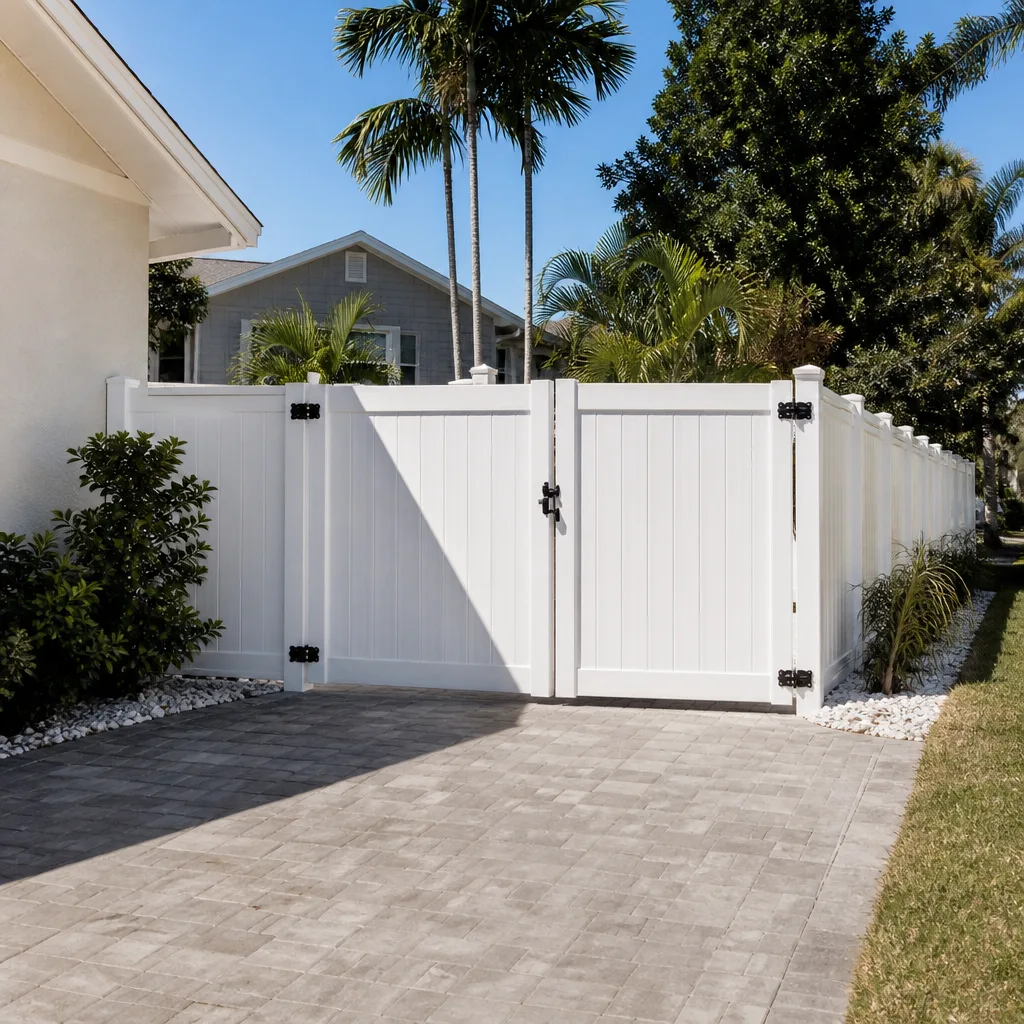
- Replacing a fence: Like-for-like repairs below a height threshold may not require a permit, but new fences in Garden Grove often do. Side-yard and corner-lot fences can trip both a local height cap and a plan-review requirement. Our Fence Installation in Garden Grove jobs all pull the right permit first.
- Repaving a driveway: A fresh surface on the same footprint usually doesn’t need a permit. Widening it, changing slope, or modifying the approach apron to the street typically does, and the City’s engineering side gets involved. That distinction is why Driveway & Pavers in Garden Grove work starts with a straight answer on which permit applies.
- Installing a new window in an existing wall: Physical size change means plan review and CF1R update. Barrette or ViewLux units that match the existing model and opening can sometimes stay over-the-counter.
- Converting a garage to living space: Never exempt in California. Full plan review, structural, and CF1R.
- Adding a shed over 120 square feet: Local amendments may lower that threshold on smaller lots. In Garden Grove, we check the amendment package every time before quoting.
- Changing a water heater to a tankless unit: Plumbing, gas, and venting all shift. Full plan review, CPC and CMC.
The pattern is the same every time: the homeowner reads the state exemption, and the local amendment takes it away. California’s three-track system is designed to let cities tune rules to their own conditions. It’s also designed to catch projects that try to skip the permit.
Common Mistakes to Avoid
- Quoting against a superseded code edition. California updates Title 24 on a three-year cycle, and Garden Grove adopts its amendments on its own timeline. Confirm both before pricing.
- Skipping the CF1R until permit submittal. The energy consultant should be engaged during design. Waiting until your plans are drawn means a second design cycle.
- Assuming a “simple” remodel doesn’t need a permit. Moving a sink, adding an outlet, or replacing a bathroom vent fan all touch the CPC, CEC, or CMC. Each one is a separate inspection.
- Scheduling the HERS rater late. Rater verification is a gated inspection, not a wrap-up. A missed checkpoint means reopening the wall.
- Ignoring the amendment that applies to the neighborhood. A project that complies on a wide Garden Grove lot may fail on a narrow one near the historic core because of side-yard or coverage rules.
- Pulling the permit under the wrong license. Structural and trade permits must be pulled by the licensed contractor of record for that scope. A homeowner-pulled permit for trade work is a red flag at sale.
- Not reading the change order. This is our discipline, so we say it plainly: no work proceeds on a change until the change order is signed. The projects that stay within a few percent of the agreed cost are the ones where every added scope went through that step.
When to Call a Professional
Call in a licensed contractor the moment a project crosses any of these lines: you’re changing the building envelope, moving a wall, adding square footage, converting a garage, or touching gas and electrical at the panel. Title 24 documentation, HERS verification, and the correction cycles only run cleanly when the drawings, energy forms, and trade sequencing are managed by someone who has done the sequence before. In our experience, the homeowner who self-manages a plan review on an ADU can easily lose six weeks to a single correction cycle. If you’re carrying a competitor’s quote or a rejected plan set to us, our Free Second Opinion reviews it line by line at no cost. Rowan Construction Group Garden Grove offers free estimates in Garden Grove, with a flat written price and written scope delivered before any work starts. Call (888) 303-8980.
See the difference
 Before
 After
 Before
 After
 Before
 After
Frequently Asked Questions
Permit fees in Garden Grove typically run between 1.5% and 3% of construction valuation, so a $40,000 kitchen remodel lands around $600 to $1,200 in permit fees, and a $150,000 ADU runs roughly $2,000 to $4,500. Plan review fees and separate trade permits for plumbing, mechanical, and electrical are added on top. Some projects also trigger school district fees and utility connection charges that don’t appear on the building department invoice. Call (888) 303-8980 for an exact quote – our estimates include a permit fee line before anything starts.
No, if the scope stays the same. Under Clause 1 of the Haven Standard, the price is written before anyone picks up a tool, and no work proceeds on a change until the change order is signed. The only legitimate reason the number moves is added scope you approve in writing, or a code correction the building department orders that couldn’t be foreseen in plan review. Call (888) 303-8980 to discuss your project – the estimate is free.
Yes. Every Rowan Construction Group Garden Grove project pulls the permits under the correct licensed contractor of record for each scope, and the photo record on every visit includes the permit and inspection card. We do not ask homeowners to pull permits for trade work, because a homeowner-pulled trade permit can create title and disclosure problems at sale. Call (888) 303-8980 for a free estimate and we’ll confirm the permit path before we quote.
Plan review for a Garden Grove room addition typically runs four to six weeks for the first cycle, and additions usually need two correction cycles. From submittal to permit issuance, budget eight to fourteen weeks for a one-story addition and four to six months for an ADU. Over-the-counter permits skip this entirely and can issue in a few business days. Call (888) 303-8980 for a project-specific timeline.
A CF1R form is the Title 24 certificate of compliance that documents the energy measures your project must meet, and the building department will not approve the permit without it. It’s required whenever your project touches the building envelope, changes HVAC, installs windows or doors, or adds square footage – so nearly every remodel in Garden Grove needs one. The form is produced during design, not at submittal. Call (888) 303-8980 if you’re unsure whether your project triggers it.
Yes. California lets each city adopt code amendments stricter than the state minimum, and Garden Grove has used that authority on setbacks, fire-rated assemblies, and accessory structures. A project that clears the state CBC minimums can still fail Garden Grove’s local review. The current applied amendment package is published on the city’s permit portal, and we pull it before pricing every job. Call (888) 303-8980 for a free estimate reviewed against the correct local code.
The Bottom Line
California’s permit system runs on three parallel tracks: state code, local amendments, and Title 24 energy compliance. The building code family (CBC, CRC, CMC, CPC, CEC) tells you which inspections apply. Garden Grove’s local amendments tell you what stricter rules apply on your specific lot. Title 24 tells you what CF1R paperwork and HERS verification the building department needs to close out. Plan review in Garden Grove runs four to six weeks for a first cycle; over-the-counter work bypasses it. Pull the current amendment package, engage the energy consultant at design, and write the permit path into the schedule before you sign a contractor’s number. The projects that finish on budget are the ones where the paperwork was right first.
Written by the team at Rowan Construction Group Garden Grove.