Last updated November 17, 2026


Free written scope consultation - allowances, timeline, and change-order rules on paper before a single trade is scheduled
Driveway & Pavers Troubleshooting: Common Problems and How to Fix Them
A sunken paver section that looks like a $300 re-leveling job is often an $1,800 base failure in disguise. And sealing over efflorescence before you treat the moisture source guarantees the white stain returns within one wet season. Here’s the pattern we’ve seen across Garden Grove driveways: the symptom homeowners point at is rarely the cause that drives the repair cost. This guide teaches you to read the cause, not just the symptom, so you can tell the difference between a maintenance fix and a structural one before anyone quotes you a number.
Quick Answer
Most driveway paver problems come down to three root causes: a base that was never compacted properly, water that can’t drain away from the slab edge, and failed joint sand or edge restraint. Sinking point to a base issue, white residue points to moisture and salt movement, and loose pavers along the border point to edge restraint failure. Diagnose the cause first, because the same visible symptom can cost $200 or $4,000 to fix depending on what’s underneath.
Styles & brands we work with
- Kitchen remodeling
- Bathroom remodeling
- Home additions & ADU
- Roofing
- Windows & doors
- Driveway & pavers
- Fence
Table of Contents
- Why Do Pavers Sink? Base Failure vs. Soil Erosion vs. Poor Compaction
- How to Probe a Suspect Base Without Pulling Pavers
- Efflorescence: What That White Residue Really Means
- Joint Sand Washout vs. Edge Restraint Failure: Two Lookalike Problems
- Cracked and Chipped Pavers: When It’s Cosmetic and When It’s Structural
- Drainage in Garden Grove’s Climate
- What to Photograph Before You Call a Contractor
Why Do Pavers Sink? Base Failure vs. Soil Erosion vs. Poor Compaction
Not every dip in a paver driveway gets fixed the same way. Three distinct causes produce the identical symptom of a low spot, and each one has its own cost floor.
- Base failure means the aggregate layer under the pavers has lost its structure, usually from water intrusion. The pavers themselves are fine; the support under them isn’t. This is the most expensive fix because pavers come up, the base is rebuilt in lifts, and compacting resumes.
- Soil erosion is water carrying fine soil particles out from under the base, often along the edges or where a downspout discharges. You’ll usually find a void or soft spot near the perimeter or against the house.
- Inadequate compaction is a build-quality problem: the base was laid down in too-thick lifts or never compacted to spec with a plate compactor. The dip tends to be broad and gradual rather than a sharp, isolated crater.
In Garden Grove, where high water tables and clay-heavy soils in pockets near the older neighborhoods around Historic Main Street can hold moisture for longer than in sandier parts of Orange County, erosion and base failure show up more than homeowners expect. A single paver that rocks is often compaction. A whole section that settles toward the street is usually drainage plus base, and that’s a different job with a different number.
For a full replacement, the honest comparison is pavers against concrete: Driveway & Pavers in Garden Grove covers what the base build should include and what replacement costs run.
How to Probe a Suspect Base Without Pulling Pavers
You can gather real diagnostic information before a single paver comes up, and it helps a contractor quote accurately. The tool is a thin steel rod, a stiff length of rebar, or a long screwdriver.
- Walk the surface slowly and note where it dips or bounces underfoot. A hollow “thump” sound versus a solid one tells you where the base has lost contact with the pavers.
- At the edge of a suspect dip, work the rod down through a joint (in the sand gap, not through the paver) until it meets resistance. Mark the depth with your thumb.
- Probe the same joint across the section from solid to settling. If the refusal depth drops sharply, you’ve found the edge of a base void. If it’s consistent but shallow, the base is thin.
- Probe along the driveway edge where the pavers meet the street, the sidewalk, or the house. That’s where erosion voids concentrate.
What “bounce” tells you: when a paver rocks or flexes because the base beneath it has subsided, you’re standing over a void. A hard, dead thud means solid contact. In our experience, a broad bounce across a section points to base compaction, while a localized bounce at the perimeter points to edge erosion. Neither is a job for a bag of sand and a weekend. Note the map of dips and probe depth in a notebook or on your phone, because a contractor who can see where the problem concentrates will quote more accurately than one guessing from a photograph.
Efflorescence: What That White Residue Really Means
Efflorescence is a white, chalky mineral bloom that surfaces on pavers when water moves through the concrete or stone, dissolves salts, and carries them to the face where they dry. It’s not dirt, and it isn’t a sign of a defective paver. It’s a sign that moisture is migrating, and the fix has to start there.
Here’s the part that trips people up: vinegar-based cleaners make it worse. Acid dissolves the mineral bloom, but on a driveway that still has an active moisture source, it also opens the surface and creates a fresh path for more salt to rise. You clean it, it looks great for a month, then the white comes back with the next rain.
What actually works, in order:
- Find and fix the moisture. Downspout discharge, a low spot that holds water, a sprinkler head aimed at the driveway, or an unsealed joint letting rain into the base.
- Let the pavers dry out thoroughly. Efflorescence that keeps returning after drying keeps pointing at a source you haven’t found.
- Use a proprietary efflorescence remover formulated for pavers, not a generic acid wash. Brands like Techniseal and SRW Products make cleaners and sealers designed to be used together, and the sequence matters.
- Seal only after the pavers are dry and the source is corrected. A penetrating sealer slows water uptake; it doesn’t block it from a foundation that keeps feeding salt to the surface.
Garden Grove’s wet winters and warm, dry summers are exactly the cycle that pulls salt to the face and then dries it there. If you treat the stain alone, expect it back inside a season.
Joint Sand Washout vs. Edge Restraint Failure: Two Lookalike Problems
These two issues present almost identically to a homeowner: loose pavers, gaps, and a driveway that’s starting to look ragged along the border. But they need different corrections, and one is cheap while the other is structural.
Joint sand washout is what it sounds like. The sand that locks the pavers together gets hosed out, blown out, or washed away, and pavers start to shift laterally. The pavers are still sitting on a sound base. The fix is a full re-sanding with polymeric sand, worked into the joints and set with a light water mist, which takes most of a day on a typical two-car driveway.
Edge restraint failure is the border strip of pavers creeping sideways because the edge restraint, an aluminum or concrete curbing that holds the field in place, has lost its anchor or was never set on a compacted, pinned footing. Spreading pavers with a widening border are the tell. Without the restraint holding the field, re-sanding buys you weeks, not years, because the pavers keep moving and the sand keeps washing out.
How to tell them apart in two minutes:
- Look at the outer row. If the whole border line has crept out and gaps are opening across the field, suspect edge restraint.
- Look at the sand itself. If joints are empty but the border line is straight, you likely have washout, not movement.
- Push the border pavers with your foot. Movement along the edge means the restraint, not the sand, is the problem.
Order the fix wrong, and you’ll pay for sand you’ll lose again. We’ve seen Garden Grove driveways treated three times for washout when the real issue was a restraint that let the field widen 3/4 inch over two years.
Cracked and Chipped Pavers: When It’s Cosmetic and When It’s Structural
A cracked paver is not automatically a failing driveway. It depends on where the crack runs and whether the base under it has movement.
- Corner chips and surface spalls are usually cosmetic: a lawn mower, a dropped tool, or winter frost in a shallow joint. Replacement is a single-paver swap.
- Cracks running edge to edge through the paver above a settling base mean the paver is working up and down. Fixing the paver alone leaves it to crack again.
- Linear cracks along a whole course often follow a joint that wasn’t locked or a base seam. That’s a base question, not a paver question.
On heavier loads, driveways carrying an RV or a full-size pickup over pavers laid to a lighter residential spec will crack along the tire path where compaction was marginal. Telling a cosmetic chip from a structural crack usually comes down to one question: is the base under it moving? Probe it as described above before you replace the paver.
Drainage in Garden Grove’s Climate
Garden Grove gets most of its rain in a short winter window, and when it comes, it comes fast. Driveways that hold water after a storm aren’t unlucky; they’re telling you the grading is wrong.
A properly built paver driveway sheds water to the street or a drainage point on a slope of roughly 1/4 inch per foot. When that slope is lost (to settling, to a base that wasn’t built to grade, or to landscaping that raised the ground level against the edge), water pools, sits in the joints, and works into the base. That’s the exact recipe for the base failure and efflorescence above. Garden Grove’s older neighborhoods around the downtown core have tight lots and mature shade trees that drop leaves into drainage channels, which compounds the problem.
What to check after a storm:
- Where the water pools, and whether it’s gone within a day.
- Whether water is running toward the house or away from it. Toward is a problem.
- Whether downspouts and sprinklers discharge onto the pavers, which feeds the joint washout and efflorescence issues above.
If your driveway has a drainage problem and a fence line that also collects water, the two are often the same grading issue. Fence Installation in Garden Grove covers how a properly set fence footing handles the same runoff.
What to Photograph Before You Call a Contractor
Good photos turn a guessing game into an accurate quote, and they save you a site visit on small jobs. Here’s what to capture, in this order:
- Wide shots of the whole driveway from the street, one at eye level and one from a corner, so the contractor can see overall grade and where the dips sit in relation to the house and street.
- Close shots of each problem area from six inches away, with a coin or a ruler laid in the gap for scale.
- A photo of the edge restraint along the border, including any widening gaps.
- A photo of the joint sand in a problem area, showing depth of washout.
- Photos of efflorescence or staining taken in daylight, not under artificial light, because the tone tells a contractor what the deposit is.
- A note of where your probe found soft spots and how deep the rod refused, on a sketched map of the driveway.
What helps less: a single wide shot with nothing marked and no scale. What helps most: pairing each wide shot with a close shot and a note. A contractor with accurate photos can often quote the common fixes over the phone, then confirm on-site. For bigger jobs, documentation feeds straight into a written line-item quote so every fix has a discrete number.
Common Mistakes to Avoid
- Sealing over efflorescence without finding the moisture source. The sealer traps salt under a film and the stain returns with the first wet season.
- Fixing the symptom, not the cause. Re-leveling a dip without diagnosing compaction vs. erosion vs. base failure rebuilds the same failure. In Garden Grove’s clay-heavy soil pockets, a base that wasn’t compacted in lifts will settle again.
- Using vinegar or generic acid wash on pavers. It etches the surface and opens a fresh path for mineral bloom.
- Re-sanding when the edge restraint is failing. The pavers keep creeping and you lose the sand again within weeks.
- Skipping the probe test. Without it, a contractor quotes from the surface and either under-quotes or pads the job.
- Letting downspouts and sprinklers discharge directly onto the pavers. Every gallon works into the joints and base. Move the discharge or extend the downspout.
- Assuming the paver itself is defective when it cracks. The base under it usually is, and replacing the paver alone won’t stop the next crack.
See the difference
 Before
 After
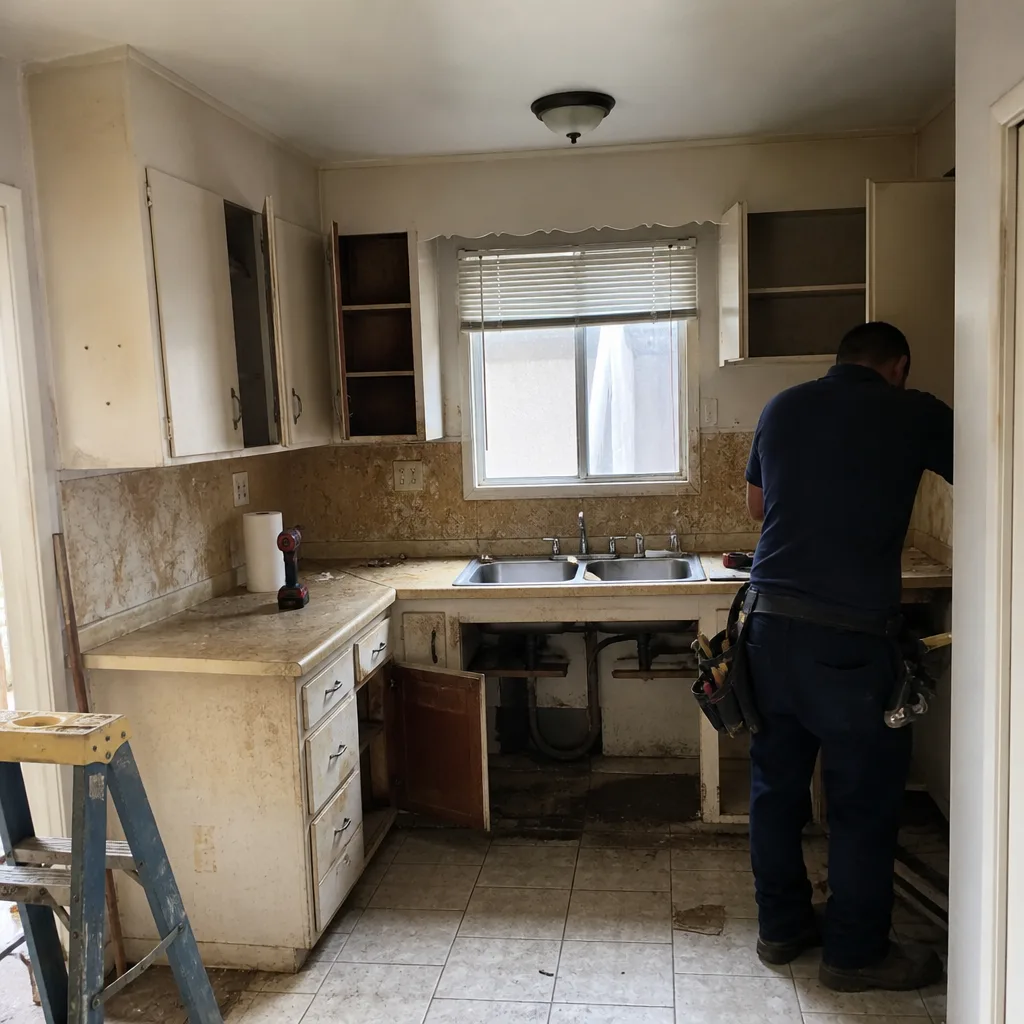 Before
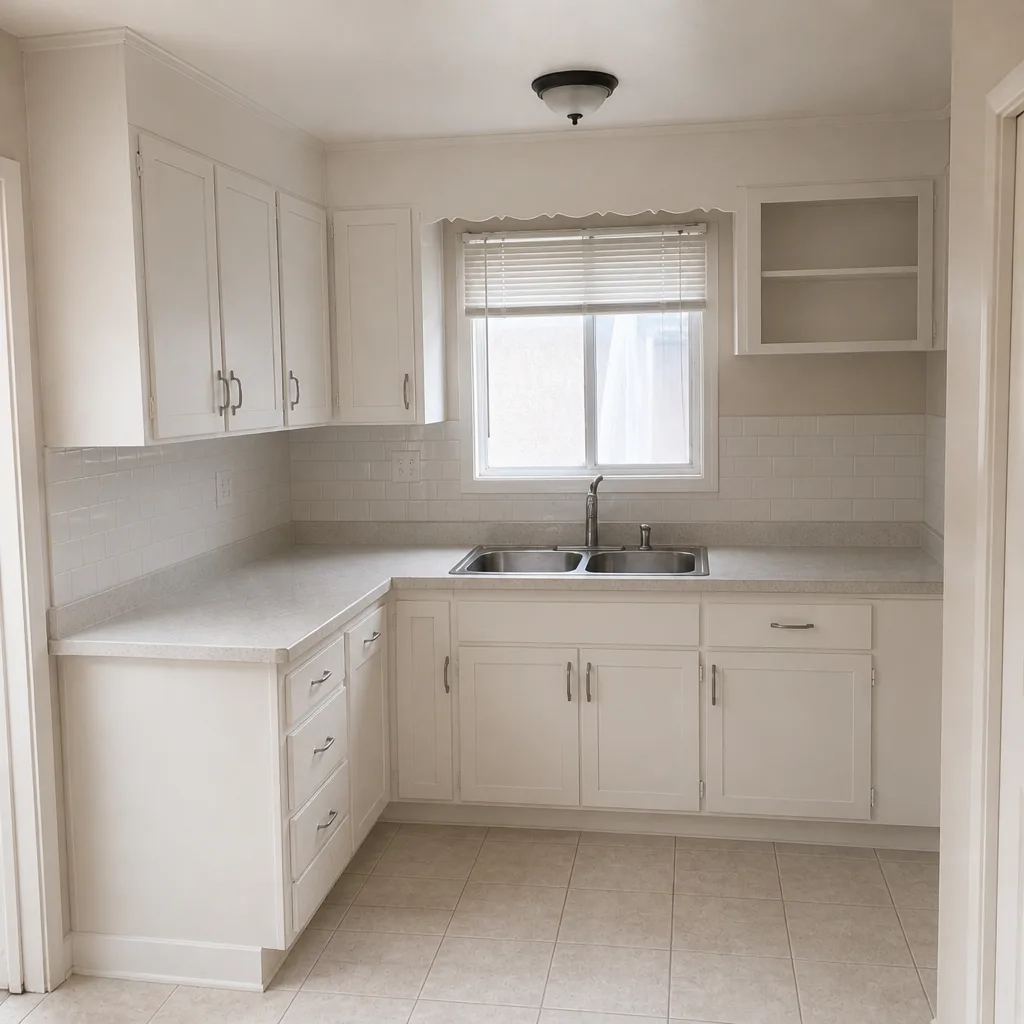 After
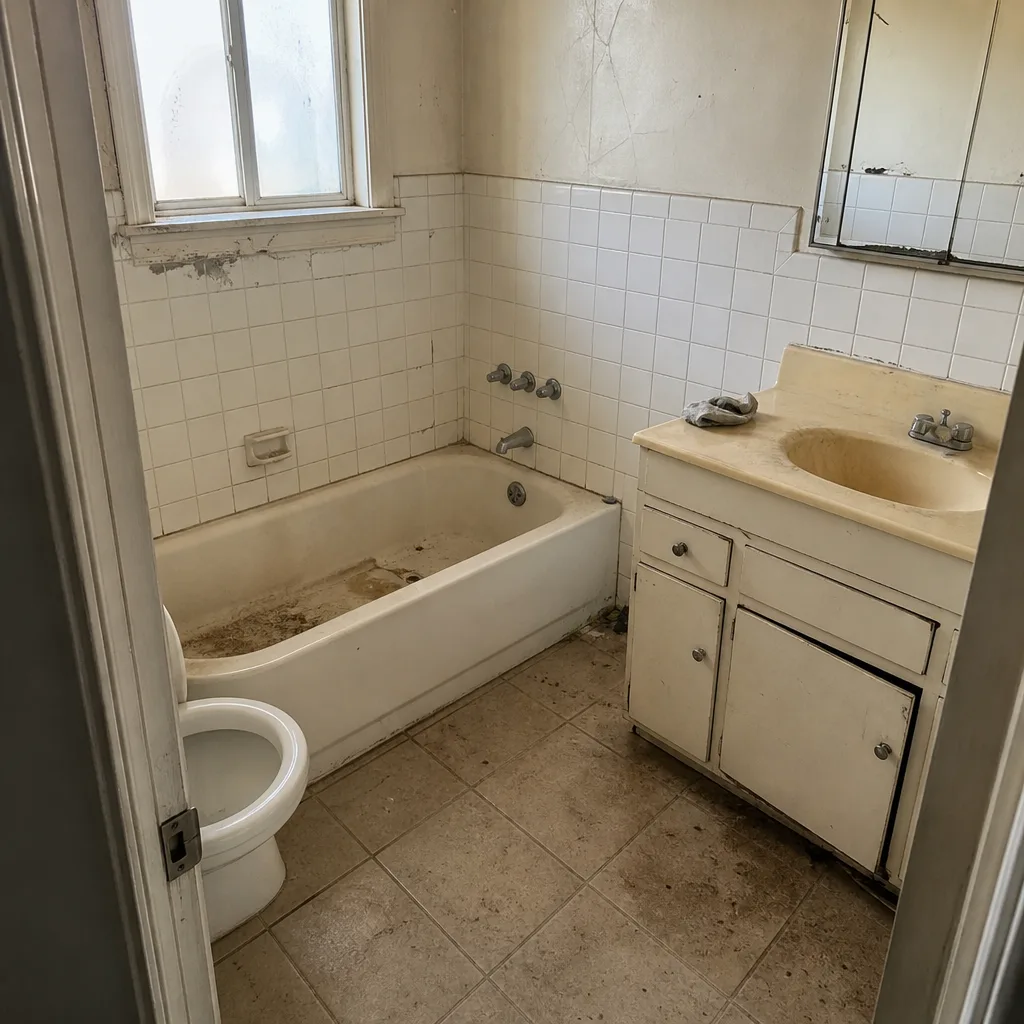 Before
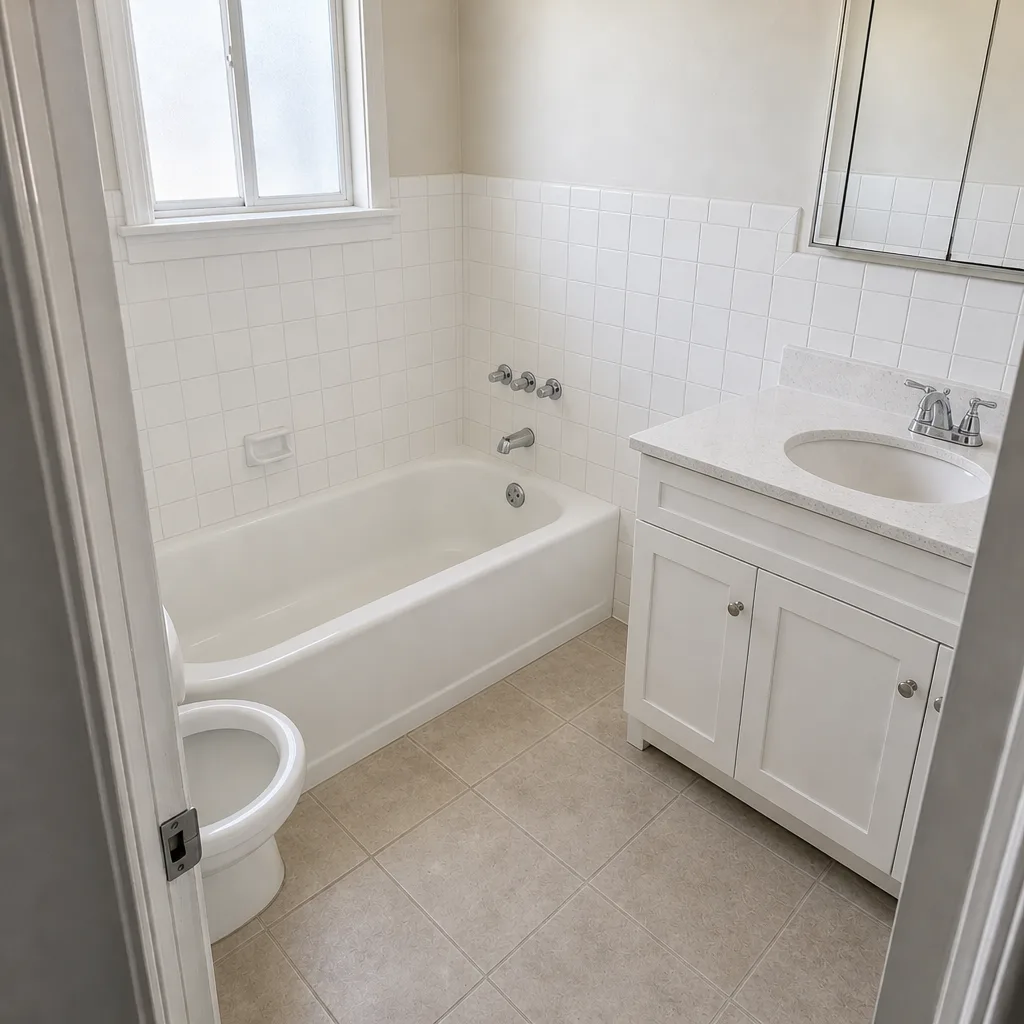 After
When to Call a Professional
Some of what’s above is genuine homeowner territory: photographing, moving a downspout, re-sanding a small area that has washout but no movement. But four scenarios need a trained eye and a written quote before you touch them. A whole section that has settled more than an inch or continues to settle after re-leveling. Efflorescence that returns after you’ve corrected every visible moisture source. Border pavers that move underfoot or gaps opening across the field. And any crack that runs edge to edge above a soft base. Cutting pavers, rebuilding base in lifts with proper compaction, and setting edge restraint on a pinned footing all need the right tools and the right spec, and a mistake there is more expensive to fix than to do right the first time. Rowan Construction Group Garden Grove offers free estimates in Garden Grove; call (888) 303-8980 and we’ll walk the driveway with you and put the findings and the price in writing.
Frequently Asked Questions
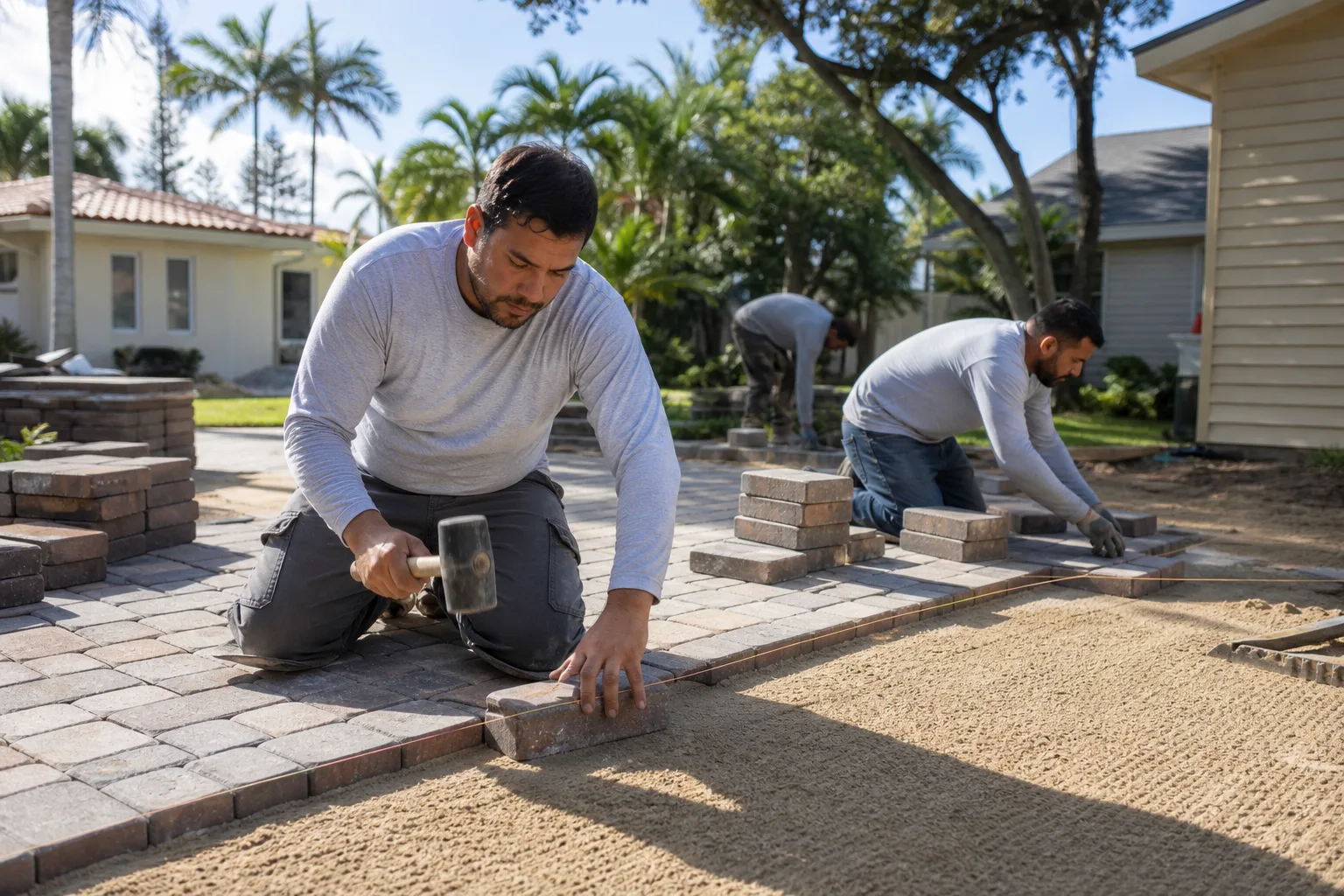
Most sunken-paver repairs fall between $200 and $400 for a small re-leveling, and $1,200 to $4,000 for a base rebuild of a larger section, depending on whether the cause is compaction, erosion, or base failure. The reason the range is so wide is that the visible dip is the same for all three, but the fix is not. Call (888) 303-8980 for an exact quote; estimates are free and every price is written before work starts.
Some maintenance work is safe to do yourself: re-sanding joints with polymeric sand, replacing a single chipped paver, repositioning a downspout. Base repair, edge restraint setting, and any cutting of pavers are not good DIY territory because getting compaction wrong means a repeat failure. If the problem involves movement or a settling section, call us at (888) 303-8980 for a free estimate.
That white residue is efflorescence, a mineral bloom caused by water moving through the paver and carrying dissolved salts to the surface. You stop it by finding and fixing the moisture source first, drying the pavers, then treating with a proprietary efflorescence remover from a brand like Techniseal or SRW Products, not vinegar. Call (888) 303-8980 and we’ll help you diagnose the source and quote the treatment.
Probe the surface with a stiff rod: if the rod drops sharply at the edges or under a dip, you have a base problem, and re-sanding won’t fix it. Re-sanding is the right fix only when the base is sound and the pavers aren’t moving. Call (888) 303-8980 for a free diagnostic visit; the quote is written and line-itemed.
A penetrating sealer slows water uptake and helps with fade and stain resistance, but it won’t fix active efflorescence or a failing base. Seal only after the underlying cause is corrected, or you’ll trap the problem under the film. Reach us at (888) 303-8980 for a sealer recommendation matched to your paver type.
A small dip can stay small for years if the water source is corrected, and can become a full base failure within a season or two if it isn’t. The clock is really about water: stop water reaching the base and the dip stops growing. Call (888) 303-8980 if a dip is growing or water is pooling above it.
The Bottom Line
Diagnose the cause, not the symptom. A sunken section is a base question, not a paver question, until you’ve probed it. White residue is a moisture question, not a cleaning question, until you’ve found the source. Loose borders are an edge restraint question, not a sand question, until you’ve checked the curbing. Photograph well, probe carefully, and use the right proprietary products from the right brands. If our up-to-19-years-experienced technicians can help, Rowan makes it right under the 365-Day Done Right Promise and puts the price in writing before anyone starts. Start with a free written estimate from our Garden Grove team, or explore the full scope of what we build at the Rowan Construction Group Garden Grove home.
Contact
Ready to stop guessing and get a written number for your driveway? Call Rowan Construction Group Garden Grove at (888) 303-8980 for a free estimate. We’ll walk the driveway, probe the suspect areas, and deliver a line-item price and a documented photo record before any work begins. If paver repair is step one in a bigger plan, our Home Additions & ADU in Garden Grove page covers how a driveway rebuild fits a larger site plan. No-hassle upfront pricing, every trade, every time.
Written by the team at Rowan Construction Group Garden Grove.